V-Beam Laser Redness Treatment in Seoul
Precision laser treatment for redness and blood vessels
Precision laser treatment for redness and blood vessels
If your face often feels hot and turns red, it may be more than simple skin sensitivity. Vascular conditions such as facial flushing and rosacea, which develop as blood vessels dilate or proliferate, can worsen over time. V-Beam at ABLE Dermatology selectively destroys these abnormal vessels to effectively improve redness and vascular problems.
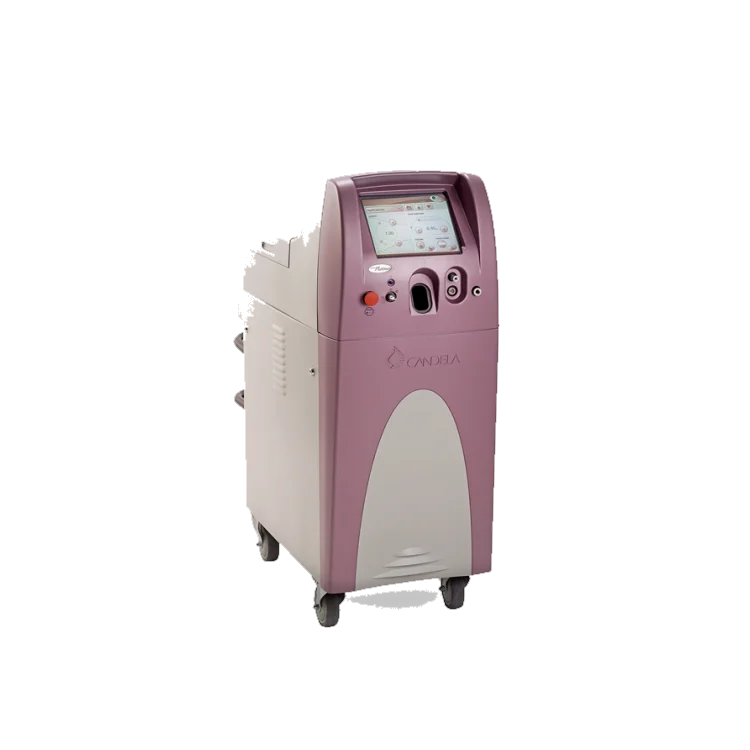
V-Beam Perfecta works by selective photothermolysis at a wavelength of 595nm. Because this wavelength is specifically absorbed by hemoglobin in red blood cells, it concentrates on destroying abnormal vessels while the surrounding normal skin tissue is preserved. At the same time, a cooling system protects the skin surface, reducing the risk of burns or scarring.
Facial flushing is a temporary reddening of the face, triggered by temperature changes, stress, spicy food and the like. Rosacea, by contrast, is a condition in which blood vessels are chronically dilated, leaving the face always slightly red. Rosacea is not merely a cosmetic issue but a skin disease that requires accurate diagnosis and treatment. At ABLE Dermatology, we distinguish flushing from rosacea through careful diagnosis and apply the V-Beam protocol suited to each.
Because V-Beam's 595nm wavelength is selectively absorbed only by red blood cells, it efficiently closes abnormal vessels without damaging normal skin tissue. As the vessels shrink and blood flow decreases after treatment, facial redness and the burning sensation improve markedly.
ABLE Dermatology does not have an IPL device. The comparison below sets out how the two approaches differ.
There are several ways to treat redness. IPL (intense pulsed light) uses a broad range of wavelengths, so its effect is relatively mild, but it can treat several issues (pigment, vessels) at once. V-Beam, by contrast, acts specifically on blood vessels with a single 595nm wavelength, so when vascular problems are the main concern, a much stronger and faster improvement can be expected. V-Beam is more effective particularly where the vessels are distinct, as in rosacea.
Note: V-Beam is not the answer for every case of facial redness. Redness comes in several types. For the skin-barrier damage type (skin that stings whatever you apply and burns even after washing your face), barrier recovery (such as LDM ultrasound) comes before vascular laser. For the mixed type (diffuse redness + heat and stinging + sensitivity to irritation) as well, the effective order is barrier recovery first and then V-Beam. At ABLE Dermatology, we identify your type of redness accurately at your consultation and guide you through the optimal order of treatment.
A face that is always slightly red is improved with the 595nm vascular laser.
Noticeable vessels on the nose and cheeks are selectively coagulated.
Rosacea caused by vascular proliferation is treated at its root. At ABLE Dermatology, stable improvement can be expected.
We accurately assess the degree, distribution and cause of the redness and vessels. The board-certified dermatologist at ABLE Dermatology sets V-Beam parameters suited to your skin type and vessel characteristics.
The laser is applied systematically to the vascular areas while a cooling system protects the skin. Energy level and pulse width are tailored to each patient, with the aim of increasing effectiveness while reducing side effects.
Right after the treatment, a soothing cream and mask are applied to minimize inflammation. We explain the follow-up care plan along with sun protection guidance.
Safe, quick vascular laser treatment
After the face is thoroughly cleansed, eye shields are put on to protect the eyes. Cooling gel is spread widely to protect the skin surface from the laser energy.
The 595nm V-Beam laser is applied systematically to areas of redness and vessels. The cooling system operates automatically to protect the skin surface. Energy tailored to each area is applied, and the treatment takes 15–30 minutes.
Right after the treatment, a soothing cream and a growth-factor mask are applied. We explain how to care for your skin over the next few days, along with sun protection guidance.
Diffuse redness, in which the whole face turns red, often cannot be resolved with vascular laser alone. V-Beam Perfecta's 595nm PDL is effective at selectively destroying dilated vessels, but when the cause of the redness lies in skin-barrier damage, rosacea or chronic inflammation, barrier-recovery treatment must be combined with vascular treatment.
At ABLE Dermatology, we classify redness by type — ① vascular (dilated-vessel) type (V-Beam first), ② skin-barrier damage type (LDM + topical treatment first), ③ mixed type (step-by-step approach) — and then design the order of treatment. The key is not to start with vascular laser by default, but to find the first treatment that fits the cause of each person's redness.
The red marks after V-Beam mostly settle within 1–3 hours and take 24 hours to disappear completely. Depending on the individual, faint marks may remain for a few days, so at ABLE Dermatology we explain the expected outcome in advance through a careful pre-treatment consultation.
Because V-Beam reacts selectively with hemoglobin in red blood cells, people with darker skin can also have the treatment. However, the darker the skin, the more carefully we adjust the energy settings to minimize the risk of hyperpigmentation.
It depends on the severity of the redness. Mild redness may improve in 1–2 sessions, but chronic redness or rosacea may need five or more sessions at 2–4 week intervals. At ABLE Dermatology, we present an individual treatment plan at your first consultation.
V-Beam is performed while a cooling system protects the skin, so you feel only slight warmth and a light snapping sensation. It is done without anesthesia; there is some pain, but at a tolerable level.
Be able to choose, not be pushed.
This page is for informational purposes only. Individual results may vary. Please consult with our dermatologist for personalized treatment recommendations.