Acne Scar Treatment in Seoul
Restore smooth skin texture with professional scar treatment
Restore smooth skin texture with professional scar treatment
Uneven, bumpy skin texture left behind by acne, scars that become more noticeable under certain lighting, and depressed marks that cannot be hidden by foundation. These scars are not simple pigmentation issues but involve structural damage deep within the dermis, making topical skin care alone insufficient for improvement.
Scars left after acne, or those resulting from trauma or surgery, are caused by structural damage to the dermis and deeper layers. The treatment approach varies completely depending on scar depth, shape (ice pick, boxcar, rolling), distribution range, and skin thickness. Repeating a single laser treatment is insufficient for adequate improvement. When deep ice pick scars and wide rolling scars are mixed, each scar type must be treated strategically in combination for overall skin texture to improve evenly.
At ABLE Dermatology, after precisely classifying scar type and depth, we induce dermal collagen regeneration with Potenza RF microneedling, realign skin surface with UltraPulse CO₂ fractional laser, and release deep adhesions with TriFill Pro CO₂ subcision as part of a comprehensive treatment protocol. After treatment, we use SynerJet Pro microjet medication delivery or LDM ultrasound management to promote collagen synthesis and shorten recovery time.
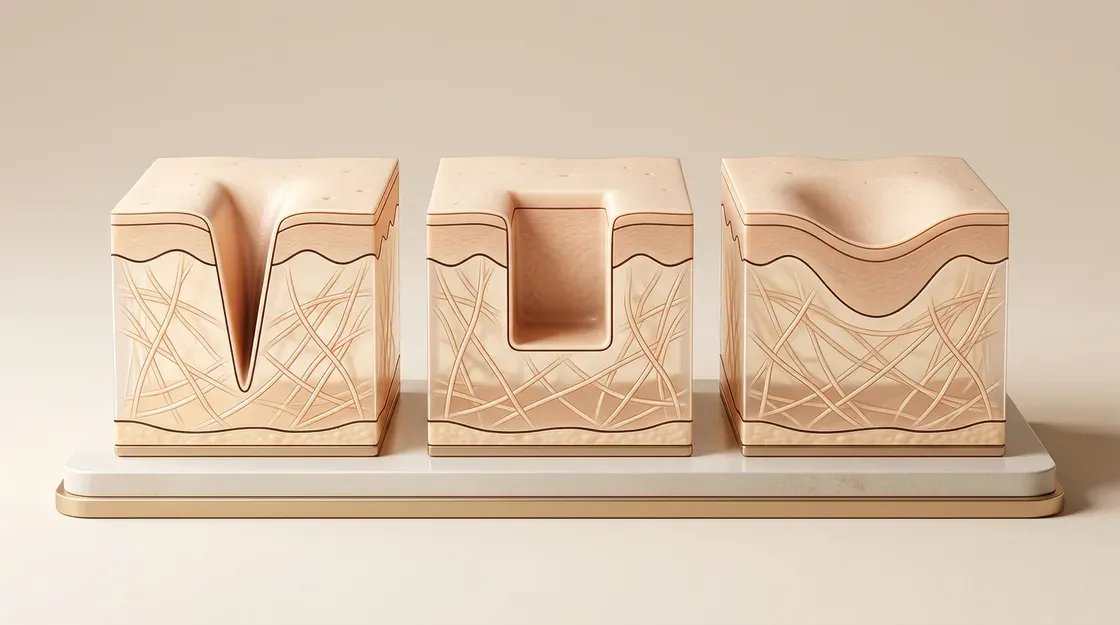
Even the same acne scar shows greatly different treatment outcomes for each patient. At ABLE Dermatology, we always evaluate five prognostic variables before treatment: ① Scar depth (shallow vs deep), ② Dermal adhesion degree (whether subcision is needed), ③ Skin thickness (thin skin limits aggressive treatment), ④ Mixed ratio of scar types, ⑤ Previous treatment history (dermal fibrosis from repeated fractional laser).
In particular, Potenza RF microneedling is most effective for shallow and wide boxcar and rolling scars, while deep ice pick scars require TriFill Pro CO₂ subcision to first release adhesions. When dermis has fibrosed from 10+ fractional laser sessions, switching strategy to subcision and collagen boosters is far more effective than repeating the same procedure.
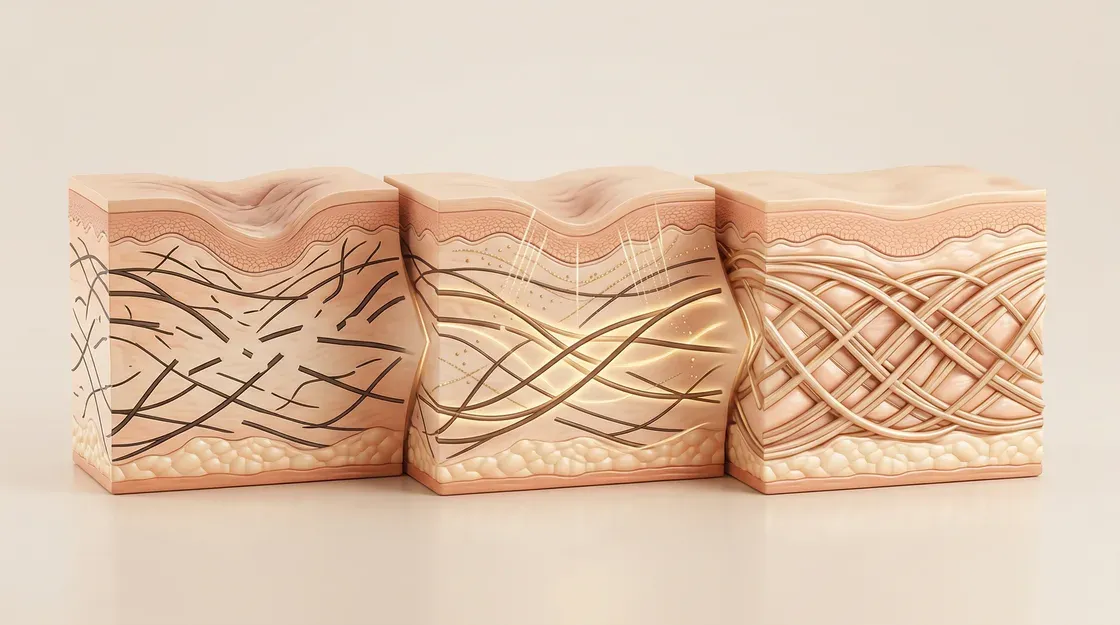
Acne scars are broadly divided into ice pick (narrow and deep), boxcar (angular), and rolling (wide and gradual) types, with different treatments being most effective for each. TCA cross or TriFill Pro CO₂ subcision work for ice pick scars, UltraPulse CO₂ fractional for boxcar scars, and subcision with filler combination for rolling scars. Combination treatment tailored to scar type is far more effective than repeating a single laser.
At ABLE Dermatology, we classify patient scars by type and strategically combine TriFill Pro subcision (adhesion release), UltraPulse fractional laser, Potenza RF microneedling, and collagen boosters to maximize depth improvement. Potenza features four tip modes, allowing precise energy delivery adjustment based on scar depth and area. While complete removal is difficult, professional combination therapy achieves 50~80% or greater meaningful improvement.
Many clinics repeatedly use the same fractional laser on all scars. However, ice pick, boxcar, and rolling scars each require different energy depths and types. ABLE Dermatology first classifies scars, then strategically combines subcision (adhesion release), fractional laser, and RF to provide treatment matched to each scar type.
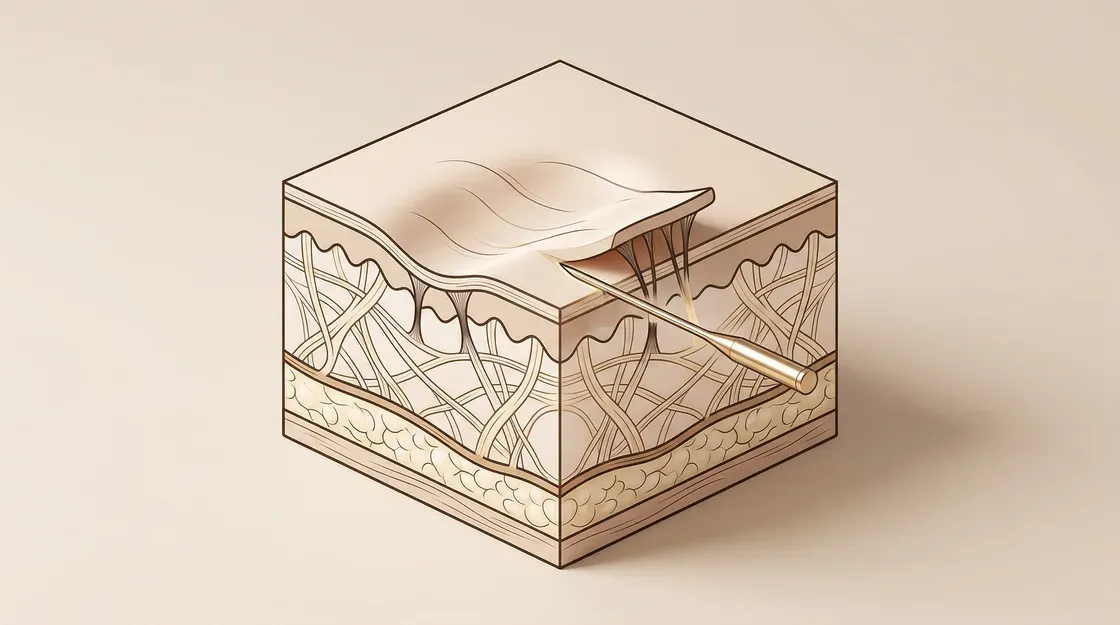
Deep inflammatory acne that progresses without treatment can damage the dermis, leaving scars.
Abnormal collagen reformation after trauma or surgery creates depressed or raised scars.
Depending on constitution, excessive collagen proliferation at scar sites can form hypertrophic scars or keloids.
Analyze scar type and depth. Differentiate keloids and hypertrophic scars for treatment planning.
Subcision releases adhesions; laser and RF promote regeneration. Combination is 2-3x faster.
SkinBooster and collagen stimulators maximize production. 3-6 months makes scars noticeably shallower.
Customized treatment based on scar type and depth
| Treatment | Application | Mechanism | Duration | Recovery |
|---|---|---|---|---|
| Potenza (RF Microneedling) | Shallow to moderate scars | RF energy and fine needles stimulate collagen regeneration | 30-40 min | 2-3 days |
| TriFill Pro (CO₂ Subcision) | Deep depressed scars | Separates fibrous bands beneath the skin to improve depression | 15-30 min | 3-5 days |
| UltraPulse (CO₂ Fractional) | Moderate to severe scars | CO₂ laser promotes skin remodeling | 30-50 min | 5-7 days |
| SynerJet Pro (Needle-Free) | Shallow to moderate scars | Microjet + electroporation + plasma delivers medications | 20-30 min | 1-2 days |
| Skin Boosters | Shallow scars, adjunctive therapy | Hydrating and regenerative agents delivered into the dermis Skin Vive · Aqua Glow · Re2O · Juvelook · Ultracol |
20 min | None |
| Collagen Stimulators | Deep scars, volume restoration | Induces endogenous collagen synthesis for dermal regeneration Juvelook Volume · Sculptra · Radiesse · GOURI |
30 min | 1-2 days |
Performing scar treatment while active acne is present can worsen inflammation or create new scars. It is safest and most effective to first stabilize acne inflammation through acne treatment, then begin scar treatment.
Subcision is a procedure that uses a special needle to break up the fibrotic adhesion tissue beneath scars. It is particularly effective for rolling type or wide scars, and as the adhesion releases, the dermis naturally fills in. When combined with fractional laser, it produces a synergistic effect.
This depends on the depth and scope of the scar, but generally we perform 5~10 sessions at 4~6 week intervals. Each session provides progressive improvement, and after 3~6 months of collagen remodeling, patients experience additional improvement.
Complete removal is realistically difficult, but professional combination treatments can significantly reduce the depth and scope of scars. Most patients can achieve more than 50~80% noticeable improvement, and many reach a level that can be easily covered with makeup.
Duration varies by scar type and depth, but typically 4-6 sessions at 4-6 week intervals. Superficial scars may improve within 2-3 months, while deep scars may require 6-9 months of consistent treatment.
Scar treatment doesn't erase scars completely, but significantly reduces visibility. Post-treatment collagen remodeling fills in scar depressions, making them blend naturally with surrounding skin. Results depend on initial scar severity and treatment adherence.
Depending on treatment intensity, you may experience redness, swelling, and flaking for 3-5 days. Subcision may cause bruising lasting 1-2 weeks. ABLE Dermatology adjusts intensity based on your lifestyle and schedule.
Yes, newer scars (less than 1-2 years old) are generally more responsive to treatment as collagen remodeling is still active. Old scars require longer treatment periods and more sessions, but significant improvement is still achievable with proper treatment protocols.
Be able to trust the logic behind every treatment.
We only recommend treatments explained by evidence and data.
This page constitutes medical advertising in accordance with Article 56 of the Korean Medical Service Act, and treatment results may vary by individual.