

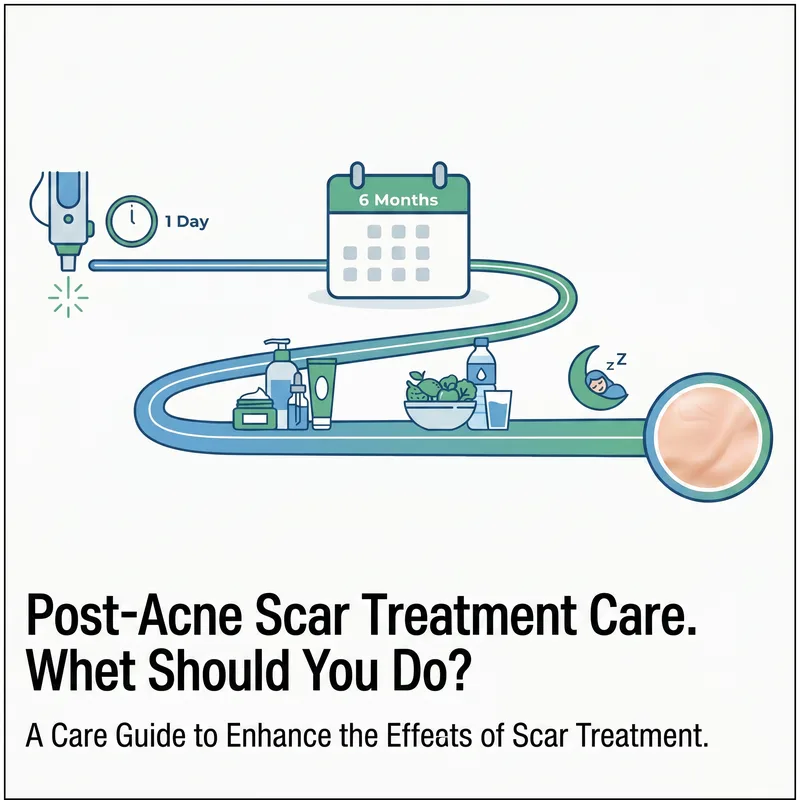
Post-Treatment Management Determines Your Final Results
Your actual scar treatment outcomes depend far more on the six months after treatment than on the procedure itself. Whether you receive laser, Potenza, subcision, or any other modality, treatment success is determined by proper post-care protocols. Many patients focus on downtime management immediately after treatment but neglect the more critical medium and long-term recovery—a major reason why results disappoint.
Understanding Post-Treatment Skin Physiology
Scar treatment procedures intentionally damage skin to trigger regenerative healing. This creates a specific skin state requiring appropriate response.
The stratum corneum (skin barrier) is temporarily compromised. This increases transepidermal water loss (TEWL) 3-5 times above baseline. Expect mild inflammation, burning, stinging, and redness as normal healing responses—not adverse reactions.
However, excessive sun exposure or irritating skincare during this compromised barrier period causes post-inflammatory hyperpigmentation (dark spots), worsened scar texture, thickened scars, and impaired collagen regeneration.
Phase-Based Skincare Protocol
Days 0-7: Acute Phase - Wound Care and Calming
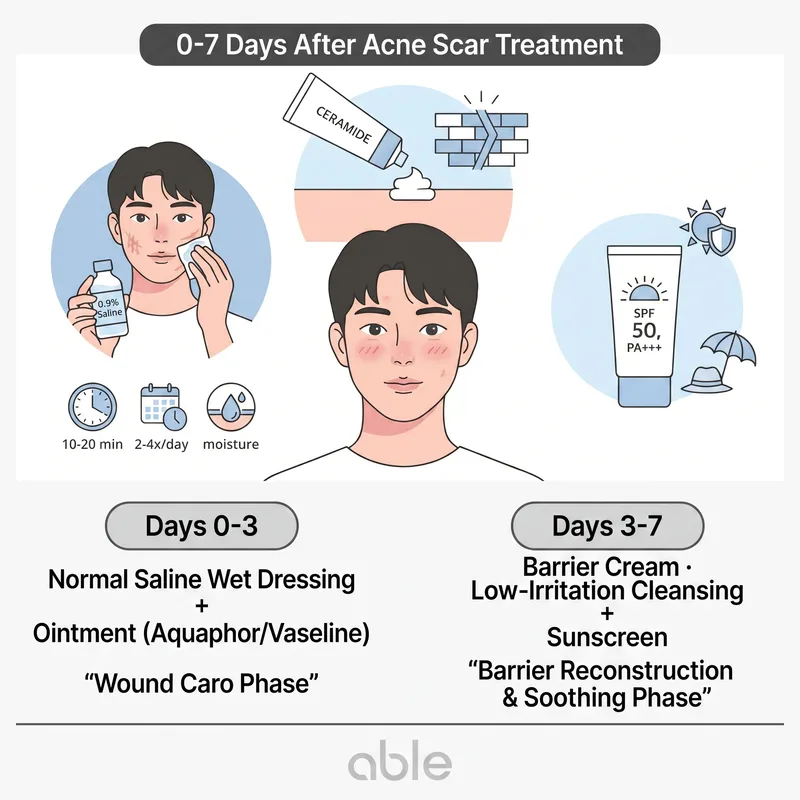
"Soothe and protect" mode. Skin is a fresh wound requiring minimal irritation.
Cleansing: Lukewarm water, gentle touch only. Use only pH-neutral gentle cleansers. Never use soap or scrubs. Limit cleansing to once daily maximum.
Hydration: Focus on anti-inflammatory ingredients. Centella asiatica, panthenol, and aloe vera are ideal. Hydrating toners and sprays also support barrier recovery.
Sun Protection: Physical barriers (umbrella, hat, mask) take priority over sunscreen. Only use mild sunscreen recommended by your clinic. SPF 50+ minimum.
Forbidden ingredients: Avoid vitamin C, niacinamide, glycolic acid, and benzoyl peroxide—these risk hyperpigmentation. Never use exfoliating products.
Weeks 1-4: Recovery Phase - Barrier Restoration
Downtime mostly resolves, but skin remains in recovery. "Continued protection mode".
Cleansing: Continue gentle cleansing with lukewarm water, twice daily.
Enhanced Hydration: Implement three-step hydration (hydration-occlusion-emollient). Apply essence, then essence or ampoule, then cream. Prioritize hyaluronic acid, glycerin, and squalane.
Sun Protection: Continue physical barriers as primary method. Apply only very gentle sunscreen. Reapply every 2-3 hours if outdoors.
Optional ingredients: Calming and anti-inflammatory ingredients remain helpful. Vitamin E (tocopherol) and diphenhydramine are gentle anti-inflammatory options.
Weeks 4-12: Recovery Acceleration Phase - Collagen Support
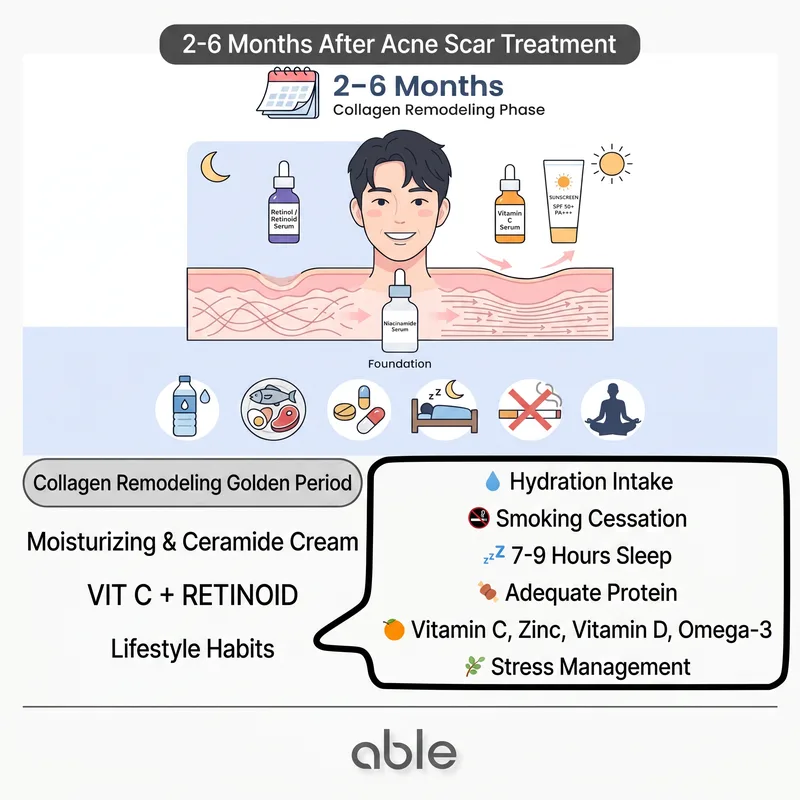
Treatment effects begin appearing. "Recovery support mode".
Cleansing: Return to normal cleansing with gentle products maintained.
Hydration and Barrier Maintenance: Focus on barrier strengthening alongside hydration. Include ceramides, squalane, and consider adding facial oils.
Gentle Active Ingredients: Begin introducing mild actives—vitamin C, niacinamide at low concentration. Start 2-3 times weekly, gradually increasing.
Sun Protection: Remains essential. Hyperpigmentation risk is still significant. Daily SPF 50+ mandatory.
Months 3-6: Stabilization Phase - Normal Skincare Return
Treatment area has stabilized. Resume normal skincare for your skin type.
Hydration and Antioxidants: Normal hydration with vitamin E and vitamin C at regular concentrations. Continue sun protection for recovering skin. SPF 50+ daily.
Gentle Chemical Peels: If desired, introduce gentle AHA or BHA products. However, treatment areas may remain slightly sensitive, so use caution.
UV and Light Protection: Maintain sun protection. Blue light from screens also contributes to hyperpigmentation, so consider this if indoors regularly.
Absolute Prohibitions
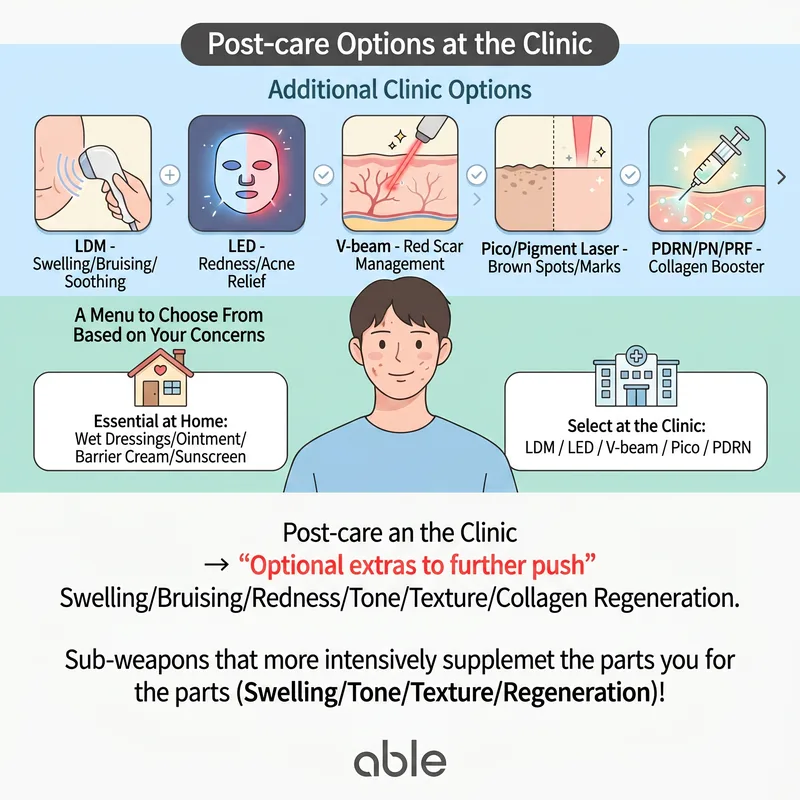
Never touch, rub, or pick treated areas: This causes hyperpigmentation and worsens scar texture—you're working against healing.
Avoid aggressive exfoliation or peeling: If inflammation persists, peeling is counterproductive. Wait for complete stabilization.
Don't use irritating actives prematurely: Retinol, high-concentration vitamin C, and alcohol-containing products should wait at least 2 weeks. Early use worsens inflammation.
Don't assume indoor = no sun damage: UV penetrates windows. Reapply sunscreen indoors and maintain physical barriers.
Minimizing Hyperpigmentation
Sun and light avoidance is most critical. Post-inflammatory hyperpigmentation responds to visible light and blue light, not just UV. Minimize outdoor time, use physical barriers primarily, and apply daily sunscreen. SPF 50+.
Dietary antioxidants support healing: Red, orange, and dark green foods contain compounds supporting skin recovery.
Sleep and stress management matter: Skin regenerates during sleep. Maintain 6-7 hours nightly and manage stress.
Treatment-Specific Modifications
Fraxel, CO2 Laser: Longer downtime and deeper damage. Emphasize hydration and calming during first two weeks especially.
Potenza (RF Microneedling): Shorter downtime but cumulative results matter, so allow full stabilization between sessions (4-6 weeks minimum).
Subcision: Deep tissue trauma means extended bruising and swelling possible. Long-term hydration management is particularly important.
Conclusion: Recovery Care Is More Important Than Treatment
Your actual scar treatment success depends less on where you received treatment than "how you managed the six months afterward". Precise post-treatment skincare and lifestyle choices determine final results. The initial inconvenience is worthwhile—patients who carefully followed recovery protocols achieve exceptional satisfaction. Disciplined recovery management produces superior outcomes.
Frequently Asked Questions
- How should I care for my skin after acne scar treatment?
- Avoid washing for 24 hours post-treatment, use only gentle moisturizer for 48 hours. Apply regenerative cream and sunscreen for 1-2 weeks. Avoid exfoliation and retinol for at least 2 weeks.
- How important is sun protection after scar treatment?
- Critical. Post-treatment skin is vulnerable to hyperpigmentation. Apply SPF 50+ sunscreen every 2-3 hours and avoid direct sunlight for at least 4 weeks.