Laser Toning Treatment in Seoul
Safe, progressive pigmentation control with Nd:YAG 1064nm laser
Safe, progressive pigmentation control with Nd:YAG 1064nm laser
Do you notice your entire complexion appearing dull every time you look in the mirror? Melasma—the stubborn brown patches commonly appearing around cheekbones and forehead—creates a fatigued appearance even when concealed with makeup. Melasma is not merely a surface pigmentation issue; it results from overactive melanocytes in the deep dermal layer producing excessive melanin. Surface-level treatments alone carry high recurrence rates.
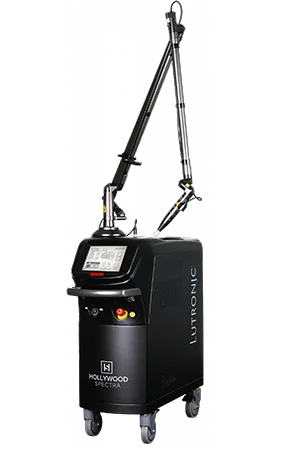
Laser toning (Nd:YAG 1064nm) is the treatment precisely designed to solve this problem. By delivering low-power laser energy repeatedly, the treatment selectively breaks down melanin pigment while minimizing epidermal damage. Unlike aggressive high-power laser protocols that risk post-inflammatory hyperpigmentation (PIH), laser toning stimulates gradual, cumulative improvement. The key advantage: laser toning suppresses melanocyte activity itself, not just the pigment. This is the fundamental difference from picosecond lasers or traditional Q-switched lasers. High-power single pulses deliver immediate results but risk epidermal damage and PIH, while laser toning's low-power repeated delivery increases safety while aiming for gradual improvement. At ABLE Dermatology, our board-certified dermatologist combines the latest laser toning technology with precise protocol design to deliver the progressive, natural pigmentation correction that Korean dermatologists have perfected.
For international patients visiting Seoul, laser toning is an ideal choice.
Laser toning's effectiveness lies in the principle of selective photothermolysis. The Nd:YAG 1064nm wavelength responds strongly to melanin pigment while simultaneously minimizing epidermal cell damage. Low-power repeated delivery creates a "cumulative effect" where dermal pigment gradually breaks down across multiple sessions.
Melasma's core problem: melanocytes become hyperactive, overproducing pigment. Laser toning achieves dual action—it breaks down existing pigment while simultaneously calming melanocyte activity. This fundamental distinction sets laser toning apart from picosecond lasers or standard Q-switched lasers. High-power single-pulse delivery is immediate but carries risks of epidermal damage and post-inflammatory hyperpigmentation, while laser toning's low-power repeated protocol improves safety while aiming for gradual improvement.
Both treatments effectively address pigmentation, but their mechanisms and characteristics differ. Laser toning specializes in melasma through low-power repeated delivery, targeting gradual improvement. Picosecond lasers deliver extremely short pulses at high power, offering faster results for age spots, pigmentation, and tattoo removal. If melasma is your primary concern, laser toning provides an 8-12 week treatment plan. For complex pigmentation issues involving multiple pigment types, combining picosecond and toning lasers is recommended. ABLE Dermatology's diagnostic precision determines the optimal treatment combination for your specific pigmentation pattern.
Laser toning selectively breaks down pigment without destroying melanocytes, so the risk of post-inflammatory hyperpigmentation (PIH) after treatment is relatively low. Repeated low-energy delivery stimulates the skin's natural healing response while simultaneously calming melanocyte activity. This is why melasma improves gradually with laser toning. Individual response varies, but about 60-80% melasma improvement can be expected after 4-8 treatment sessions.
Brown melasma on forehead, cheekbones, and nose responds progressively to low-power repeated laser toning. Laser toning remains the highest-efficacy zone for this indication.
Brown age spots, pigmentation irregularities, and freckles across the face improve effectively. Precise dermatologist parameter adjustment determines final outcomes.
Overall darkened and dull-appearing complexion brightens noticeably.
We comprehensively evaluate melasma depth, skin type, and pigment distribution. Our board-certified dermatologist directly diagnoses your condition and determines individualized optimal laser parameters (power, pulse width, spacing) for your specific skin.
Low-power Nd:YAG laser is systematically applied across the entire face. Treatment energy is carefully modulated in areas of concentrated melasma for maximum precision. Sessions typically require 15-25 minutes, minimizing patient inconvenience.
Immediately following treatment, soothing cream and rigorous sun protection are initiated. When needed, specialized masking accelerates skin calming, with detailed sunscreen guidance provided.
Safe, precise, step-by-step treatment
The face is thoroughly cleansed and baseline skin condition is documented photographically. To confirm individual skin reactivity, low-energy laser is applied to a small test area to observe response. ABLE Dermatology considers this step critically important.
Cheekbones, forehead, nose, and lip area are treated systematically. Low-power Nd:YAG laser is applied evenly, inducing progressive pigment breakdown. Energy is adjusted in real-time according to individual skin tone and melasma severity.
Post-treatment soothing cream and broad-spectrum sunscreen are applied generously. Optional masking further calms skin. No special recovery period exists—makeup and normal daily activities resume immediately. Next treatment (typically 1-2 weeks later) is scheduled.
Before beginning laser toning treatment, confirming whether your melasma is "responsive" type is most critical. Epidermal melasma (light brown color) responds well to toning, but deep dermal melasma (grayish-brown), melasma with strong vascular component (reddish), and hormonally-driven melasma may not improve with toning alone and could potentially worsen.
Indiscriminate repeated low-energy toning can cause melanin to migrate deeper into the dermis or create confetti-like depigmentation. ABLE Dermatology classifies melasma as epidermal, dermal, mixed, or vascular type, then applies customized protocols: picosecond laser for epidermal, laser toning for dermal, and specialized vascular lasers for vascular melasma, combined with oral tranexamic acid to suppress recurrence.
Yes, laser toning is effective for melasma treatment. The Nd:YAG low-power repeated delivery method selectively breaks down pigment without destroying melanocytes, resulting in low recurrence and minimal skin damage. ABLE Dermatology achieves progressive melasma improvement through multiple sessions.
Laser toning is non-invasive with zero recovery required. Mild redness or warmth may persist but naturally subsides within hours. No recovery period interrupts your schedule—makeup and outdoor activities resume immediately.
Laser toning is low-power repeated delivery specialized for melasma with gradual improvement goals. Picosecond laser delivers high-power extremely short pulses for faster results on age spots and pigmentation. For primary melasma concerns, laser toning is recommended; for complex pigmentation, combining both treatments produces good outcomes.
Session number depends on melasma severity, skin tone, and individual factors. Typically 5+ sessions at 1-2 week intervals are performed, with cumulative effects progressively improving melasma. ABLE Dermatology presents an individualized treatment plan during initial consultation.
Be able to choose, not be pushed.
This page is for informational purposes only. Individual results may vary. Please consult with a healthcare provider for personalized medical advice.