

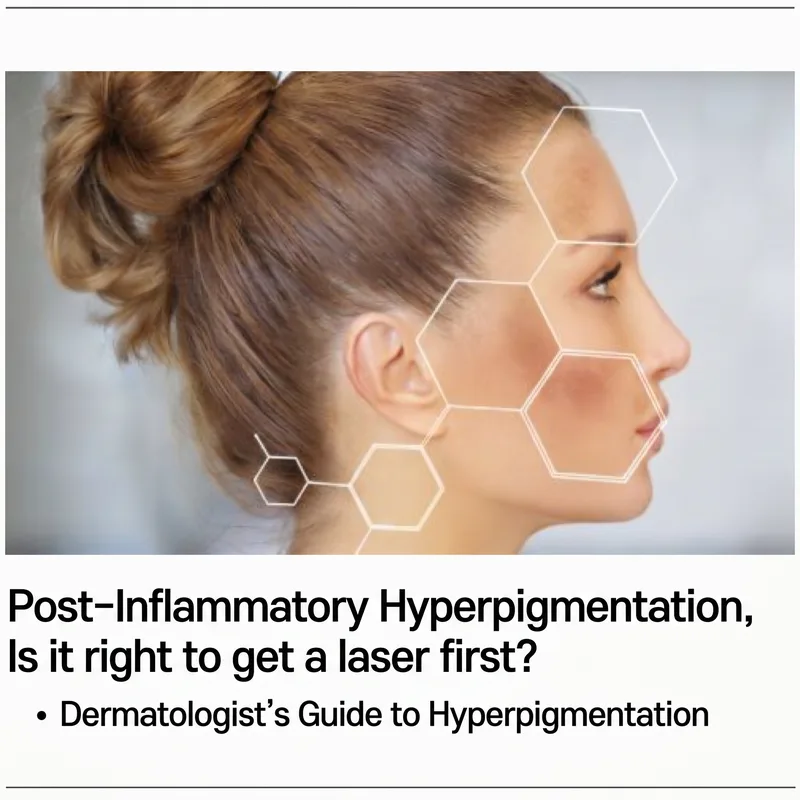
Hyperpigmentation: Same Symptom, Different Causes
Brown marks remaining after acne, procedures, or wound healing deserve careful evaluation before laser treatment, because identical-appearing discoloration can have completely different depths requiring entirely different treatment approaches. Some post-inflammatory hyperpigmentation fades naturally over months while others persist, and laser can either dramatically improve or worsen these marks depending on accurate depth assessment.
The same brown mark manifests completely differently depending on pigment depth. Some patients achieve natural clearance while others experience persistent or laser-worsened color. This happens because pigment depth was never properly evaluated. Understanding this distinction is critical before any treatment decision.
Two Types of Post-Inflammatory Hyperpigmentation
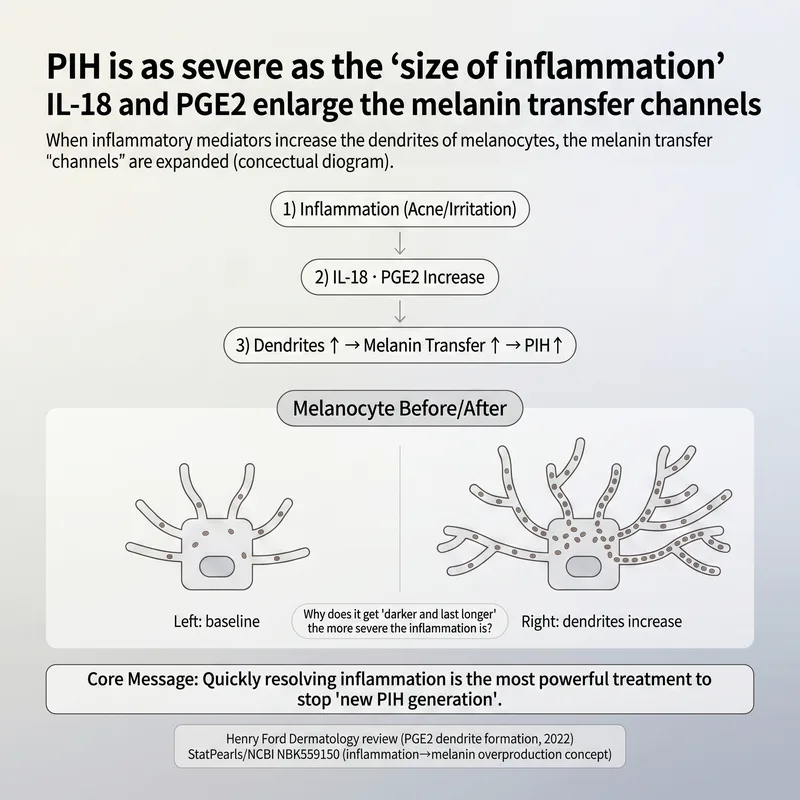
Epidermal Hyperpigmentation (Superficial)
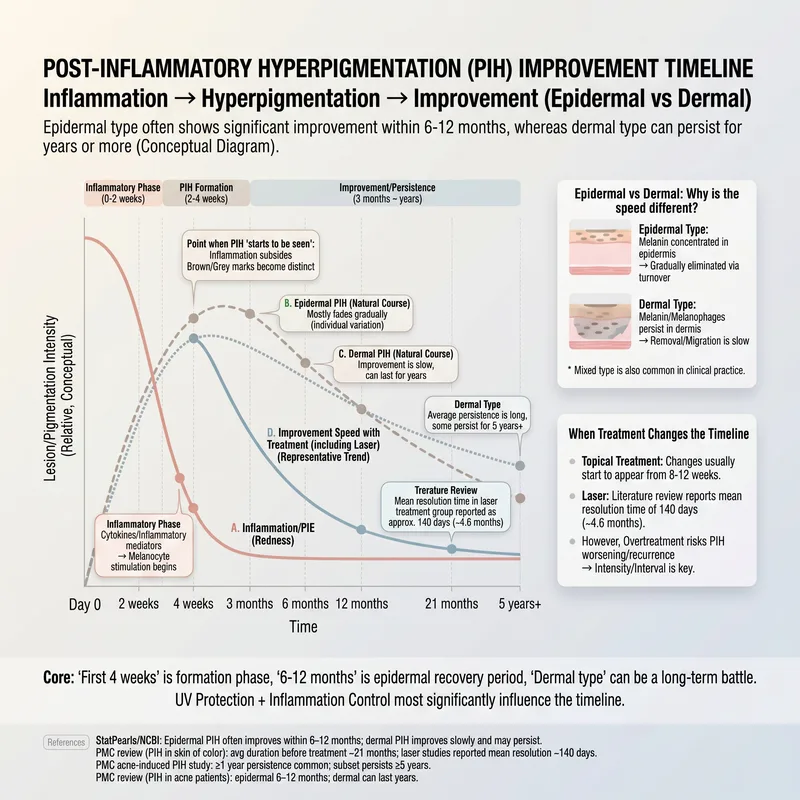
Epidermal hyperpigmentation is color remaining only in the outer skin layer. The key characteristic is significant potential for natural improvement through normal skin turnover. This type typically improves substantially over months without treatment.
Epidermal discoloration usually follows mild acne or light inflammation and spontaneously resolves within months. Here the initial strategy emphasizes sun protection and barrier recovery while simply waiting. This conservative approach is highly effective.
Dermal Hyperpigmentation (Deep Layer)
Dermal hyperpigmentation represents a deeper problem. When the basement membrane between epidermis and dermis is damaged, melanin leaks into the dermis—a process called melanin incontinence. Macrophages try to clear this pigment, sometimes mixing it with hemosiderin to create grayish or blue-gray tones. Dermal pigmentation persists much longer than epidermal and requires systematic treatment planning for improvement.
Factors Worsening Post-Inflammatory Hyperpigmentation
Inflammation Intensity and Duration
Stronger and longer-lasting inflammation produces deeper, more persistent discoloration. Areas that remained red, hot, and painful for extended periods developed higher melanocyte activity, so the pigment tends to linger longer. Acne extraction, skin wounds, or severe post-procedure inflammation create these conditions, making initial inflammation management critically important.
Repeated Trauma
Touching, friction, extraction, scratching, and over-exfoliation perpetuate discoloration through counterproductive mechanisms. Your skin attempts to heal while repeated irritation reignites inflammation, resetting pigmentation cycles. Post-scar hyperpigmentation worsens dramatically if the area receives continued touching or harsh products.
Ultraviolet and Visible Light Exposure
Not only UV radiation but also visible light (especially blue light) influences post-inflammatory pigmentation. Inflamed skin becomes light-sensitive, requiring sun protection even indoors. Combined UVA1 and visible light exposure intensifies color through studied mechanisms.
Skin Type
Deeper skin tones develop more frequent and persistent post-inflammatory hyperpigmentation. This occurs because melanocytes are more active in these skin types. Identical trauma produces different pigmentation severity and recovery timing based on skin type.
Correct Treatment Sequence
Epidermal Hyperpigmentation: Patient Waiting
The first strategy is strategic restraint. Natural improvement potential exists, so during this window:
Apply sunscreen consistently daily. SPF 50+, reapply every 2-3 hours.
Eliminate irritation completely. No touching, rubbing, or exfoliating products.
Use soothing ingredients. Centella, panthenol, and aloe reduce inflammation.
Most encouraging: 3-6 months of patient sun protection typically brings substantial spontaneous improvement.
Dermal Hyperpigmentation: Treatment Timing Matters
Once pigment reaches the dermis, waiting alone becomes insufficient. However, immediate laser is not automatically correct.
Step One: Completely Resolve Inflammation First
If hyperpigmentation coexists with inflammation (redness, warmth), laser may paradoxically deepen color. Anti-inflammatory medication and gentle skincare must first stabilize inflammation. Two to four weeks of inflammation resolution should precede laser treatment.
Step Two: Reassess Pigment Depth After Inflammation Resolution
After inflammation clears, re-evaluate color intensity—it will likely appear lighter. If significant discoloration persists, that's when laser becomes appropriate.
Step Three: Adjust Laser Intensity and Treatment Intervals
Dermal hyperpigmentation typically requires multiple treatments compared to epidermal. Gentle intensity applied repeatedly often works better than aggressive single treatment. Adequate spacing (4-6 weeks) between treatments is essential.
The Underestimated Power of Sun Protection
The most overlooked but most powerful tool for hyperpigmentation management is rigorous sunscreen use. Many patients undervalue this.
Daily, consistent, identical-timing sunscreen application can dramatically fade post-inflammatory hyperpigmentation without any laser treatment. Conversely, even excellent laser results deteriorate without diligent sun protection.
Post-Inflammatory Hyperpigmentation Treatment Principles
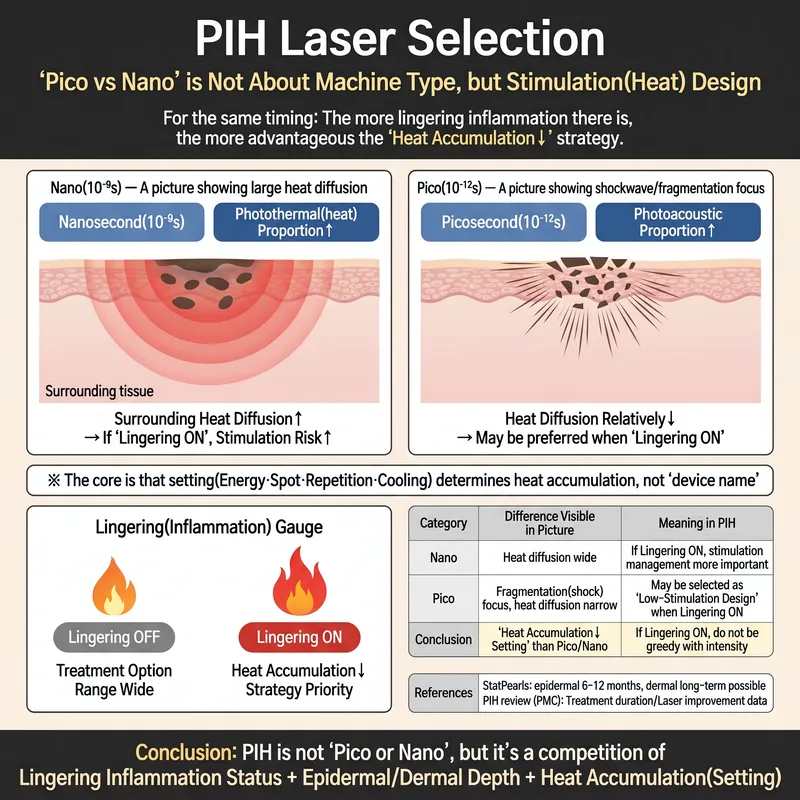
1. Identify inflammation first: If redness and warmth persist, remove them before laser.
2. Accurately assess depth: Epidermal versus dermal status completely changes your treatment plan.
3. Sunscreen is foundational: All hyperpigmentation treatment requires rigorous daily sun protection. Results are impossible without it.
4. Avoid treatment rush: Epidermal discoloration may resolve naturally. Wait through adequate observation before treating.
5. Prevent re-inflammation: Hand management, avoiding irritating products, and sun protection are the most reliable recurrence prevention strategies.
Post-Inflammatory Hyperpigmentation: No Need to Rush
Post-inflammatory hyperpigmentation is common after procedures but responds substantially to proper understanding and management. Success requires identifying cause, selecting correct timing, and protecting from sun. Laser serves when appropriate, not automatically. Consult your dermatologist for an individualized plan matching your specific hyperpigmentation type.
Frequently Asked Questions
- Should you get laser treatment for post-inflammatory hyperpigmentation right away?
- Generally not recommended. PIH often fades naturally over time, and premature laser treatment can worsen pigmentation. Stabilize first with topical agents and sun protection before considering laser.
- How do you distinguish PIH from melasma?
- PIH appears at specific sites following inflammation (acne, procedures), while melasma presents symmetrically across broader areas. PIH usually improves within months, but melasma requires chronic management.
Learn more about post-inflammatory hyperpigmentation treatment
Pigmentation Treatment Information Schedule a Consultation