

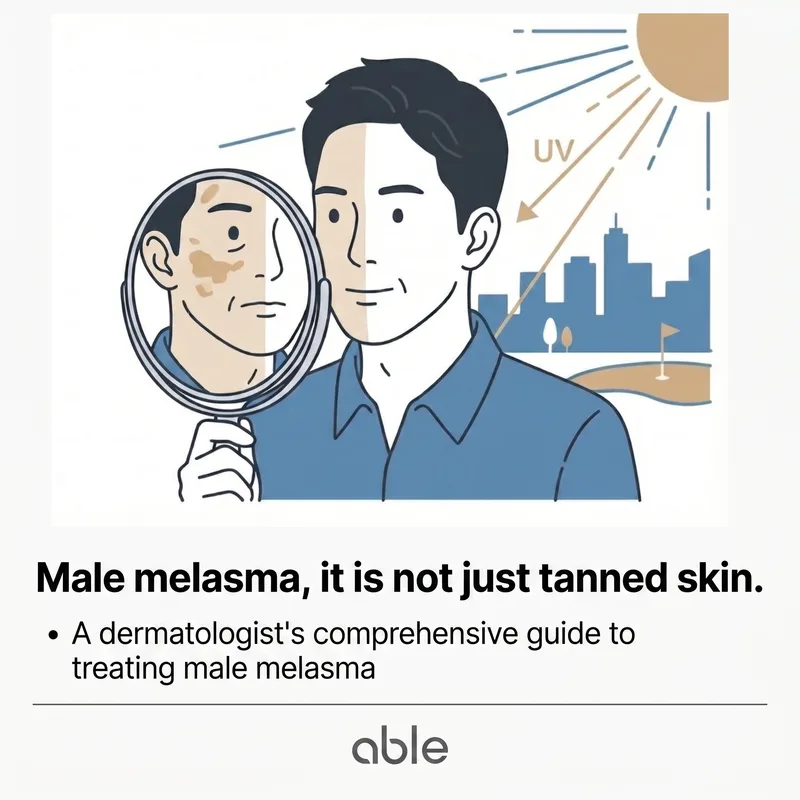
Male Melasma Is More Common Than You Think
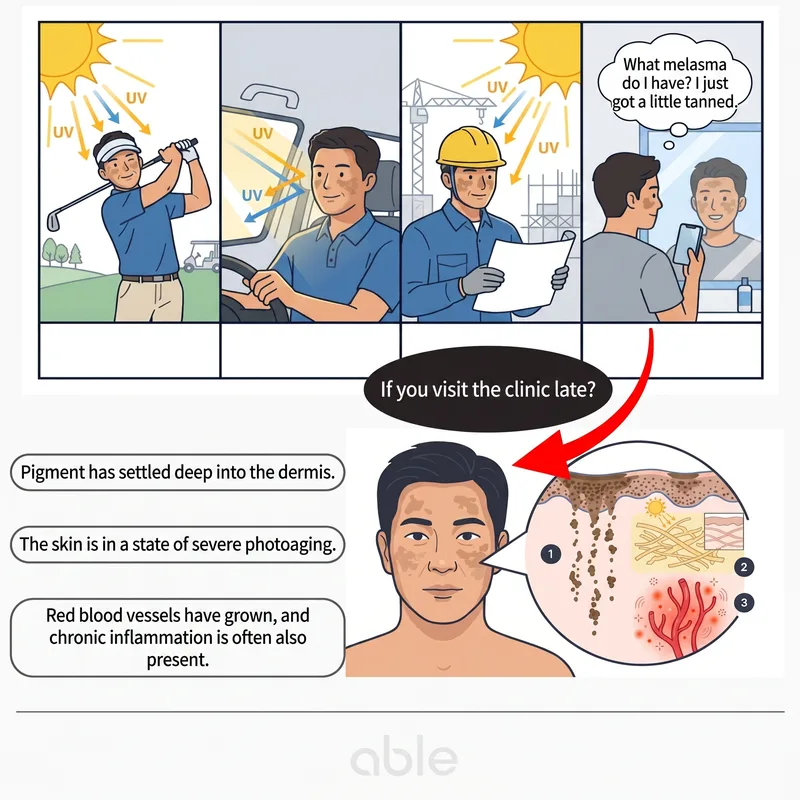
Male patients often express surprise when hearing a melasma diagnosis, with comments like "Isn't that caused by female hormones?" or "I'm a man—this is just sun-tanned skin from golf, right?" While melasma does affect women more frequently, approximately 10% of global melasma patients are male, with substantially higher prevalence in high-UV regions and among men with significant sun exposure from golf, hiking, or driving.
The critical problem is that male melasma diagnosis arrives significantly later than female cases. Men dismiss the changes as sun-darkened skin, continuing untreated until seeking care when the condition is substantially advanced. At this stage, pigment has penetrated deep into the dermis, skin has undergone chronic photodamage, and complicating factors like vascular involvement and chronic inflammation have developed, transforming simple pigmentation into complex dermal disease.
Male and Female Melasma Differ Fundamentally
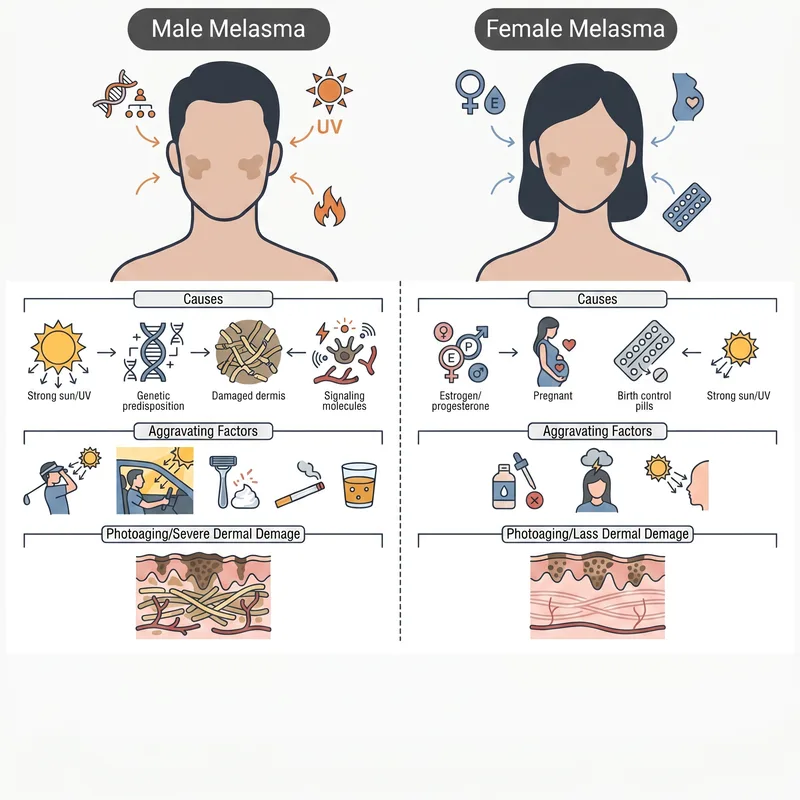
The origin differs completely. Female melasma stems primarily from hormonal changes (pregnancy, contraceptives), sun exposure, and post-inflammatory hyperpigmentation. Male melasma results almost entirely from prolonged sun exposure. Men with intense outdoor activities—golf, construction, extended driving—develop melasma more frequently.
Pigment distribution differs. Female melasma typically appears symmetrically on cheekbones and cheeks. Male melasma distributes irregularly across sun-exposed areas. Male melasma characteristically locates deeper in the dermis and carries concurrent photodamage, making treatment comparatively more challenging.
Male Melasma Treatment: Realistic Approach
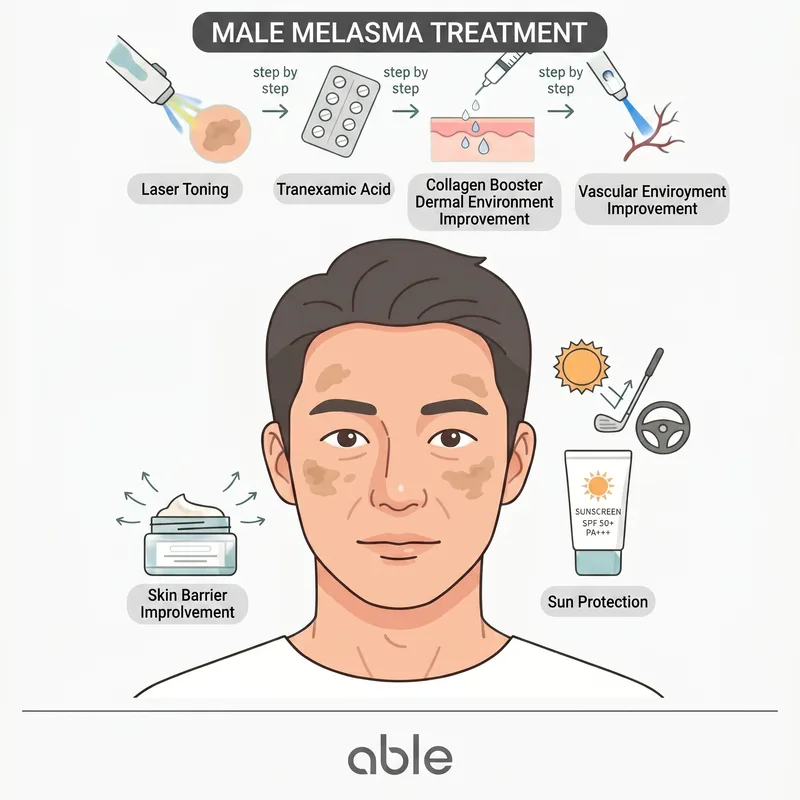
Accurate diagnosis begins male melasma treatment. You must determine whether pigment locates in the epidermis or dermis, and quantify photodamage extent. This assessment determines treatment direction and expected outcomes.
Epidermal pigment responds well to pigment-removal lasers like picosecond and Q-switched versions. However, deep dermal pigment requires multiple laser wavelengths or repeated treatments for significant improvement. Aggressive single treatment often proves inadequate.
Accompanying photodamage demands additional therapy beyond pigment lasers alone. Lifting procedures, RF-based treatments, and ultrasound therapies used with pigment therapy simultaneously improve skin texture and appearance. Red vascular components require vascular laser treatment in addition to pigment management.
Critical Information for Male Melasma Patients
Male melasma requires longer treatment duration than female melasma. Deep dermal pigment and photodamage cannot improve through short-term intervention; regular maintenance therapy becomes necessary. Equally critical: rigorous post-treatment sun protection. Many male patients neglect sunscreen after treatment, experiencing recurrence or worsening.
Male melasma transcends pure cosmetic concern—it signals past skin injury. Severe melasma indicates chronic sun damage to skin, signifying that comprehensive treatment addressing melasma alongside other photodamage effects (wrinkles, elasticity loss, vascular dilation) becomes medically appropriate.
Frequently Asked Questions
- Can men get melasma?
- Yes. UV exposure, stress, and sleep deprivation are common triggers. Many men mistake melasma for a simple tan, delaying treatment.
- Is melasma treatment different for men?
- Treatment principles are the same, but men's thicker skin and higher sebum production can affect drug penetration and treatment response. Lifestyle modification, especially sun protection habits, is even more critical for male patients.