Face Lifting in Seoul
Elastic contours with natural lifting solutions
Elastic contours with natural lifting solutions
Do you notice cheekbones settling downward when looking in the mirror, nasolabial folds deepening, and jawline becoming blurred? These changes signal real structural changes in your skin, not just aging itself.
As we age, skin collagen and elastin synthesis slow, and accumulated elastic fibers break down, causing progressive sagging. Beginning in the mid-thirties, sagging progresses in the order of forehead, eyelids, cheeks, and jawline, with pace and extent varying individually. Those with extensive sun exposure or sudden weight changes may experience faster sagging.
At ABLE Dermatology, we begin by accurately identifying the cause layer of sagging, not simply "pulling" tissue. Depending on whether elasticity loss affects the skin layer, volume loss affects the fat layer, or fascia (SMAS) layer laxity exists, Ultherapy HIFU, Density sequential RF, Onda microwave, Olewave piezo shockwave and fillers are completely different approaches. We comprehensively evaluate patient skin thickness, fat volume, sagging degree, and desired magnitude of change to design the optimal combination.
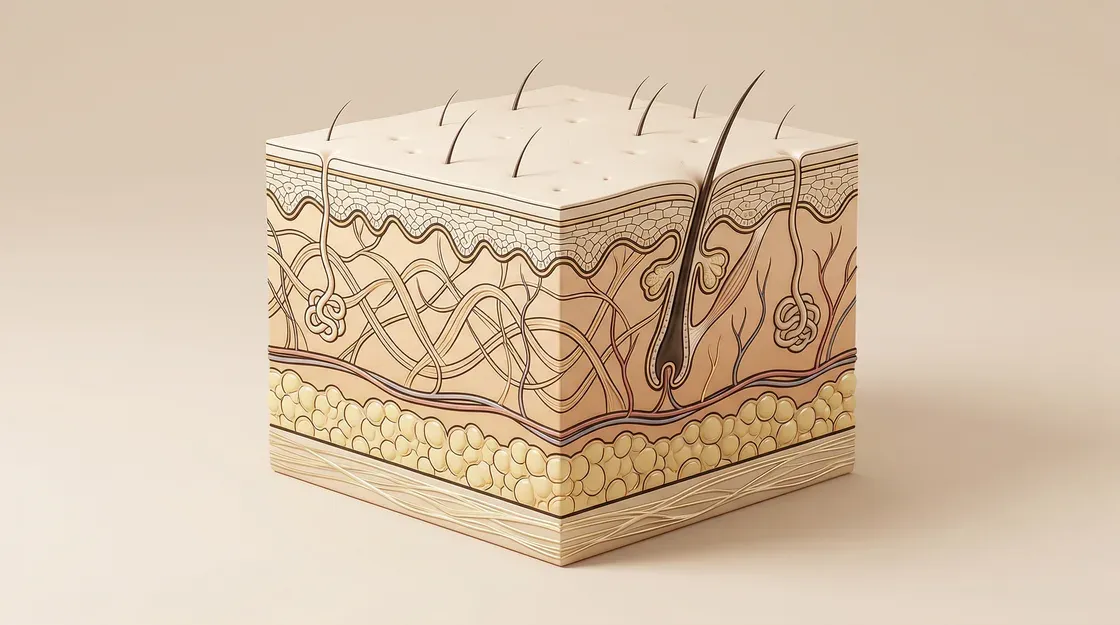
The most critical distinction in sagging treatment is 'whether internal volume is lost or external skin is stretched'. Loss of subcutaneous fat causing hollow cheeks requires different treatment than laxity of skin and fascia causing sagging. Repeating tightening alone on hollow skin makes the face look more sunken, while filling hollow areas makes it heavier and more sagging.
At ABLE Dermatology, this distinction launches treatment strategy. Ulthera HIFU specializes in contracting the 4.5mm-deep fascial layer (SMAS), Density sequential RF regenerates dermal collagen, and Onda microwave selectively acts on fat layer for volume control. Because different energy reaches different depths and tissues, precise diagnosis followed by combination therapy is essential.
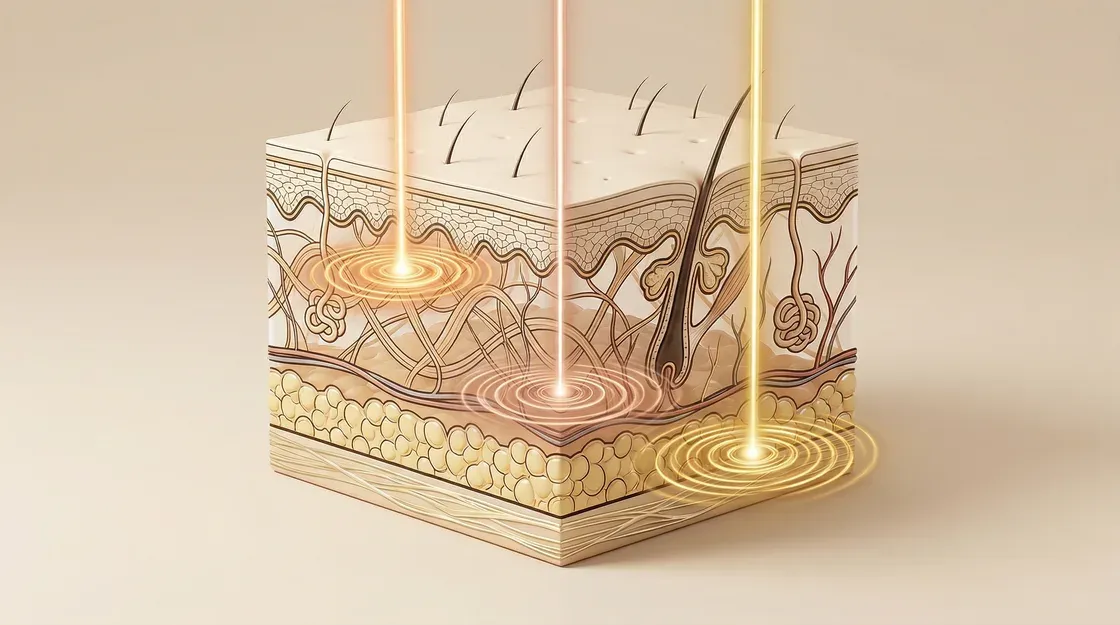
Facial sagging results from collagen and elastin loss, descent of fat pads, and skeletal atrophy working together. Simple tightening of skin surface alone cannot achieve natural improvement. For example, repeating tightening on hollow-appearing sagging from volume loss creates the opposite effect, making faces look more sunken.
At ABLE Dermatology, we identify the exact sagging layer and combine appropriate treatments for each. Multilayered approach using Ulthera HIFU to contract fascia, Density sequential monopolar+bipolar RF to regenerate dermal collagen, and fillers or collagen stimulators to restore lost volume achieves natural yet effective lifting. Post-treatment LDM ultrasound or CryoCell electroporation aids recovery and maintains results longer.
Many clinics treat all patients with one device. But sagging causes differ completely among individuals. Thin vs thick-skinned patients, those with remaining fat vs atrophied fat, shallow vs deep sagging, fast vs slow healers cannot get identical results from identical procedures. ABLE Dermatology precisely diagnoses skin thickness, sagging layer, and recovery timeline first, then designs whether to combine HIFU, RF, and microwave. This 'design process' is crucial for natural, lasting lifting.
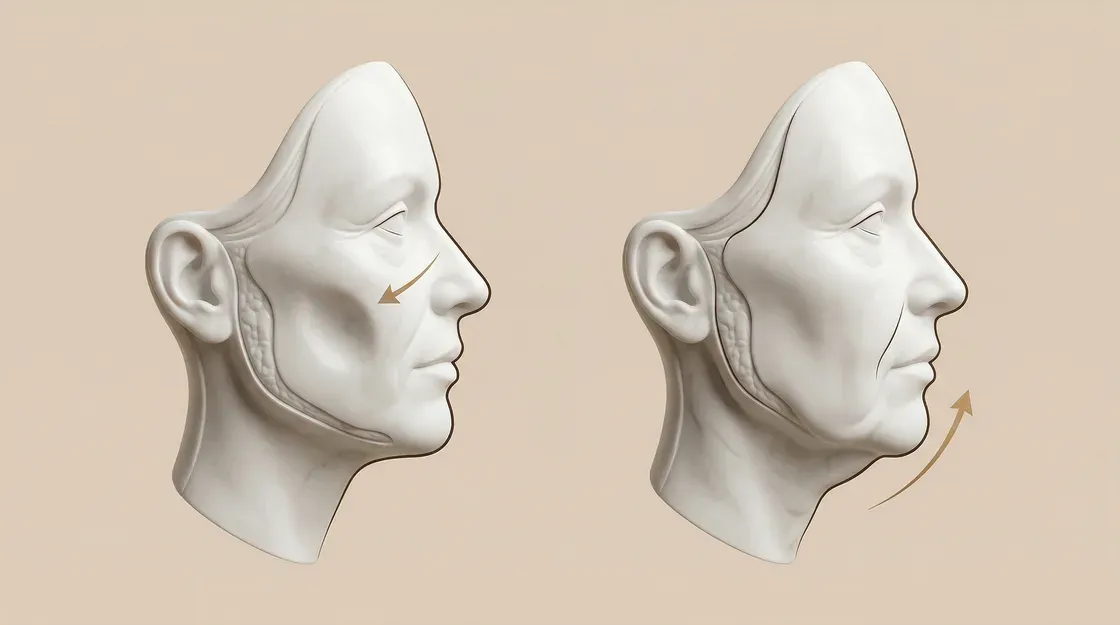
Age-related decline in skin collagen and elastin causes elasticity loss. This is the primary sagging cause.
Over time, skin descends, with cheekbone region and jawline most affected first.
Subcutaneous fat and bone resorption cause volume loss, blurring contours and accelerating overall sagging.
We do not start from the device. Dr. Jeong Kyungmuk, a board-certified dermatologist, first examines skin thickness, the layer where laxity appears, subcutaneous fat volume and your procedure history in person. There is no sales counselor recommending treatments — the physician explains the findings to you directly.
Superficial dermal elasticity, overall dermal remodeling, SMAS and deep support laxity, migration of subcutaneous fat, skeletal change and volume loss — we determine which of these five layers carries the largest share. The same sagging calls for a completely different approach depending on the layer.
Ultherapy HIFU (SMAS, deep dermis), Density sequential RF (full dermal thickness), Onda microwave (subcutaneous fat) and Olewave piezo shockwave (non-thermal, mechanical) each act on a different layer. Sequencing a device that addresses another layer at an appropriate interval is often more natural than raising the intensity of one.
Session count, intervals, maintenance timing and cost are agreed before the first treatment. If skeletal change or volume loss is the main driver, we say so first and adjust the goal toward maintenance, or discuss other approaches alongside.
The same physician performs the procedure. When the doctor who examined you is not the one treating you, the layer and parameters decided in consultation rarely carry over. Here, examination, device selection and treatment are carried out by one person.
Find the treatment that suits you best among various lifting methods
| Treatment | Target layer | How it works | Duration | Recovery | Results Duration |
|---|---|---|---|---|---|
| Ultherapy (HIFU) | SMAS 4.5mm · deep dermis 3.0mm | Focused ultrasound forms thermal coagulation points in the deep support layer | 30-40 min | None | 6-12 months |
| Densité (Sequential RF) | Full dermal thickness | Sequential monopolar + bipolar RF heats the dermis in bulk | 30-45 min | Minimal | 6-12 months |
| Onda (Microwave) | Subcutaneous fat | Coolwaves microwave acts selectively on fat, reducing the weight behind sagging | 20-30 min | Minimal | 6-9 months |
| Olewave (Piezo ESWT) | Non-thermal · mechanical stimulation | Piezoelectric shockwave triggers a tissue response without thermal injury; used alongside energy devices | 20-30 min | Almost none | Varies with the combination |
| Filler Lifting | Volume · support structure | Restores lost volume to rebuild support points | 15-30 min | None | 12-18 months |
Start from the layer, not the device. The same sagging can come from loss of superficial dermal elasticity, SMAS and deep support laxity, the weight of subcutaneous fat, or skeletal change and volume loss, and each calls for a different approach. A board-certified dermatologist examines you in person to identify the layer, and the device is matched to that layer afterwards.
Ultherapy Prime (HIFU at SMAS 4.5mm and deep dermis 3.0mm), Density Classic/Alpha/Eye (sequential monopolar + bipolar RF), Onda (2.45GHz microwave) and Olewave (piezoelectric shockwave). Each acts on a different layer, and they are used alone or in combination according to the examination.
Ultherapy is considered first where deep laxity dominates; Density where superficial dermal elasticity and texture are the larger issue. When both layers contribute, they may be combined at an interval. Skin thickness, pain tolerance and downtime allowance change the parameters, so this is confirmed at consultation.
The examination, layer analysis, device selection and the procedure itself are all carried out by Dr. Jeong Kyungmuk, a board-certified dermatologist. No non-medical counselor recommends treatments or sells packages. When the examining doctor also treats you, the layer and parameters decided in consultation carry over exactly.
Yes. Prices are identical for Korean and international patients, with no foreigner premium and no separate package pricing. All non-covered treatment prices are published on our fee page in accordance with Article 45 of the Medical Service Act. Consultation is available in English, Japanese and Chinese.
No — we do not have them. ABLE Dermatology focuses on energy-based non-invasive lifting (Ultherapy, Density, Onda, Olewave). These work on different principles, so a simple ranking is not meaningful; if another modality suits your condition better, we say so at consultation.
Some discomfort is expected with HIFU treatment such as Ultherapy. We combine topical anesthetic with cooling during the procedure and adjust energy levels in real time according to your response. Most patients find it tolerable.
Lifting accumulates a tissue response, so the number of sessions and the intervals shape the result. The count varies with the degree of sagging, your goal and your downtime allowance, so sessions, intervals and cost are agreed at the first consultation before starting.
It depends on the device and on individual response. We generally guide 6-12 months for Ultherapy and Density and 6-9 months for Onda, and the skin often remains better than before treatment beyond that. Planning maintenance timing in advance keeps the change gradual.
An interval is recommended between injectable treatment and energy devices, because thermal or ultrasound energy can affect the injected material. Tell us what was done and where, and the sequence and interval are adjusted individually.
Starting preventive lifting in your thirties, when the first signs of ageing appear, can give a better long-term result. Stimulating collagen and maintaining elasticity before sagging advances significantly is effective over time.
Sun protection and avoiding heat exposure are the basics during recovery, after which maintenance timing and the order of any combined procedures are planned together. Sagging is a progressive change, so managing it with a long-term plan is more realistic than treating it once.
Be able to plan for today and tomorrow.
We design today's improvement and tomorrow's skin strategy together.
This page constitutes medical advertising in accordance with Article 56 of the Korean Medical Service Act, and treatment results may vary by individual.