Spot Removal — PicoPlus + Accento N Spot
PicoPlus + Accento N concentrated spot
PicoPlus + Accento N concentrated spot
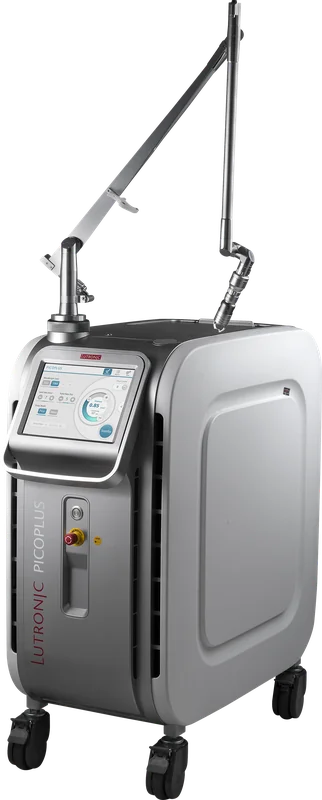
Spot Removal targets stubborn pigmented lesions — large freckles, solar lentigines, age spots — with concentrated high-fluence laser delivery. ABLE Dermatology Songpa uses PicoPlus picosecond laser and Accento N 1064nm spot mode to remove pigment quickly.
Unlike repeated low-fluence toning, Spot uses high-fluence direct-shatter approach. Recovery involves micro-scab formation (5~7 days), but pigment removal is faster.
Toning uses low-fluence repetition with safety focus, no recovery time, gradual tone improvement. Spot uses high-fluence concentrated approach with efficiency focus — micro-scab forms 5~7 days but pigment removed faster. Two are complementary approaches.
PicoPlus picosecond photoacoustic shatters surface-mid pigment. Accento N 1064nm penetrates deeper for dermal pigment. Combining both by pigment depth/density provides more precise treatment than single modality.
Recommended for stubborn dark pigmented lesions unresponsive to repeated toning. Large freckles, solar lentigines, age spots are targets.
Solar lentigines formed by cumulative UV exposure have concentrated surface melanin. Low-fluence toning is inefficient — high-fluence Spot shatters pigment in one session for rapid removal.
Age spots appear on hands·face·neck with strong surface melanin deposition. Concentrated Spot precisely targets — 1~2 sessions for meaningful improvement.
Pigment unresponsive to multiple toning sessions has density or depth beyond general toning range. Combining PicoPlus picosecond photoacoustic with Accento N deep penetration improves efficiency.
Spot balances pigment shattering power and surrounding skin protection. Director Jeong personally designs region- and pigment-specific output and equipment.
We evaluate pigment lesion pattern (flat·raised), depth, distribution, UV exposure history. Herpes history, isotretinoin use, pregnancy/breastfeeding status are checked.
PicoPlus and Accento N selected by pigment depth·density. Output adjusted based on patient skin response, with precise protection of boundary with normal skin.
Scab management, UV protection, home care guides provided in detail. Result evaluated 4~6 weeks later to decide additional session need. PIH monitoring critical.
Picosecond pulse uses photoacoustic energy to shatter pigment into micro-particles. Less thermal damage to surrounding tissue with excellent protection-efficiency balance.
1064nm wavelength penetrates deeper for dermal pigment. Selectively targets stubborn lesions, with output fine-tuned to patient skin response.
Combine PicoPlus and Accento N by pigment depth·density·distribution. More precise treatment than single modality with improved results.
Toning is low-fluence repetition for safety-focused approach; Spot is high-fluence concentrated for efficiency-focused approach. Stubborn pigment needs Spot; overall tone management needs Toning.
Properly performed picosecond Spot is unlikely to scar. However, picking scab or skipping UV protection can cause PIH.
1~2 sessions suffice for most; stubborn cases up to 3 sessions at 4~6 week intervals.
Picking increases scar/PIH risk. Let it shed naturally over 5~7 days.
Avoid soap on scab area until shedding; gentle cleansing. Makeup possible after scab heals.
Daily life possible, but strict UV protection. Scabs are small enough to cover with makeup in many areas.
Be able to choose, not be pushed.
This content is general medical information. Treatment effects and side effects vary by individual. Please consult in person.