Olewave Shockwave Lifting in Seoul
PZ Array Piezoelectric Shockwave — Adhesion Loosening & Collagen Remodeling
PZ Array Piezoelectric Shockwave — Adhesion Loosening & Collagen Remodeling
Olewave is a shockwave treatment for people whose lifting results were limited by tethered tissue, or who prefer to avoid heat-based treatments. There is almost no downtime. Published lifting fee range: KRW 200,000–3,000,000 per session.
ABLE Dermatology (에이블피부과) · 140 Jungdae-ro, Songpa-gu, Seoul, 4-5F · right in front of Police Hospital Station (Line 3) Exit 4 — turn left from the exit · from Jamsil: Line 8 to Garak Market, then Line 3 for one stop
Medically reviewed by Dr. Jeong Kyungmuk, board-certified dermatologist · Last updated
As we age, tissues beneath the skin develop adhesions and blood flow diminishes, which can limit how well laser treatments work. Extracorporeal Shockwave Therapy (ESWT) was first used to break up kidney stones and later in orthopedics for conditions such as calcific tendinitis and plantar fasciitis, but its mechanical energy has gained attention in dermatology for its potential to help loosen adhesions and promote collagen remodeling.
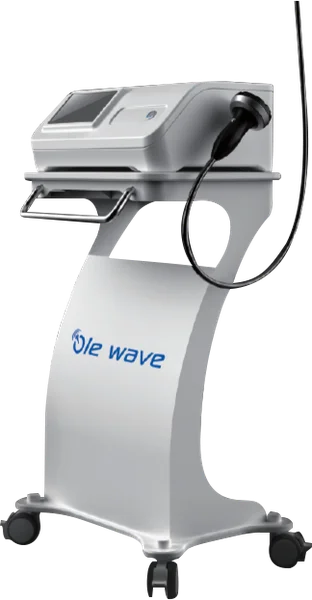
Olewave is a PZ Array (piezoelectric array) shockwave device that delivers precise mechanical stimulation to a narrow focal zone. Because it uses mechanical energy rather than thermal energy, it works through a different mechanism from HIFU or radiofrequency treatments. At ABLE Dermatology, Olewave is used within combination lifting protocols alongside Ultherapy PRIME, Density and Onda.
The core mechanism of shockwave therapy is mechanotransduction — the process by which cells convert mechanical stimulation into biological responses. As shockwave energy passes through tissue, it applies microscopic mechanical stress to cells. In response, cells release growth factors and activate collagen synthesis pathways.
Shockwave therapy can help physically loosen adhesions that form in deep tissue layers, restoring tissue mobility and improving blood flow. The PZ Array configuration of Olewave delivers energy precisely to a narrow focal zone.
Ultherapy (HIFU) uses ultrasound thermal energy to contract collagen at the SMAS layer, while radiofrequency (RF) lifting uses electrical thermal energy to stimulate the dermal layer. Olewave, by contrast, works through mechanical shockwave energy rather than heat, so its mechanism differs from heat-based treatments. At ABLE Dermatology, we plan combination protocols that use each treatment for the part it suits.
Mechanical shockwave energy helps loosen adhesions formed in deep tissue layers, restoring tissue mobility and improving blood circulation.
Mechanical stimulation triggers collagen synthesis, helping improve skin elasticity and texture over time.
When applied before or after Ultherapy PRIME (HIFU) or Density (RF), Olewave supports tissue responsiveness within a combined protocol.
Our board-certified dermatologist evaluates your degree of sagging, adhesion status, and treatment history. Based on this assessment, we determine whether Olewave alone or a combination protocol with HIFU or RF is most appropriate. Dr. Jeong consults and treats in English himself.
The PZ Array handpiece is placed against the skin, and shockwave energy is delivered to target areas. Treatment takes 15 to 30 minutes depending on the area, and no anesthesia is required.
Mild redness may appear immediately after treatment but typically resolves within a few hours. There is no particular recovery period, and you can resume daily activities right away.
| Treatment | Suited to | Sessions / interval | Recovery |
|---|---|---|---|
| Olewave | Tethered tissue, or prefer to avoid heat | Decided at consultation | Almost none |
| Ultherapy PRIME | Sagging jawline and neck | Usually 1 session (repeat after 6–12 months) | Swelling about 2 weeks |
| Density | Loose skin, loss of firmness | 1 session, once every 6–12 months to maintain | Daily life right after |
| Onda | Fat and sagging along the face and jawline | 3 sessions 2–4 weeks apart (3–6) | Daily life right after |
Sessions, intervals and recovery vary with your skin and are decided at your consultation.
Olewave is a PZ Array (piezoelectric array) extracorporeal shockwave therapy (ESWT) device. It delivers precise mechanical energy to a narrow focal zone, helping loosen deep tissue adhesions and stimulating collagen remodeling. It is a non-invasive procedure performed without surgery or injections.
You may feel a tapping sensation characteristic of shockwave therapy, but it is generally tolerable without anesthesia. Energy intensity is adjusted by treatment area, so the procedure can be tailored for your comfort.
As a non-invasive procedure, there is no particular recovery period. Mild redness may appear immediately after treatment but typically resolves within a few hours. You can resume daily activities right away.
Ultherapy uses HIFU (high-intensity focused ultrasound) to deliver thermal energy to the SMAS layer, inducing collagen contraction. Olewave uses extracorporeal shockwave therapy (ESWT) to deliver mechanical stimulation that helps loosen adhesions and promotes collagen remodeling. Because the mechanisms differ, combining both treatments can produce synergistic results.
Be able to choose, not be pushed.
This page contains medical advertising in compliance with Article 56 of the Korean Medical Service Act. Individual results may vary.