PicoPlus Laser Pigmentation Treatment in Seoul
Picosecond laser for melasma, spots, and tattoo removal
PicoPlus is a picosecond laser for melasma, freckles and other pigmentation. It is repeated every 1–2 weeks (the interval can be extended as your skin progresses; shallow spots may need only 1–2 sessions), and light flaking may last 3–5 days. Published laser fee range: KRW 50,000–500,000 per session.
ABLE Dermatology (에이블피부과) · 140 Jungdae-ro, Songpa-gu, Seoul, 4-5F · right in front of Police Hospital Station (Line 3) Exit 4 — turn left from the exit · from Jamsil: Line 8 to Garak Market, then Line 3 for one stop
Medically reviewed by Dr. Jeong Kyungmuk, board-certified dermatologist · Last updated
ABLE Dermatology's PicoPlus laser uses picosecond pulses, much shorter than those of traditional nanosecond toning. This breaks melanin into finer particles, and PicoPlus is used for a range of pigmentation, from superficial spots to deeper melasma.
A key feature of PicoPlus is that it targets pigment while limiting damage to the surrounding skin. Because each pulse is extremely brief (one trillionth of a second), melanin is broken up selectively with relatively little damage to surrounding tissue. This means a short recovery time and a relatively low risk of side effects such as post-inflammatory hyperpigmentation and redness.
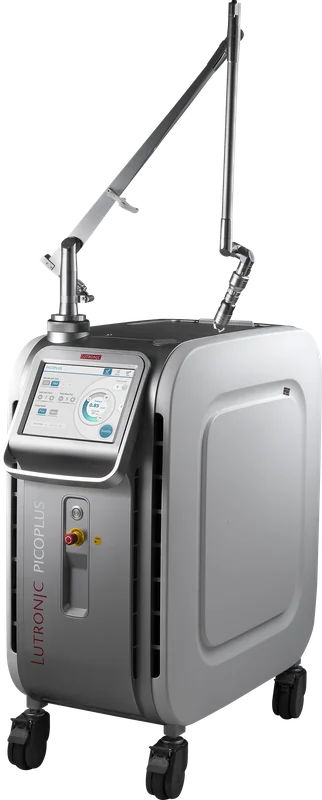
PicoPlus operates with picosecond-duration ultra-short pulses (one trillionth of a second). These ultra-brief pulses generate 'pressure waves' in melanin particles, physically shattering pigment through non-thermal mechanisms. This effect is called the 'photoacoustic effect'.
This is how it differs from traditional nanosecond toning. Nanosecond toning breaks down melanin mainly through thermal energy (a photothermal effect), while PicoPlus breaks it up selectively through a photoacoustic effect and can also be used for deeper pigmentation. Which suits you depends on the type and depth of the pigment.
Multiple lasers treat melasma. Q-Switch Nd:YAG nanosecond toning applies a Q-switched laser at low energy over multiple passes and works mainly through a photothermal effect, with a risk of adverse effects. PicoPlus delivers even shorter pulses that break pigment into finer particles, with a lower risk of side effects. Superficial pigmentation such as freckles and age spots may improve in 1-2 sessions, although this varies from person to person.
Note: Deep melasma sometimes requires combination therapy. PicoPlus breaks down melanin, but some melasma involves dermal pigmentation that does not respond to laser alone. ABLE Dermatology evaluates pigmentation depth and location to recommend a single treatment or a combination that suits you. We may suggest pairing PicoPlus with topical depigmenting agents or complementary modalities.
Deep facial pigmentation from UV exposure and hormonal factors improves rapidly through selective melanin breakdown.
Superficial pigmentation may need fewer sessions, as the photoacoustic effect breaks the pigment up.
Picosecond pulses break tattoo ink into small particles.
We assess pigmentation depth, distribution, and etiology. Our board-certified dermatologist determines epidermal vs. dermal involvement and customizes PicoPlus parameters accordingly.
We systematically deliver picosecond pulses to pigmented areas with wavelength and intensity customized per patient. Multiple wavelengths address different melanin depths. Treatment duration typically ranges 15-30 minutes.
Minimal redness and possible light flaking require only basic skincare. We provide sun protection guidance and information about sequential treatment scheduling. Most patients resume normal activities immediately.
Rapid and comfortable pigmentation laser treatment
The face is thoroughly cleansed. Eye protection is applied. A thin cooling layer protects skin during treatment delivery.
Picosecond laser pulses systematically address pigmented areas with customized wavelength and energy. The photoacoustic effect physically shatters melanin. Treatment duration typically lasts 15-30 minutes depending on treatment area size and pigmentation severity.
Soothing cream is applied. We provide comprehensive sun protection and aftercare instructions. Most patients experience only minimal redness lasting hours to days.
Severe melasma with deep dermal involvement often requires more than laser treatment alone. PicoPlus targets epidermal pigment, but dermal melasma sometimes responds only partly to laser alone. Gradual improvement usually requires combining laser with topical depigmenting agents (hydroquinone, tretinoin, kojic acid) and strict UV protection.
ABLE Dermatology evaluates melasma depth through clinical examination and sometimes dermoscopy. We recommend combination protocols: PicoPlus sessions paired with prescription skincare and meticulous sun avoidance. Patience and adherence to the complete protocol are essential—melasma improvement progresses gradually across multiple months.
| Treatment | Suited to | Sessions / interval | Recovery |
|---|---|---|---|
| PicoPlus | Melasma, spots, pigmentation | Every 1–2 weeks, extended as needed (shallow spots: 1–2) | Flaking 3–5 days |
| Toning | Melasma, spots, acne marks | 5–10 sessions, 1–2 weeks apart (extended as needed) | None (makeup right away) |
| Spot Removal | Larger spots, lentigines, age spots | 1–3 sessions, 4–6 weeks apart | Small crusts 5–7 days |
Sessions, intervals and recovery vary with your skin and are decided at your consultation.
PicoPlus is an FDA-cleared device; its cleared indications are tattoo removal and benign pigmented lesions. It breaks up melanin through photoacoustic effects with relatively little damage to surrounding tissue, but post-inflammatory hyperpigmentation can still occur. For darker skin types, we conservatively adjust energy to minimize any hyperpigmentation risk.
Treatment depends on pigmentation depth and area. Superficial spots may clear in 1-2 sessions, moderate melasma typically requires 3-5 sessions, and deep melasma may need 5-10+ sessions. Sessions are spaced 1-2 weeks apart without anesthesia, and the interval can be extended as your skin progresses.
PicoPlus causes minimal skin damage, requiring virtually no recovery time. Slight redness and possible light flaking may persist 1-2 days. Daily activities and makeup are immediately permitted post-treatment.
PicoPlus pulses are in the picosecond range, much shorter than those of nanosecond laser toning. This breaks melanin into finer particles and lowers the risk of adverse effects such as post-inflammatory hyperpigmentation, erythema and irritation.
Be able to choose, not be pushed.
This page is for informational purposes only. Individual results may vary. Please consult with our dermatologist for personalized treatment recommendations.