Sculptra (PLLA Collagen Stimulator) in Seoul
PLLA Collagen Stimulator
PLLA Collagen Stimulator
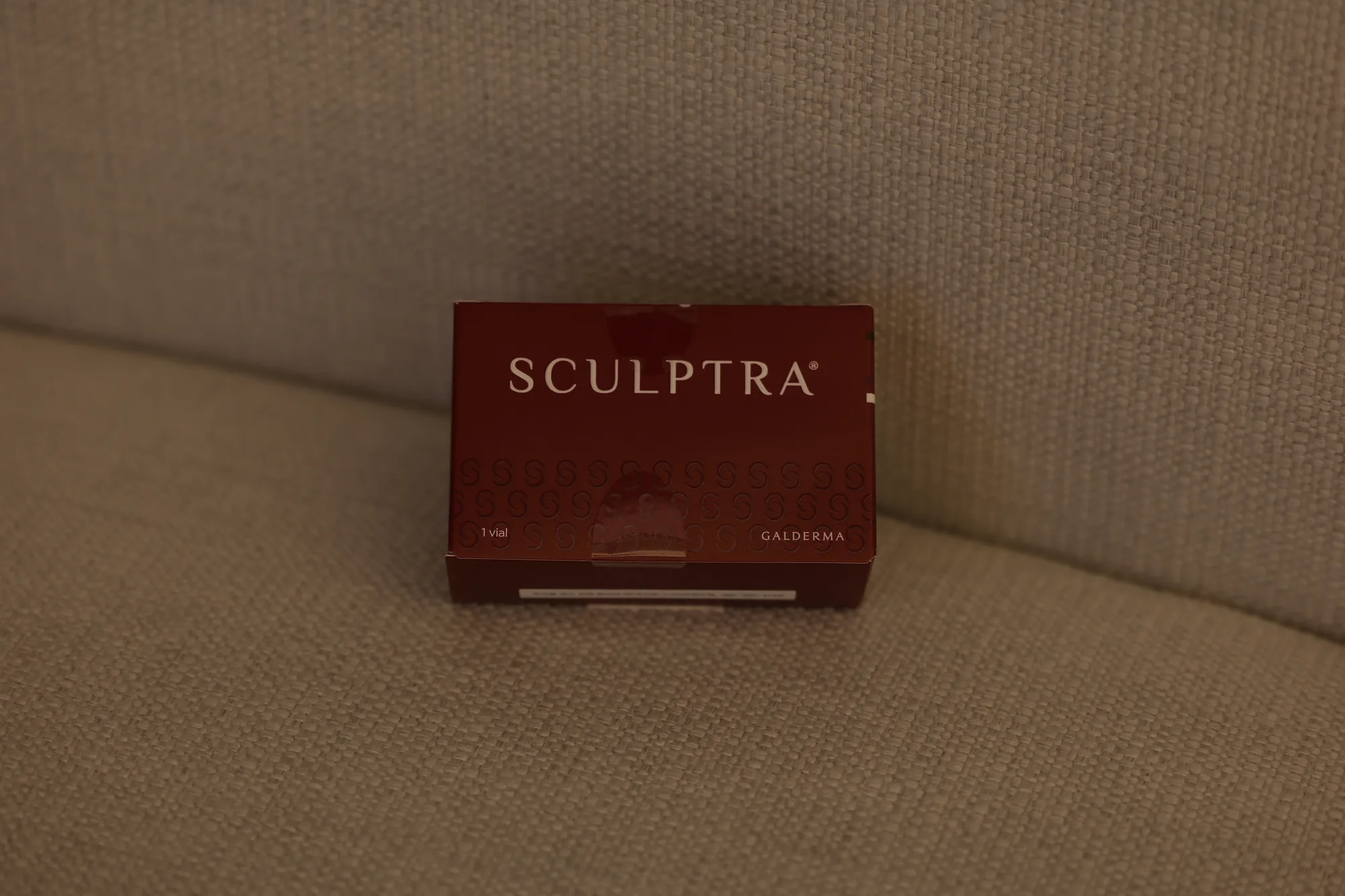
Sculptra is Galderma’s PLLA (poly-L-lactic acid) collagen stimulator, and at ABLE Dermatology Dr. Jeong Kyungmuk, a board-certified dermatologist, consults and performs it himself, in English. The base plan is three sessions six weeks apart, then maintenance in six-month blocks, with change building gradually over 1–3 months. Fees are published as a range in our Treatment Price Guide.
ABLE Dermatology (에이블피부과) · 140 Jungdae-ro, Songpa-gu, Seoul, 4-5F · right in front of Police Hospital Station (Line 3) Exit 4 — turn left from the exit · from Jamsil: Line 8 to Garak Market, then Line 3 for one stop
Medically reviewed by Dr. Jeong Kyungmuk, board-certified dermatologist · Last updated
Sculptra is a collagen stimulator in which the synthetic, biodegradable polymer PLLA (poly-L-lactic acid) is injected so that your own collagen forms as the body processes the particles. The injected material does not create the volume itself — the collagen your tissue builds afterwards creates the result — so your own collagen fills hollow areas gradually over time.
PLLA particles stimulate macrophages and recruit foreign-body giant cells, inducing fibrosis and collagen production in the process. Strong collagen production comes with nodule risk in the same structure, so results vary widely with the dilution, the layer injected, the injection pattern and aftercare.
At ABLE Dermatology in Songpa, Seoul, Dr. Jeong Kyungmuk looks at skin thickness, volume loss and elasticity together, then decides personally whether Sculptra suits you and where, and how, it should go.
Filler is crosslinked hyaluronic acid that fills volume directly — a filling approach. You get volume immediately, where it is placed and in proportion to how much goes in, and if needed hyaluronidase can dissolve it and reverse the change. A collagen stimulator such as Sculptra, by contrast, creates volume through the collagen that forms afterwards rather than through the material itself, and fibrosis once formed is hard to undo. The two point in opposite directions on immediacy and reversibility.
In clinic, before naming a product, we separate whether the change you need is volume and structure, the quality of the skin itself, or tissue laxity.
We first separate volume loss from a decline in the quality of the skin itself. We assess skin thickness, areas of volume loss, elasticity and previous procedures, and check pregnancy and breastfeeding, autoimmune disease, active skin infection, recent isotretinoin use and any history of allergy to the ingredients.
The treatment is split across sessions not because it cannot all go in at once, but because it is safer not to put it in at once. What has been injected is hard to take out, while a response that falls short can be added to at the next session, so we generally plan slightly under, check the response, and then decide whether to add.
Dr. Jeong sets the dilution, the layer injected and the injection pattern for each area and injects it himself, because this is where results vary most.
Inject into the same site before the response finishes and material layers on material, and uneven accumulation can lead to nodules. So the interval is set by the time the tissue needs to complete its response: six weeks. When skin boosters are planned in the same period, we separate them by depth or by timing rather than concentrating them in one area.
| Item | Our standard |
|---|---|
| Sessions & interval | 3 sessions, 6 weeks apart |
| Maintenance | Then maintenance in six-month blocks |
| When change appears | Gradually over 1–3 months as your own collagen forms — usually visible from around 4–12 weeks onward, adding up as sessions repeat |
| When to judge | A few weeks after the course is finished |
| Recovery | Bruising and a lumpy feeling for about 5–7 days |
Feeling that little has changed a month in may well be the scheduled stretch, and individual responses vary. Stopping short of the session count finishes with a smaller degree of change, and when to pick up the remaining sessions can be decided again after looking at your condition. Sessions, intervals and recovery depend on your skin and are set at your consultation.
The reported nodule rate for PLLA is high among collagen stimulators. That said, results vary widely with dilution, the layer injected, the injection pattern and post-treatment massage. So at ABLE Dermatology we split the treatment across sessions, plan slightly under, and leave six weeks between sessions for the tissue to complete its response.
A palpable lump or an uneven texture can remain, and depending on where it sits the discomfort can be greater. The options include steroid injection, a small incision where needed, radiofrequency-based treatment and long-term observation, and it does not always resolve easily. That is why we explain this possibility before starting and proceed after your consent.
Bruising and a lumpy feeling can last about 5–7 days, and nodules and firmness are possible — the degree varies with the treatment plan, and individual responses vary. Collagen stimulators hold longer but are hard to reverse, so at your consultation “how much better this can look” and “how we undo it if it goes wrong” carry the same weight.
| Product | Ingredient | Suited to | Sessions · interval |
|---|---|---|---|
| Sculptra | PLLA | Gradual volume and elasticity | 6 weeks · 3 sessions (then maintenance every 6 months) |
| Juvelook Volume | PDLLA + hyaluronic acid | Volume and elasticity over larger areas such as the lateral cheeks, front cheeks and nasolabial folds | 6 weeks · 3 sessions |
| Radiesse | CaHA | Immediate volume plus collagen stimulation | Sessions decided at your consultation |
| GOURI | Liquid PCL | Natural elasticity across the whole face | 3–6 months · 1–3 sessions |
Each product differs in ingredient, mechanism and interval. A comparison that also covers Ultracol200 is on our collagen stimulator page.
Filler is crosslinked hyaluronic acid that fills volume directly, so volume appears immediately where it is placed, and if needed hyaluronidase can dissolve it and reverse the change. With Sculptra, the collagen that forms afterwards creates the volume rather than the material itself, and fibrosis once formed is hard to undo. The two point in opposite directions on immediacy and reversibility.
At ABLE Dermatology we use three sessions at six-week intervals as the base, then set maintenance in six-month blocks. Injecting into the same site before the response finishes layers material on material, which can lead to nodules, so the interval gives the tissue time to complete its response. Sessions and intervals are set at your consultation according to your skin.
Change builds gradually over 1–3 months as your own collagen forms. It usually becomes visible from around 4–12 weeks onward and adds up as sessions repeat, so feeling that little has changed a month in may well be the scheduled stretch. Individual responses vary.
A palpable lump or an uneven texture can remain, and depending on where it sits the discomfort can be greater. The options include steroid injection, a small incision where needed, radiofrequency-based treatment and long-term observation, and it does not always resolve easily. That is why we explain this possibility before starting and proceed after your consent.
It is less that there is no effect and more that you stop short of the planned total. Sculptra builds the response across several sessions, so falling short of the session count finishes with a smaller degree of change. When to pick up the remaining sessions can be decided again after looking at your condition.
Both are collagen stimulators, but their ingredients and characteristics differ. Sculptra (PLLA) stimulates your own collagen and is given over several sessions, and because nodules can form, the technique is chosen carefully. Juvelook Volume (PDLLA) is more amorphous than PLLA, so it degrades more uniformly and more quickly. How long results last varies by product and by person.
Sculptra works mainly via foreign-body and inflammation-mediated neocollagenesis, while Radiesse’s main mechanism is physical stimulus (mechanotransduction). Sculptra is injected sub-SMAS or supraperiosteally for structural volume; Radiesse is injected into the deep dermis and subcutis for combined immediate volume and dermal texture. Which product suits you is decided after examination.
They are often planned together, because they work on different layers toward different goals and do not replace each other. That said, rather than concentrating everything into one area on the same day, separating them by depth or spacing them out in time usually serves both recovery and the result. The order and the interval are set together at your consultation.
Bruising and a lumpy feeling can last about 5–7 days. Avoid strong rubbing or pressure for 24 hours, and avoid saunas, hot baths, strenuous exercise, alcohol and irritating ingredients such as retinol and high-strength AHAs for 1 week. If bruising, swelling or warmth is present, it is better to be more cautious.
It depends on the area and the number of sessions. Fees are published as a range under “Filler · Collagen Stimulator · Contour Injection” in our Treatment Price Guide, and the exact fee is set after your consultation together with your treatment plan.
Be able to choose, not be pushed.
For each paper, the note lists only what it supports among the statements on this page. Studies that used the same principle with a device other than ours are marked in the note. Study results come from the people studied; results differ from person to person.
This content is general medical information. Treatment effects and side effects vary by individual. Please consult in person.