


The Correct Treatment Sequence Starts With Correct Diagnosis
The order in which you receive treatments matters far more than most people realize. Starting with the wrong treatment can actually waste time and money, or worse, temporarily worsen the appearance before improvement occurs. This guide will help you understand your sagging type and the optimal treatment sequence specifically designed for that type.
The golden rule is this: you must address the primary problem first. If volume loss is your main issue, start with volume restoration. If skin elasticity loss is primary, start with lifting. Getting this backwards can derail your entire treatment plan.
The Hollow Face: How to Recognize Volume Loss Sagging

Ask yourself: when you look in the mirror, does your face look "thin" or "deflated"? Volume loss sagging typically appears as the following signs:
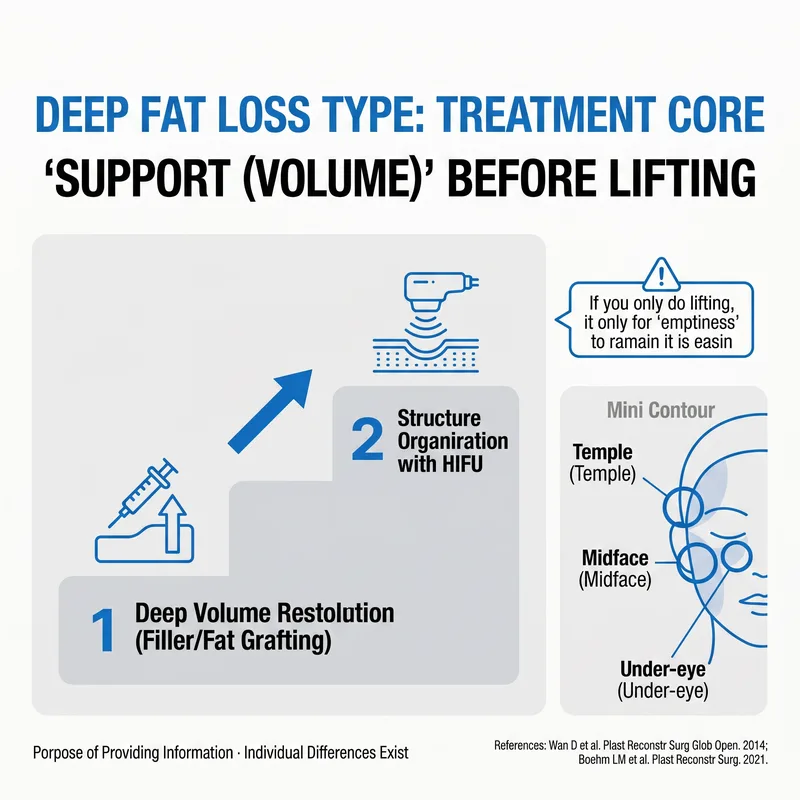
Your cheeks appear sunken—the area under your cheekbones looks empty and shadowed. Your temple area is visibly indented. The area under your eyes is hollow and tired-looking, emphasizing the dark circles. Your cheekbones appear more prominent than before, but not in an attractive way—they look skeletal rather than defined. The nasolabial folds (smile lines) are deep not because of skin sagging but because the fat beneath has disappeared, creating a shadow effect.
The Correct Sequence for Volume Loss Sagging: Begin with volume restoration using filler or collagen stimulator. After the volume has been restored, you can add light lifting treatments if needed. The reason is logical: if you lift without first filling the hollows, you're just pulling thin skin tighter, making the problem worse.
The Slack Face: How to Recognize Skin Laxity Sagging
In contrast, does your face look like "skin is hanging"? Skin laxity sagging produces different signs:
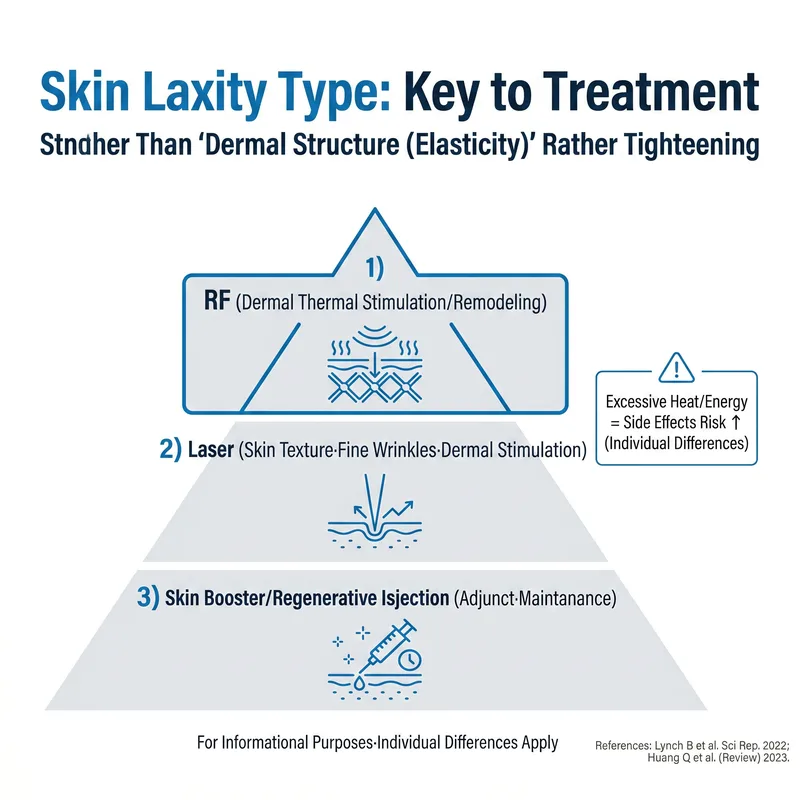
A double chin has developed under your jaw even though you haven't gained weight—the skin itself is sagging and drooping. Your jawline has become blurred and indistinct; it's no longer sharp or defined. Your cheeks seem to have slipped downward, and the lower face appears heavy and loose. Marionette lines run from the corners of your mouth down to below your chin, making your face look droopy. When you pinch your cheek and let go, the skin doesn't immediately snap back to its original position.
The Correct Sequence for Skin Laxity Sagging: Start with lifting treatments (Ultherapy, radiofrequency, or similar). These restore elasticity and lift the descended structures back to their proper positions. Only after lifting has been established should you consider adding carefully placed volume if needed. Adding volume before lifting simply adds weight to already-loose skin.
The Mixed Face: When You Have Both
Most people have a combination, which requires a more nuanced approach. The key question becomes: which problem is more prominent?
If your face appears both hollow AND loose, look for these clues: Are your cheeks sunken but also drooping downward? Do your temples appear indented, and is your jawline blurred? Is your under-eye area both hollow and saggy? If you have 60% volume loss and 40% skin laxity, you should begin primarily with volume restoration, then add lifting. If you have 40% volume loss and 60% skin laxity, begin primarily with lifting, then add strategic volume.
The proportion determines the sequence. This is why professional evaluation matters—a dermatologist can identify which component dominates and design a treatment sequence specific to your situation.
Why Treatment Order Matters
Imagine trying to tighten a pair of pants that have also faded. Should you dye them first, then tailor them? Or tailor first, then dye? While both approaches might eventually work, the order affects efficiency and results quality.
Similarly, treating in the wrong order means wasting money on treatments that can't deliver good outcomes given the current state of your skin. Starting with the correct treatment positions each subsequent treatment to work better because the foundation has been properly established.
Beyond Treatment Sequence: Timing Between Sessions
Don't rush the process. Your skin needs time to respond between treatments. Generally, allow 4-6 weeks between sessions for proper healing and collagen remodeling. Cramming multiple treatments into short intervals often reduces overall efficacy and increases risk of irritation.
For volume restoration, you may see immediate results from filler, but collagen stimulators require 8-12 weeks to show full benefit. For lifting treatments, the microtrauma stimulates collagen production over weeks. Each treatment in a proper sequence should build on the previous one's foundation.
The Self-Diagnosis Checklist
Before your consultation, use this simple checklist: First, observe your face directly. Does it look mainly "hollow/thin" or mainly "droopy/loose"? Second, perform the skin elasticity test: gently pinch your cheek and release. Does the skin snap back immediately (normal elasticity) or slowly return (reduced elasticity)? Third, look at specific areas: under eyes (hollow=volume loss, saggy=laxity), jawline (blurred=laxity, normal but sunken=volume loss), temples (indented=volume loss, loose=laxity). Fourth, assess your history: have you always had fuller cheeks (now volume loss) or fuller-than-now skin elasticity (now laxity)?
These observations give you and your dermatologist a head start in determining your optimal treatment sequence.
Frequently Asked Questions
- How can I self-diagnose facial sagging at home?
- Look in a mirror tilted 45 degrees downward to assess cheek and jawline drooping. Gently lift the skin in front of your ear upward to gauge laxity. However, an accurate diagnosis requires professional evaluation.
- What is the correct order for lifting treatments?
- Start with deep-layer tightening (Ulthera Prime, Density) to build a foundation, then add a collagen booster to reinforce dermal density, and finally restore volume where it has been lost. The order and number of sessions are set after assessment.
Ready to start the right lifting treatment?
Sagging & Lifting Treatment Details Schedule Your Consultation