

Why Redness Worsens in Winter
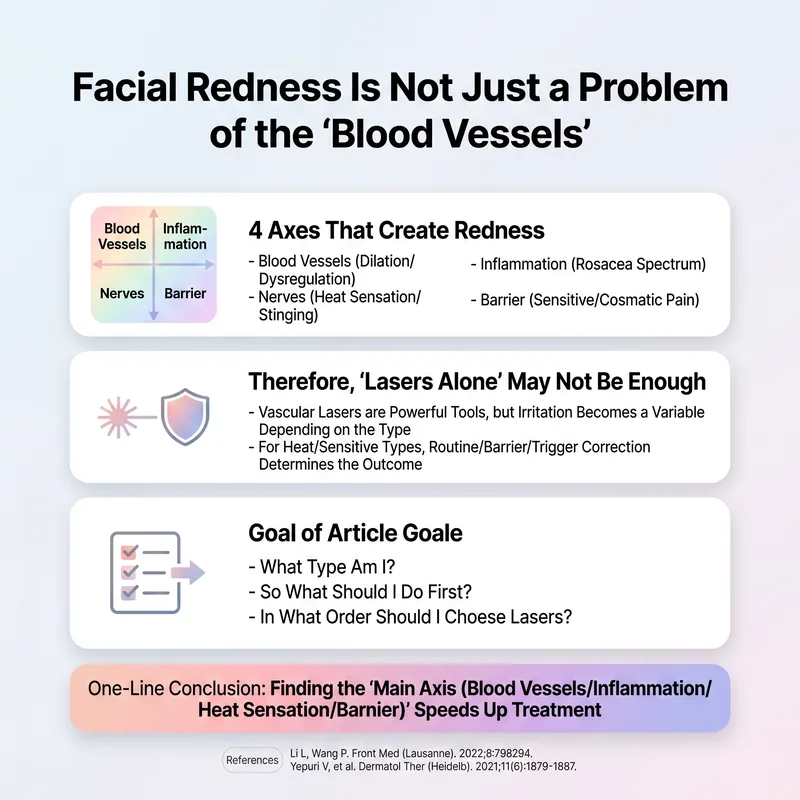
Winter cold, dryness, and intense heating worsen rosacea and facial redness. Patients frequently ask: "Which laser is best? I heard V-Beam is superior—must I choose V-Beam?" Behind these questions lies an assumption that a "right answer" exists. But the reality is different. Redness presentations vary widely, so optimal treatment varies individually.
Correct laser selection starts with identifying your redness type. Diffuse facial redness (uniform flush across the face) and localized vascular enlargement (prominent vessels in specific areas) require different approaches.
Diffuse Redness vs Localized Vascular Enlargement
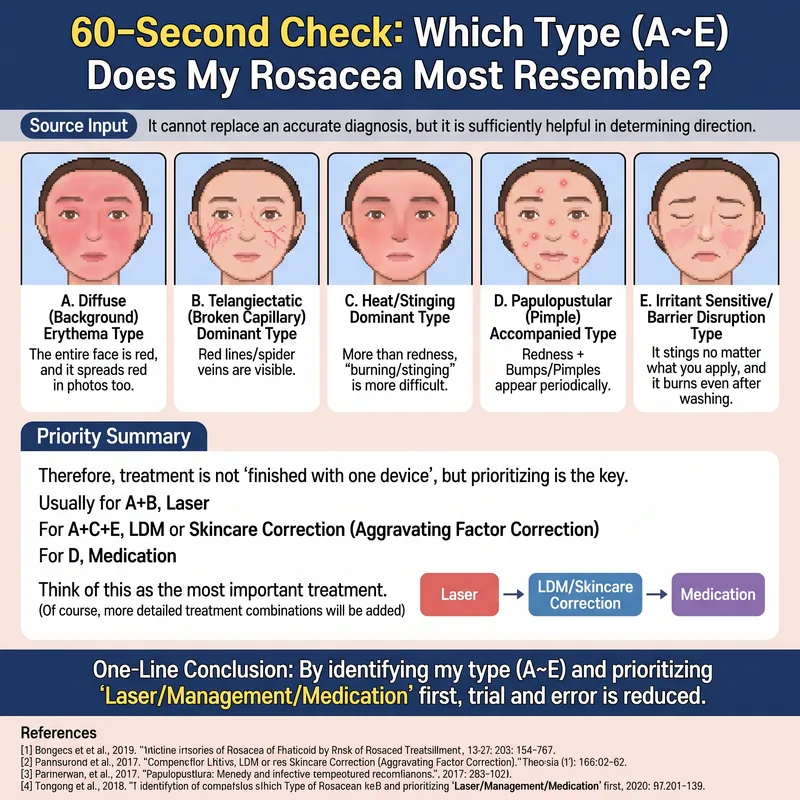
Diffuse redness blankets the entire face uniformly. It reflects widespread, persistent microvascular dilation—hallmark of rosacea and facial erythema. Localized vascular enlargement shows prominent thick vessels in specific spots: around the nose, one cheek side, or jaw.
Treatment selection differs entirely. Diffuse redness typically benefits from longer-wavelength lasers (V-Beam's 595nm PDL or 1064nm Nd:YAG), which penetrate deeper and eliminate numerous microvasculature. Localized enlargement may work with shorter wavelengths (532nm KTP or IPL), depending on vessel depth.
Major Vascular Laser Characteristics and Selection
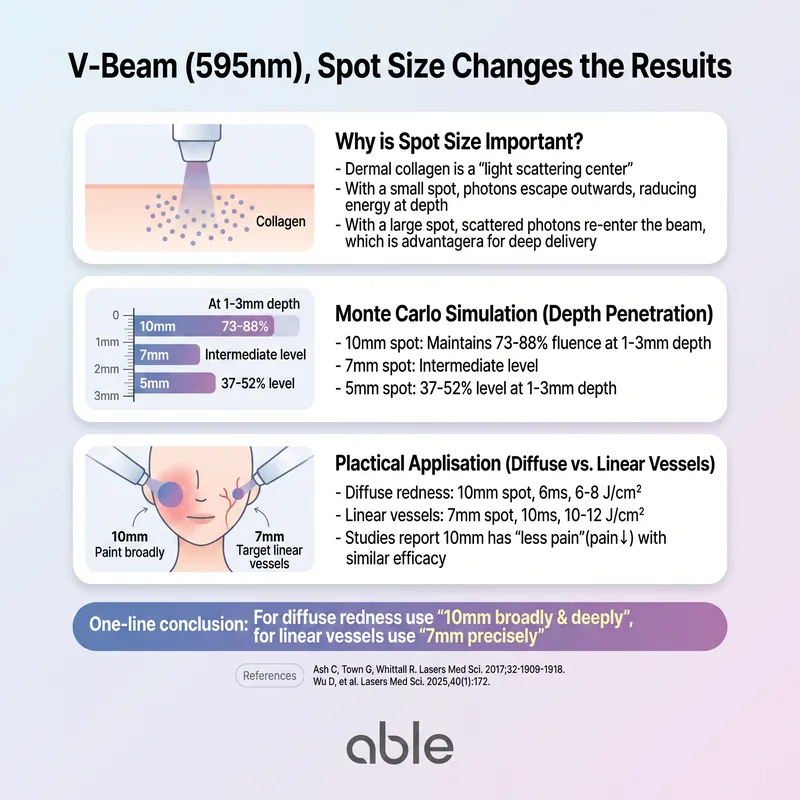
V-Beam (595nm PDL) ranks first for diffuse redness. This wavelength absorbs well into hemoglobin while achieving appropriate penetration depth, effectively removing extensive microvasculature across broad areas. Pain and irritation are moderate, with relatively brief downtime.
ExcelV and GV (532nm KTP) penetrate shallowly, working well for superficial vessels but underperforming on deep microvasculature typical of diffuse redness. 1064nm Nd:YAG penetrates deepest, ideal for thick deep vessels but less efficient on superficial microvasculature.
IPL uses broad wavelength spectrum, addressing various vessel sizes, but causes relatively more irritation, pain, and hyperpigmentation risk. Selection requires careful judgment.
Redness Type-Specific Recommendations
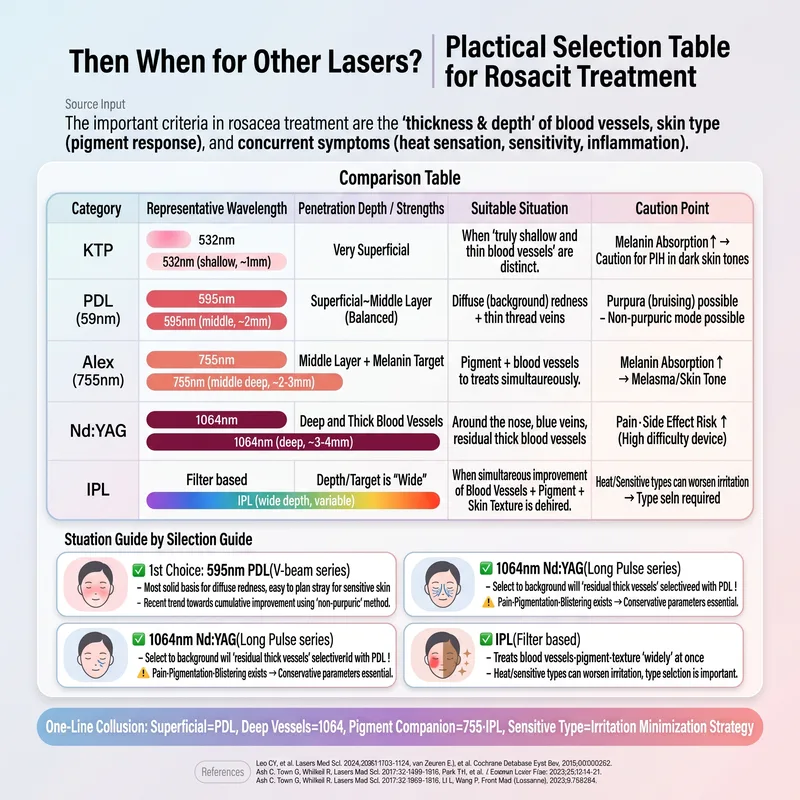
Entire-face diffuse redness: V-Beam (595nm PDL) ranks first. It effectively removes extensive microvasculature across broad areas and is relatively safe.
Prominent thick vessels in specific areas: 1064nm Nd:YAG works well. It selectively eliminates deep-situated thick vessels.
Mixed type (diffuse plus localized): Combination therapy applies. Start with V-Beam for overall microvasculature removal, then add Nd:YAG for remaining prominent thick vessels.
Very sensitive skin with redness: Consider layered low-energy or non-laser approaches like LDM (dual-frequency ultrasound) first to minimize surface damage.
Laser Treatment Aftercare
Post-laser care extends results. Sunscreen is essential; avoid irritating skincare. Regular maintenance sessions (typically 6-12 months apart) are realistic—complete vascular re-expansion prevention is impossible, so periodic reinforcement is practical.
Most critical is managing redness's underlying cause: barrier damage and inflammation. Correct skincare, irritant avoidance, and stress management let laser results last longer.
The Importance of Personalized Laser Selection
"V-Beam is best" oversimplifies. Matching your redness type and skin condition to the right laser matters. Dermatologist assessment tailoring wavelength, energy, and technique delivers safer, more effective results.
Frequently Asked Questions
- Is V-Beam the best treatment for diffuse redness?
- V-Beam excels at treating focal vascular lesions but has limitations for widespread diffuse redness. Diffuse redness requires combining vascular treatment with barrier repair and anti-inflammatory therapy.
- What's the difference between diffuse redness and focal telangiectasia?
- Focal telangiectasia presents as visible individual vessels around the nose and cheeks, while diffuse redness is overall facial flushing. Focal types respond well to laser alone, but diffuse redness needs combination therapy.
Want to learn more about redness and vascular laser treatment?
Redness & Rosacea Treatment Details Book Consultation