

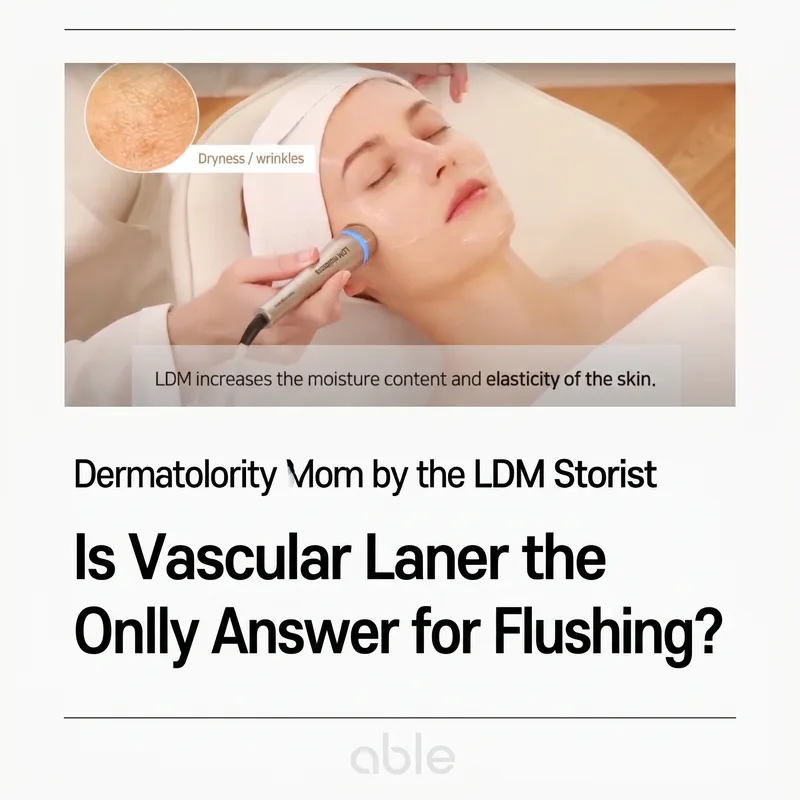
Facial Redness Is More Than Just Vascular Dilation
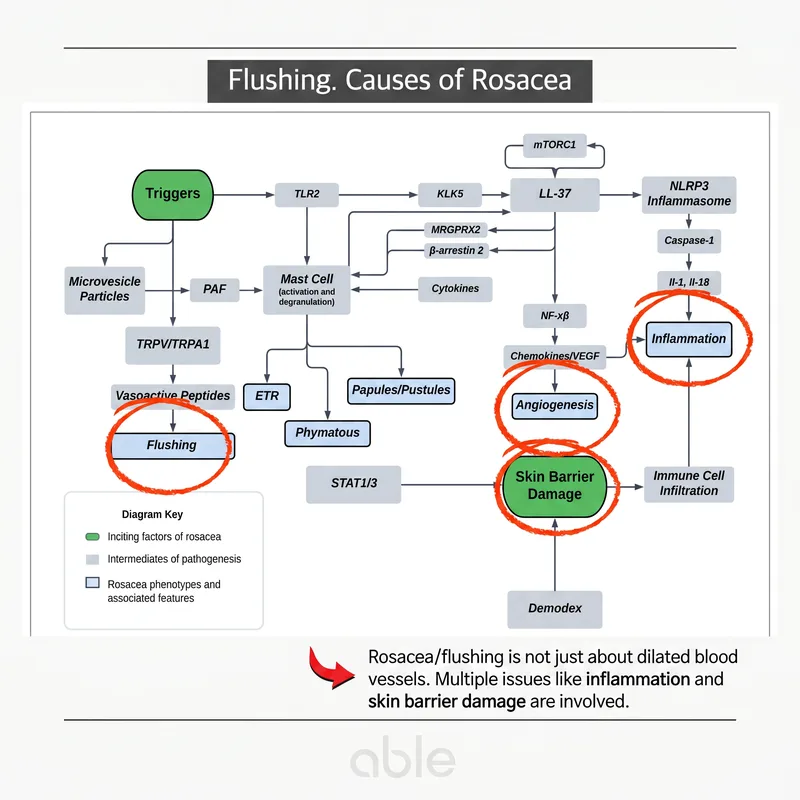
Many patients think rosacea treatment means vascular laser. But when you closely examine the skin of patients with facial redness and rosacea, most aren't simply "dilated and red." Instead, the barrier is weakened, sensitivity and stinging coexist, inflammation spikes with minor irritation, temperature and stress trigger excessive reactivity, and neurological changes layer on top.
In this complex situation, eliminating vessels alone is insufficient. Many patients report their skin reddens again quickly after vascular laser—because lasers effectively remove current dilated vessels but don't address the underlying cause: barrier weakness and inflammatory dysregulation that produces repeated flushing.
What Is LDM (Dual-Frequency Ultrasound)?
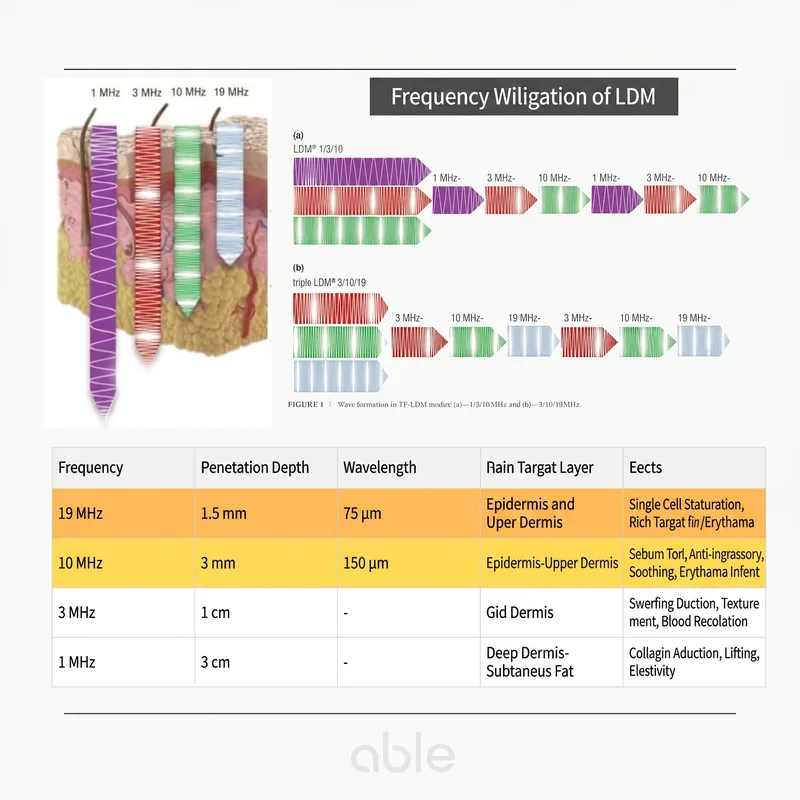
LDM (Local Dynamic Micromassage) applies multiphase ultrasound at varying frequencies, changing in 1-10 millisecond intervals, delivered non-invasively without light or heat. Mechanical ultrasonic vibration acts directly on skin cells and extracellular matrix, inducing diverse physiological responses.
For redness, LDM's role centers on barrier strengthening and inflammatory stabilization. It reinforces stratum corneum structure, calms hyperreactive nerves, reduces chronic inflammation, and improves blood flow to restore skin renewal capacity.
Vascular Laser: Role and Limits
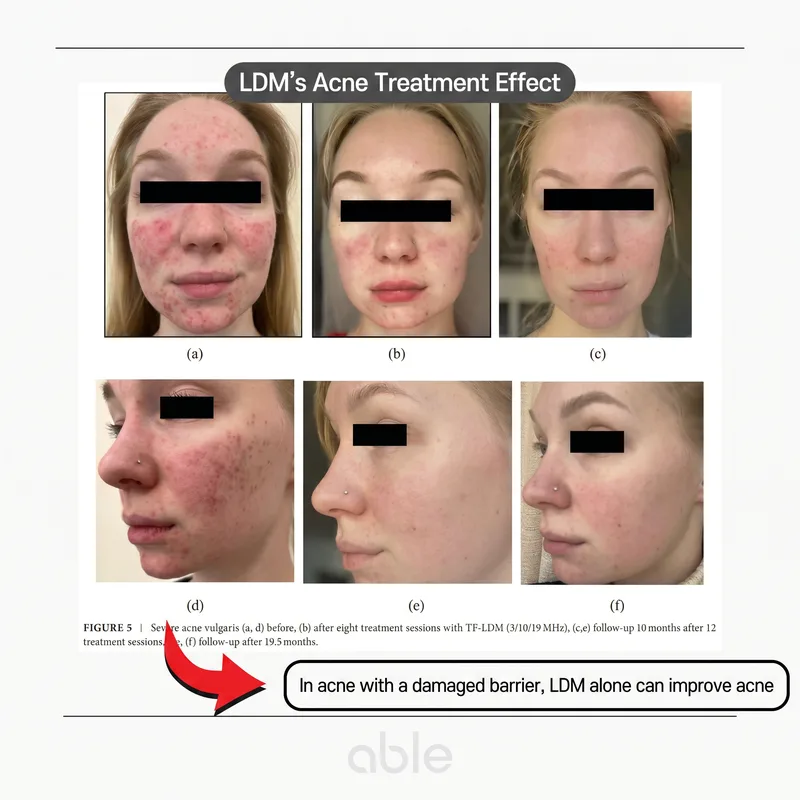
Vascular lasers are highly effective at selectively destroying dilated vessels—especially when clear vascular pathology dominates. However, most redness patients have barrier damage, chronic inflammation, and nerve hypersensitivity alongside vessel dilation. Laser alone cannot fully resolve this constellation.
Another problem is recurrence. If the inflammatory environment and nerve sensitization aren't fixed, new vessels redilate after laser removal, creating a cycle of repeated treatment.
Complementary Role of LDM and Vascular Laser
The most effective approach combines both modalities. Use LDM to stabilize skin's foundational state, then add vascular laser to remove excessive dilation—or reverse the order: laser first to clear major vessels, then LDM to strengthen barrier and calm inflammation.
LDM is minimally irritating, suitable even for sensitive skin, and shines with regular maintenance. Monthly or bimonthly LDM combined with periodic vascular laser when needed delivers lasting improvement and reduces recurrence over time.
A Comprehensive Approach to Redness
Redness treatment requires multilayered strategy: skincare supporting barrier repair (ceramides, niacinamide), lifestyle adjustments addressing inflammation (diet, stress, sleep), and targeted procedures. When redness is severe, stress management and sleep quality become essential.
Since redness phenotypes vary (vascular-dominant, inflammation-dominant, nerve-dominant), the balance between LDM and vascular laser must be individualized. Dermatologist assessment and customized planning ensure safety and efficacy.
Frequently Asked Questions
- Is vascular laser enough for redness treatment?
- Vascular lasers effectively destroy dilated vessels but don't address root causes like barrier damage, inflammation, and nerve hypersensitivity. Combining with barrier-restoring treatments like LDM ultrasound reduces recurrence.
- How does LDM treatment help with redness?
- LDM uses dual-frequency ultrasound to activate natural cell repair, strengthening the skin barrier and reducing inflammation. Unlike laser, changes are gradual but address the underlying skin environment.
Want to learn more about redness treatment options?
Redness & Rosacea Treatment Details Book Consultation