

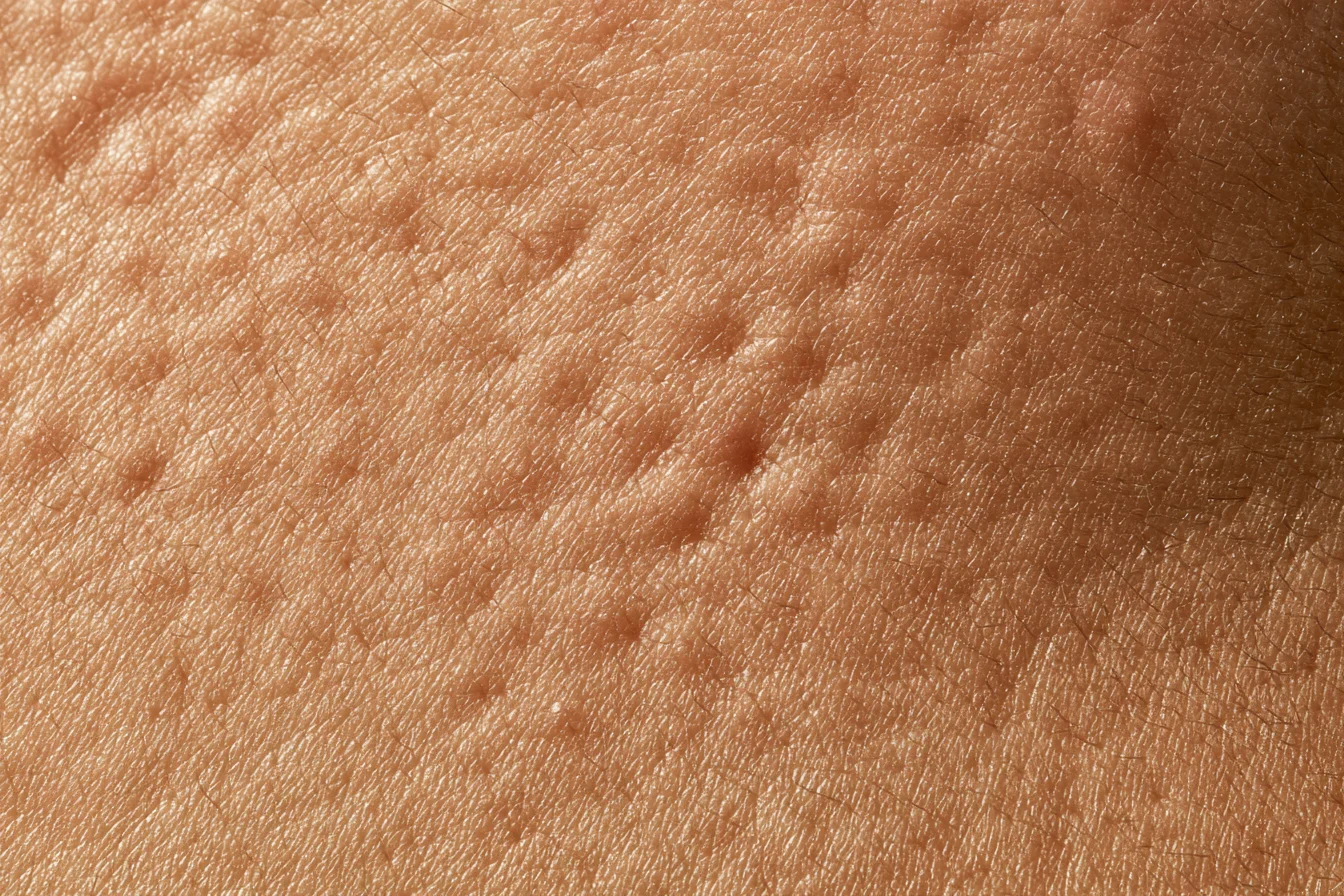
"Filler in a scar? Filler sounds a bit scary." That is what we usually hear when we bring up filler during a scar consultation. More often than not it is us, not the patient, who raises scar filler first, because some depressed scars respond well to it. When people hear "filler," they picture volume in the cheeks or chin, and the stories about blocked blood vessels, so the hesitation is understandable. Many assume that scar filler simply squirts gel into a pit and that once the gel dissolves, the effect is gone. That is only half right. Filler does fill the sunken spot, but what it does inside a scar may go beyond that. This column follows what filler does inside a scar from start to finish, using a single tent as the picture.
Summary in Three Lines
- Scar filler is less an injection that fills an empty space and more one that props up the sunken scar floor from below to reduce the height difference. So the first question is whether the scar can be propped up.
- Filler cannot cut the fibrous bands (tethering) that hold the scar floor down. If the scar is tethered, the bands are released with subcision first, and filler then supports what is still missing.
- Tissue studies suggest that filler can stretch the dermis taut so fibroblasts make collagen again. These came from the arm and buttock skin of older adults, so whether the same happens to the same degree in facial acne scars has not yet been confirmed.
The Short Answer — Scars Where Expectations Fit, and Where They Overreach
Scar filler is less about filling an empty space and more about propping up the sunken scar floor from below so the dermis is held taut again. That is why the first question is whether the scar can be propped up.
When expectations usually fit
- Broad, gently sloping depressions (rolling scars)
- Scars that smooth out when you gently spread the skin beside them
- Scars whose floor still looks relatively smooth
- A broad, sunken floor that remains after several laser sessions
When expectations tend to overreach
- Scars that sink deeper when you push the skin inward from both sides (scars held down from below)
- Ice pick scars with a narrow opening and a deep shaft
- Boxcar scars with sharp, cut-like walls and a pale floor
- Concerns about red or brown marks rather than depressions
- Skin that is still breaking out
Why the line falls where it does becomes clear once you look at each job the filler does inside a scar.
How Depressed Scars Form — A Sagging Canvas and a Rope Tied to the Ground
Think of the skin over a scar as a tent. The canvas is the dermis, the collagen cushion of the skin. Living in that canvas are the workers who weave and mend it: fibroblasts, the cells that make collagen.
When acne inflammation runs deep, collagen in the canvas is broken down, and the canvas thins and sags. Once the canvas goes slack, the workers inside have nothing to hold on to and stop working.
Sometimes a rope also forms under the scar floor. This is called tethering: a bundle of scar fibers that ties the floor of the scar to the tissue beneath it, like a rope tying the middle of the canvas to a tent peg. With that rope in place, the canvas stays pulled down.
Depressed scars are commonly grouped by shape into three types (Jacob et al., 2001, classification review).
- Rolling — gently sloping, wave-like depressions. In tent terms, a broad sag in the canvas
- Boxcar — sharp walls and a flat floor. A section of canvas cut out with straight edges
- Ice pick — a narrow opening that runs deep, like an awl puncture. A hole punched through the canvas
We describe the features of each shape in our column on acne scar types by shape and depth. But one thing matters more than the name of the shape: whether a rope is tied underneath.
Support — Propping Up the Sunken Floor from Below
The first job of filler is the visible one. It places a prop under the sagging canvas and reduces the height difference between the scar floor and the surrounding skin.
Hyaluronic acid is a natural component of the dermis that holds water and creates volume. Injected as is, it breaks down quickly, so fillers are made by linking hyaluronic acid chains together, a process called cross-linking. Think of it as a gel woven from chains so that it lasts.
This support shows up as soon as the filler goes in. Halachmi et al. (2013) injected small amounts of low-viscosity hyaluronic acid into depressed scars in 12 patients who had finished fractional laser treatment and reported visible improvement in every lesion right after injection (a small report without a control group). A systematic review of 24 studies (Tao et al., 2026) also listed immediate volume correction among the advantages of filler.
A scar, however, is not an empty hole. The thinned dermis is still there, so the filler works its way between that tissue and pushes it up like a prop.
That is why scar filler is not a procedure that changes the shape of the face. In a split-face randomized trial (Siperstein et al., 2022), tiny droplets were placed through a fine needle, and the total volume across one entire cheek averaged 0.66 mL in the first session and 0.61 mL in the second. If you are picturing volume filler, this starts from a very different amount.
The choice of gel matters too. The same authors wrote that they chose a soft gel with small particles that spreads well into surrounding tissue, suited to scars where the dermis is thin. When we choose a filler for scars, we likewise look first at whether it is soft enough not to bulge when placed superficially, and whether it can be dissolved if there is a problem. A firm filler designed for volume, placed shallowly in a scar, tends to leave bumps that last.
The approved uses of fillers differ from product to product. Using hyaluronic acid filler to correct scars is a clinical judgment rather than a labeled indication of the product, and we want to be clear about that.
The Rope — Filler Cannot Cut Tethering (How It Differs from Subcision)
Some scars, though, barely rise even with support underneath. If the middle of the canvas is tied to a peg, a prop placed under it only makes the area around the knot bulge while the tied spot stays sunken. Filler is a prop, not a pair of scissors. It cannot cut the bands.
Cutting the rope is the job of subcision. First described by Orentreich (1995), subcision passes a needle under the skin to cut the fibers holding the scar down. The authors explained that the release itself and the connective tissue that forms as the wound heals work together to lift the scar (an initial report built mainly on case experience).
Checking for a rope by hand first
If you gently spread the skin beside a scar, some scars smooth out and some stay put. The authors of Siperstein et al. (2022) added one more check: if a scar becomes more sunken when the skin on both sides is pushed inward (a positive dimple sign), it is attached to the tissue below, and hyaluronic acid filler alone is unlikely to work well. A simple way to remember it: if spreading smooths it, it is a candidate for support; if pushing deepens it, the rope comes first.
Spreading the skin sideways and pushing it inward are two different maneuvers, and the dimple sign is a clinical suggestion from these authors, not a test whose accuracy has been validated separately.
Adding support after releasing the rope
Ebrahim et al. (2022) performed subcision three times at one-month intervals in 40 people and then randomized them into two groups; in one group of 20, cross-linked hyaluronic acid was added to one side of the face only (the other group received PLLA threads), and the proportion with meaningful improvement was reported to be higher on the hyaluronic acid side than on the subcision-only side. In another comparison study of 40 people, Abdelwahab et al. (2022) also reported a difference in blinded assessment scores between subcision plus cross-linked hyaluronic acid and subcision alone (both were small randomized studies).
We did not find a study that directly shows filler keeps the bands from reattaching. What the current evidence supports is this much: filler supports the space created by releasing the rope and adds the volume that is missing.
There is an opposing view as well. The senior author of the Siperstein study argued that most rolling scars come from dermal thinning rather than tethering, and that for rolling scars that smooth out when spread, filler is reasonable as a first-line stand-alone treatment. That is the author's opinion, not a standard established by multiple studies.
We think both kinds of scars exist. That is why we spread and push the skin by hand before worrying about the scar's name. The device we use in the clinic to release tethering is TriFill Pro (CO₂ gas subcision); how gas pressure from the tip of a fine needle frees the bands is explained in our column on air subcision.
Tension — Fibroblasts Can Get Back to Work in a Taut Dermis
There is evidence that filler may do more than prop things up. Remember the workers in the canvas, the fibroblasts. These cells work well when they are attached to the surrounding collagen fibers and held under tension; when the canvas goes slack and there is nothing to hold, they shrink and make less collagen. The process by which cells read that pulling force as a signal is called mechanotransduction, a concept we covered in our column on Radiesse and mechanotransduction.
Wang et al. (2007) injected cross-linked hyaluronic acid and saline into the sun-damaged forearm skin of 11 healthy volunteers with an average age of 74 and took tissue samples 4 and 13 weeks later. More collagen had built up around the filler, and the expression of genes that make type I and type III collagen was higher than on the saline side. The fibroblasts around the filler looked mechanically stretched.
Interestingly, in culture experiments the fibroblasts did not attach directly to the filler. So the researchers proposed that filler does not stimulate the cells directly; instead, once filler stretches the dermis, the fibroblasts are pulled taut and get to work. In tent terms, the prop pulls the canvas tight, and the workers get busy again.
From the same research group, Quan et al. (2013) looked more closely at this process in the buttock skin of 28 people aged 74 to 95. Elongated fibroblasts lined up along the filler, and these cells made more type I collagen. Collagen signals such as the TGF-β type II receptor and CTGF rose together, and no inflammatory cell response was observed. In other words, the cells were put to work by tension, not by inflammation.
Put together, scar filler may be a prop that lifts the canvas while pulling the fibroblasts inside it taut again. But both studies were tissue studies in the arm and buttock skin of older adults, not facial scars. Whether the same happens to the same degree inside fibrotic acne scars has not been confirmed, so we describe this as a mechanism that may also apply to scars. The two-year results below do not mean that the filler dissolved and collagen filled its place either; that study did not check how much filler remained.
In clinic we often meet people who have had quite a few scar laser sessions but whose broad, sunken areas have stayed the same. When we gently spread the skin beside these scars, many of them smooth out. With scars like these, we weigh together whether to keep refining the surface or to support the floor first.
Collagen Stimulators Work Differently — Foreign-Body Response and Macrophages
"What about the other injections that are said to build collagen?" Some people ask that too. Collagen stimulators such as PLLA, PDLLA, PCL, CaHA and PMMA take a slightly different route.
These materials go in as small particles. The body recognizes the particles as foreign and gathers macrophages (immune cells that clear foreign material and send signals) around them. Fibroblasts that receive those signals then wrap collagen around the particles. A review by Haddad et al. (2022) summarized this as a controlled foreign-body response.
Here is how far the evidence goes for each material.
- PLLA — In aged animal skin and cell experiments, it shifted macrophages toward the M2 type (the tissue-repair type) and increased TGF-β and collagen (Oh et al., 2023, animal and cell study).
- CaHA — When injected behind the ears of 5 people and examined 6 months later, new collagen had built up around the particles (Berlin et al., 2008). An earlier electron microscopy study cited by these authors found little inflammatory response, so it is hard to say that every material works through strong inflammation.
- PCL — In tissue from 2 people, the particles were still present at 13 months, with collagen formed around them (Kim et al., 2015, 2-person case report).
In tent terms, instead of setting up a prop, it is like scattering grains of sand under the canvas so the body winds thread around each grain and thickens the canvas little by little. The prop works right away; the sand works slowly. That is where the two differ in scars: hyaluronic acid supports the floor the moment it goes in, while collagen stimulators fill in only as the body's response builds up.
There are scar studies as well. In a 147-person multicenter, double-blind randomized trial of a PMMA-collagen product, 64% met the improvement criterion at 6 months versus 33% with saline (Karnik et al., 2014), and this material is approved in the United States for the treatment of acne scars. An open-label study of PLLA in 20 people also reported that scar size and severity decreased over 7 treatment sessions (Beer, 2007, no control group). In the systematic review above (Tao et al., 2026), the materials whose effect lasted 6 months or longer were CaHA, PCL and autologous fat (a procedure we do not perform).
As the authors of Siperstein et al. (2022) pointed out, though, placing a lot of non-dissolvable material shallowly can leave bumps that remain for a very long time. Scars often need superficial placement for the floor to rise, which makes this concern weigh more heavily. That is why, when we place collagen stimulators in scars, we mainly use a needle-free injector such as Synerjet.
Why Rolling Scars Lift and Ice Pick Scars Rarely Do — Scars the Prop Can Reach, and Scars It Cannot
Back to the short answer at the start. A rolling scar is a broad, gentle sag in the canvas. Support from below lifts the sagging surface as it is, so this is the shape where the prop does its job well.
The authors of Siperstein et al. (2022) also wrote that improvement is greater in scars with gently sloping edges and normal skin at the floor, and that scars with irregular edges or a floor partly replaced by scar tissue improve partially, while scars with deep edges and a pale floor improve only slightly.
In a split-face randomized trial that delivered hyaluronic acid by pressure without needles (Kaminaka et al., 2023, 30 people), the response also differed by scar shape: improvement was prominent in rolling scars and smaller in boxcar and ice pick scars. For scars that respond less, more of the plan has to come from other treatments rather than from filler alone.
A prop lifts a sagging canvas; it does not shave down a sharp edge or fill an awl hole. Color changes such as red or brown marks, which are not depressions, are not something filler solves either.
What the Studies Show — A Split-Face Trial, a 2-Year Follow-Up, and Why the Saline Side Improved Too
Siperstein et al. (2022) randomly injected cross-linked hyaluronic acid filler into one cheek and saline into the other in 15 people (a split-face randomized controlled trial). Injections were given twice, 30 days apart, and assessed 90 days after the last session.
By blinded raters, the scar severity score fell by 6.6 points on the filler side and 1.7 points on the saline side. The number of rolling scars fell by 8.1 on the filler side and 2.1 on the saline side, and 13 of 14 people chose the filler side. The filler side changed more, but the saline side also improved a little.
The same group reported two-year results as an extension study in 2024. In the 12 people who completed the 720-day assessment, scar severity on the filler side remained 7.2 points lower and the scar count 8.8 lower than before treatment, with no meaningful difference between day 120 and day 720. In other words, the results at about four months carried through to two years almost unchanged.
This two-year comparison, however, is against the pre-treatment baseline, not against the saline side, because the saline side also received filler on day 120 as a crossover.
Why did the saline-only side improve?
The authors of Siperstein et al. (2022) explained the design from the start: needling alone and saline injection alone have already been used as scar treatments, so the effect of the injection itself had to be separated out.
In fact, Pravangsuk et al. (2021) compared saline delivered with a needle-free pressure injector against needle subcision and found that both boxcar and rolling scars improved, with no statistical difference between the methods (a small study of 18 people; no difference does not mean the methods are the same). In the PMMA trial (Karnik et al., 2014), 33% on the saline side also met the improvement criterion.
Our interpretation is this: as the needle passes and fluid pushes in, a few fine strands loosen (a small subcision), and the healing response lifts the floor a little. The act of injecting moves the scar a little; whether support remains on top of that is what makes the difference.
| Study | Participants and design | What was injected | Main results | Limitations |
|---|---|---|---|---|
| Siperstein 2022 | 15 people (14 assessed), split-face randomized, blinded raters | Cross-linked hyaluronic acid on one side / saline on the other, 2 sessions 30 days apart | 90 days after the last session: severity −6.6 vs −1.7 points, rolling scars −8.1 vs −2.1, 13 of 14 chose the filler side | Small, mainly cheeks and rolling scars, manufacturer funding |
| Siperstein 2024 | Extension of the same group, 12 assessed at day 720 | Hyaluronic acid on the saline side at day 120 (crossover) | Versus baseline: severity −7.2 points, scars −8.8, no difference between day 120 and day 720 | No ongoing control, filler persistence not checked |
| Ebrahim 2022 | 40 people, randomized into two groups of 20 after 3 subcision sessions | HA group (20): cross-linked hyaluronic acid added to one side, subcision only on the other (other group: PLLA threads) | Higher proportion with meaningful improvement reported on the hyaluronic acid side | Small, reattachment not measured |
| Kaminaka 2023 | 30 people, split-face randomized | Needle-free pressure-injected hyaluronic acid, 3 sessions | Improvement prominent in rolling scars, smaller in boxcar and ice pick scars | Effects of injection method and material not separated, 3-month follow-up |
| Karnik 2014 | 147 people, multicenter double-blind randomized | PMMA-collagen product vs saline, up to 2 sessions | Met the improvement criterion at 6 months: 64% vs 33% | 6-month follow-up, rolling scars |
Side Effects of Scar Filler — Bumps and the Material Used
Scar filler can leave a bump you can feel or see, and how long it lasts depends on the material used.
Swelling, redness and bruising on the first day are common. In Siperstein et al. (2022), more than half reported swelling and redness on day one; bruising and swelling were reported up to day 8 and redness up to day 11. All had settled within 30 days.
The one to note is lumpiness. On the day after treatment it was significantly more common on the filler side than on the saline side, and in the patients' records it lasted until day 29, longer than the other reactions. If filler is placed shallowly, it may be palpable for a while. In the two-year extension, no persistent or late-onset adverse events were reported, and neither the bluish Tyndall effect nor delayed granulomas were reported. Still, with 12 people, the study was too small to pick up rare complications.
Vascular occlusion is rare but has been reported across facial filler use, and in a literature review of vision-loss cases after filler, such cases were especially frequent around the glabella and nose (Beleznay et al., 2015). So scars in these areas are handled with extra caution even with small, superficial amounts of scar filler, and if needed we consider other methods before filler.
Where Scar Filler Fits — Release the Rope, Support the Floor, Refine the Surface
By now you can see why scar filler is hard to treat as a stand-alone procedure. We see it as one step within a scar treatment plan, because a single scar has several layers of problems: a rope pulling down, a thinned canvas, sharp edges and awl holes here and there.
- Spread and push by hand — Judge whether the scar needs support or needs the rope released first.
- Release the rope first if there is one — In the clinic we use TriFill Pro (CO₂ gas subcision) and Synerjet.
- Support the floor where it is lacking — This is the job of scar filler.
- Refine edges, surface and surroundings — Sharp edges and rough surfaces are handled with laser (U-Pulse fractional CO₂) or Potenza, and narrow, deep holes separately with point treatments such as pinhole or TCA.
- Check how much has filled in about a month later and add only where needed — The studies also divided injections 30 days apart.
The order changes from scar to scar, and if acne inflammation is still active, we calm it first or address it within the same plan.
| Problem inside the scar | In tent terms | Treatment that handles it |
|---|---|---|
| Lost height (thinned dermis) | Sagging canvas | Support with scar filler (hyaluronic acid) |
| Fibrous bands holding the floor | Rope tied to the canvas | Release with subcision |
| Sharp edges, rough surface | Edges cut out with a knife | Refine with laser or microneedle RF |
| Narrow, deep holes | Awl holes | Pinhole and similar treatments that close the hole from its opening |
| Thickening slowly over time | Thread wound around grains of sand | Collagen stimulators (materials hyaluronidase cannot dissolve) |
Rather than a plan that tries to solve a scar with one device, a plan that assigns a treatment to each problem inside the scar ends up taking fewer detours. How pinhole treatment works on the opening of a hole is in our CO2 pinhole column, and the factors that influence how much a scar can improve are in our column on scar prognosis.
Does Filler Have a Job to Do in Your Scar?
Scar filler props up a sunken scar floor from below to reduce the height difference, and it may give the fibroblasts in a stretched dermis room to work again. It does not cut the rope, and it does not fill an awl hole.
You can get a first sense by hand of whether it suits your scar. A broad scar that smooths out when spread is one where support should work well; if pushing makes it sink, the rope comes first; and if it is a narrow, deep hole, the hole comes first.
So when you come in for a consultation, rather than asking "Should I get filler or not?", ask "Is there a job for filler in my scar?" It is not too late to decide after you hear which material would be used and whether it can be dissolved if it bulges. We consider scar filler an important part of the plan and often weigh it when planning scar treatment.
See also: the complete acne scar guide
Precautions and Limits of the Evidence
Results and the number of treatments needed can differ with the shape, depth and degree of tethering of the scar, as well as skin thickness and skin condition.
After scar filler, swelling, redness, bruising and lumpiness can occur, and how long a bump lasts depends on the type and properties of the material used. Rarely, filler can enter a blood vessel and block it, which can lead to serious complications such as tissue necrosis or vision problems including blindness, so at the consultation we first check for contraindications and risks such as skin inflammation or infection, bleeding disorders, a history of severe allergies and pregnancy. Areas where such reports are more common, such as the glabella and nose, and areas of thin skin need particular care. Needle-free pressure injection can also cause bruising or hematoma.
This column is based on research available to date. The randomized evidence comparing hyaluronic acid scar filler with saline comes from a small trial of 15 people, partly funded by the manufacturer. The finding that stretched fibroblasts make collagen comes from tissue studies of the arm and buttock skin of older adults, not facial scars, and some of the macrophage findings for collagen stimulators come from animal studies. How long results last may differ from the studies depending on the product and injection method.
References
Show 19 references
- Siperstein R, Nestor E, Meran S, Grunebaum L. A split-face, blind, randomized placebo-controlled clinical trial investigating the efficacy and safety of hyaluronic acid filler for the correction of atrophic facial scars. J Cosmet Dermatol. 2022;21(9):3768-3778. doi:10.1111/jocd.15153
- Siperstein R, Nestor E, Meran S. Prospective clinical trial demonstrating the efficacy of hyaluronic acid filler for the improvement of atrophic facial scars up to 2 years. Dermatol Surg. 2024;50(12):1143-1148. doi:10.1097/DSS.0000000000004315
- Wang F, Garza LA, Kang S, et al. In vivo stimulation of de novo collagen production caused by cross-linked hyaluronic acid dermal filler injections in photodamaged human skin. Arch Dermatol. 2007;143(2):155-163. doi:10.1001/archderm.143.2.155
- Quan T, Wang F, Shao Y, et al. Enhancing structural support of the dermal microenvironment activates fibroblasts, endothelial cells, and keratinocytes in aged human skin in vivo. J Invest Dermatol. 2013;133(3):658-667. doi:10.1038/jid.2012.364
- Halachmi S, Ben Amitai D, Lapidoth M. Treatment of acne scars with hyaluronic acid: an improved approach. J Drugs Dermatol. 2013;12(7):e121-e123.
- Tao A, Shu Y, Ding H, Tao G. Injectable fillers for atrophic acne scars: a systematic review of mechanisms, evidence, and clinical algorithms. Clin Cosmet Investig Dermatol. 2026;19:602580.
- Jacob CI, Dover JS, Kaminer MS. Acne scarring: a classification system and review of treatment options. J Am Acad Dermatol. 2001;45(1):109-117.
- Orentreich DS, Orentreich N. Subcutaneous incisionless (subcision) surgery for the correction of depressed scars and wrinkles. Dermatol Surg. 1995;21(6):543-549.
- Ebrahim HM, Nassar A, ElKashishy K, et al. A combined approach of subcision with either cross-linked hyaluronic acid or threads in the treatment of atrophic acne scars. J Cosmet Dermatol. 2022;21(8):3334-3342. doi:10.1111/jocd.14675
- Abdelwahab AA, Omar GAB, Hamdino M. A combined subcision approach with either fractional CO2 laser (10,600 nm) or cross-linked hyaluronic acid versus subcision alone in atrophic post-acne scar treatment. Lasers Med Sci. 2022;38(1):20. doi:10.1007/s10103-022-03677-y
- Haddad S, Galadari H, Patil A, et al. Evaluation of the biostimulatory effects and the level of neocollagenesis of dermal fillers: a review. Int J Dermatol. 2022;61(10):1284-1288.
- Oh S, Lee JH, Kim HM, et al. Poly-L-lactic acid fillers improved dermal collagen synthesis by modulating M2 macrophage polarization in aged animal skin. Cells. 2023;12(9):1320. doi:10.3390/cells12091320
- Berlin AL, Hussain M, Goldberg DJ. Calcium hydroxylapatite filler for facial rejuvenation: a histologic and immunohistochemical analysis. Dermatol Surg. 2008;34 Suppl 1:S64-S67.
- Kim JA, Van Abel D. Neocollagenesis in human tissue injected with a polycaprolactone-based dermal filler. J Cosmet Laser Ther. 2015;17(2):99-101.
- Karnik J, Baumann L, Bruce S, et al. A double-blind, randomized, multicenter, controlled trial of suspended polymethylmethacrylate microspheres for the correction of atrophic facial acne scars. J Am Acad Dermatol. 2014;71(1):77-83. doi:10.1016/j.jaad.2014.02.034
- Beer K. A single-center, open-label study on the use of injectable poly-L-lactic acid for the treatment of moderate to severe scarring from acne or varicella. Dermatol Surg. 2007;33 Suppl 2:S159-S167. doi:10.1111/j.1524-4725.2007.33356.x
- Kaminaka C, Sakata M, Nishiguchi M, et al. Clinical evaluation of needle-free electronic pneumatic hyaluronic acid injection treatment for facial atrophic acne scars: a prospective, randomized comparative trial. J Dermatol. 2023;50(8):971-981. doi:10.1111/1346-8138.16830
- Pravangsuk J, Udompataikul M, Cheyasak N, Kamanamool N. Comparison of normal saline injection with pneumatic injector to subcision for the treatment of atrophic acne scars. J Clin Aesthet Dermatol. 2021;14(5):50-55.
- Beleznay K, Carruthers JD, Humphrey S, Jones D. Avoiding and treating blindness from fillers: a review of the world literature. Dermatol Surg. 2015;41(10):1097-1117.
This column is adapted from Dr. Jeong's blog post (2026-11-09, in Korean). Read the original (Korean)
From Consultation Through Treatment
A board-certified dermatologist examines you directly, identifies which layer the cause sits in, sets the device and the parameters, and then carries out the procedure as the same physician.
The number of sessions, the intervals, the maintenance point and the cost are agreed together before the first session.
Frequently Asked Questions
- Will scar filler make my face look puffy?
- Scar filler is placed under the scar floor in many tiny droplets, so it differs from volume filler that changes facial contours. In a split-face randomized trial (Siperstein et al., 2022), the total volume across one entire cheek averaged around 0.6 mL.
- How long does scar filler last? Will the scar sink again once it dissolves?
- A small study of one hyaluronic acid product (12 people) found that improvement was maintained for up to two years. That study focused mainly on rolling scars on the cheeks, and the same duration cannot be expected for every product or every scar. Hyaluronic acid is eventually absorbed, and the idea that collagen takes its place is still only a possibility. When soft hyaluronic acid is placed shallowly, it is more realistic to expect a shorter duration, so rather than fixing a retreatment date in advance, we suggest checking and adding when the scar starts to sink again.
- Can scar filler be reversed if I do not like the result?
- Hyaluronic acid filler can be dissolved with hyaluronidase. This is a key difference from materials that do not dissolve.
- Can I choose either subcision or scar filler instead of both?
- For a scar without a rope, scar filler alone may help; for a scar where the rope is the main problem, subcision comes first. Small randomized studies (Ebrahim et al., 2022; Abdelwahab et al., 2022) reported differences between combining the two and subcision alone, so we often plan them together: release the rope, then support the floor where it is lacking.
This article is general information and does not replace an individual diagnosis or treatment. Because the right decision depends on your symptoms and skin condition, please see a board-certified dermatologist.