

Two Approaches to Deep Scars: Tether Release vs Volume Replacement
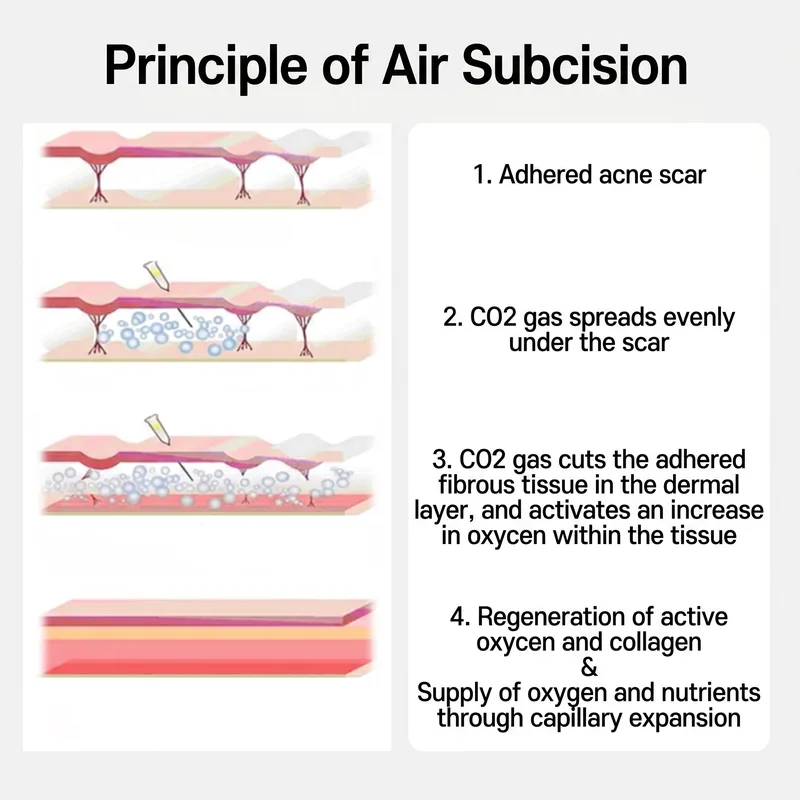
For deep acne scars, subcision and filler work through completely different mechanisms.
Subcision inserts a needle or cannula beneath the skin to physically sever fibrous tethering that pulls scars downward. Filler injection raises the depressed scar floor with hyaluronic acid or other materials to reduce the height difference with surrounding skin.
Comparison Table: Subcision vs Filler
| Category | Subcision | Filler Injection |
|---|---|---|
| Mechanism | Physically severs fibrous tethering | Fills depressed area with material |
| Best Scar Types | Rolling scars, tethered deep scars | Ice pick, deep boxcar, focal depressions |
| Immediate Effect | Gradual after bruising/swelling | Volume visible immediately |
| Duration | Permanent (tether release itself persists) | 6-18 months (varies by filler type) |
| Downtime | 5-10 days (bruising, swelling) | 1-3 days (swelling, mild bruising) |
| Side Effects | Bruising, temporary swelling, rare nodules | Asymmetry, lumps, rare vascular complications |
| Sessions | 2-4 | 1-2 (repeat for maintenance) |
| Cost | Medium | Medium-High (volume dependent) |
When Subcision Is the Better Choice
Tethered rolling scars — If scars are pulled downward by fibrous bands, no amount of laser treatment will be effective until the tethering is released. Subcision physically frees the skin to rise naturally.
Widespread deep rolling scars — For multiple rolling scars over a large area, subcision is more cost-effective and natural-looking than filler.
When Filler Is More Appropriate
Focal deep depressions — For a few distinctly deep scars (ice pick, deep boxcar), filler can immediately raise the floor for visible improvement.
Rapid visual improvement needed — While subcision shows gradual improvement after bruising, filler provides immediate depth reduction from the day of treatment.
The Triple Strategy: Subcision + Filler + Energy Device
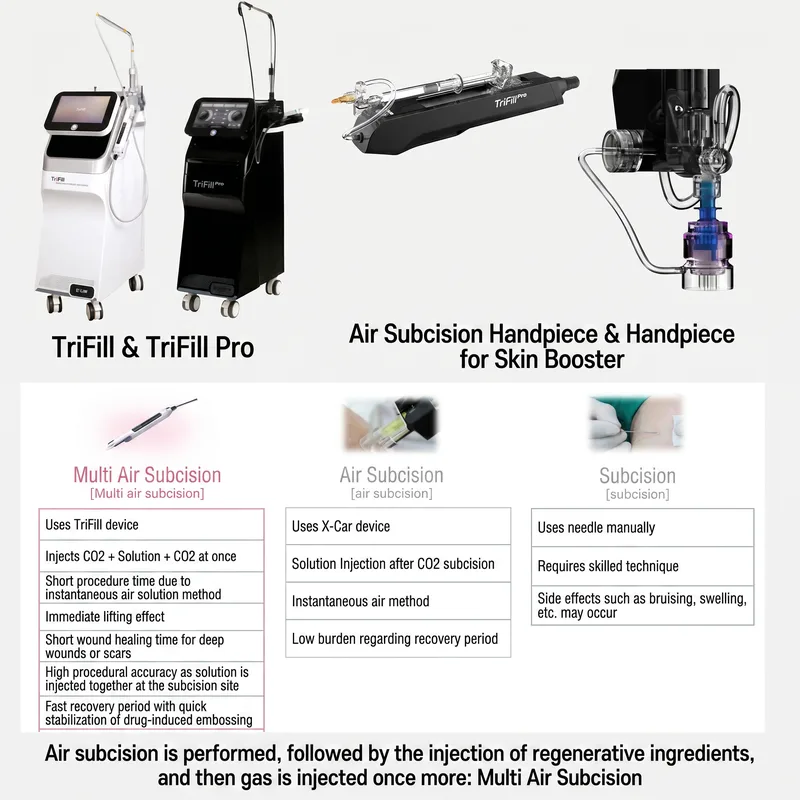
The most effective approach to deep scars isn't a single method but a staged combination.
Step 1: Subcision to release tethering → Step 2: Filler to address remaining depth → Step 3: Potenza or CO2 laser to refine surface texture. Following this order is crucial — repeating energy treatments alone on tethered scars is inefficient.
Frequently Asked Questions
- Can subcision and filler be done in the same session?
- Yes, performing filler injection immediately after subcision is common practice. Releasing tethers first then placing filler in the created space helps the results last longer.
- How long does bruising last after subcision?
- Bruising typically lasts 5-10 days. It resolves naturally, and during healing, new collagen fills the released space, contributing to long-term improvement.