

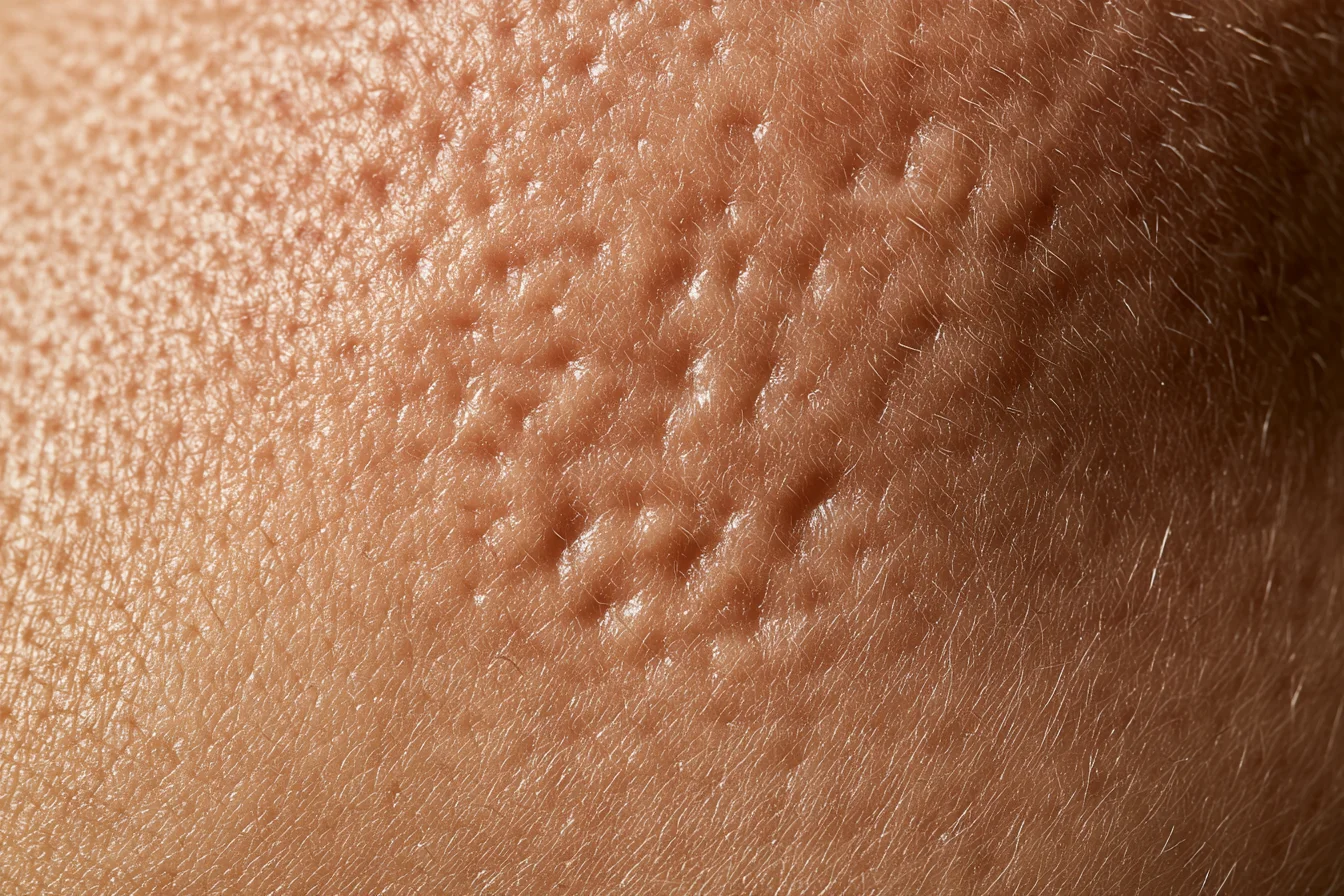
We hear a lot about Potenza on social media and in clinic: "For pores, it has to be Potenza," "The more shots, the better," "It only works if it is strong." Is that really true? If you have had a lifting treatment, the word "design" may be familiar. Overtreating can hollow the cheeks, and results vary widely with how it is done, so for each face we first map out where to lift, how much and in which direction. Potenza is no different. We covered which scars suit Potenza in our Potenza scar column, and why the same device name does not mean the same treatment in Same Device, Different Results. This column picks up from there: how, exactly, do we do it differently? Why does one person improve with Potenza while another sees no change?
Summary in Three Lines
- Different for each person — We sort skin by oiliness and firmness and set the goal for this session first. Numbers such as power and shot count come almost last.
- Different for each zone of the same face — Shallow on the thin forehead and nasal dorsum, deeper on the thicker front cheeks, lower face and nasal tip, and a lighter load on sensitive zones. For scars, we break them into components and decide which part Potenza handles.
- Redesigned every session — We change one thing at a time and record it, and we set the interval and intensity by recovery rather than by the calendar.
When Potenza Meets Expectations, and When Expectations Overreach
Potenza (microneedle RF) is a worthwhile device for scars and pores. In a consensus statement developed through two rounds of surveys by an international panel of 24 (Salameh et al., 2022), radiofrequency devices were named among the energy-based devices to consider first for acne scars. But depending on how the same device is designed, expectations can either fit or overreach.
When expectations fit
- The skin type was assessed first and the goal for the session was set
- Depth and approach were varied by zone, such as forehead, cheeks and nose
- Scars were broken into components, and the part Potenza handles was defined
- The response was checked each session and one thing was adjusted at a time
When expectations overreach
- The whole face is treated at the same depth and the same power in one go
- Firm scars are pushed with ever-stronger stimulation
- The hope is that Potenza will also release bands tethered from below
- The assumption is that turning up the numbers on the screen will raise the results along with them
So the conclusion of this column fits in three lines: design differently for each person, differently for each zone of the same face, and again for every session. Let us go through them one by one.
The Order of a Potenza Design — What We Look at Before Power
"So what setting will you use?" It is a question we often hear at the first visit, but for us the numbers come almost last.
We first look at the skin type and set the goal for this session. Then we choose the tip, depth, layers and mode to match that goal, and after treatment we reassess the response. Like a lifting design, the order is: look at the skin, choose the method, treat, and look at the response again.
Doing Potenza well is not about a stronger single hit; it is about not skipping this order.
Potenza Differs from Person to Person — Four Skin Types by Oiliness and Firmness
The first answer to the opening question lies in the skin itself. Even when two people both say "pores" or "scars," different skin needs a different treatment.
So we touch first. We pinch to feel how firm the skin is, stretch it to see how far it spreads, and pull and release to see how quickly it springs back. Adding how much oil the skin produces, we sort it into four groups.
- Soft skin with little oil — ordinary enlarged pores
- Soft skin with a lot of oil — oiliness and pores together
- Firm skin — fibrotic or tethered from below
- Firm and oily skin — a mixed type
We check two more things: whether there is underlying redness or sensitivity, and whether the skin tends to keep pigment after procedures. We also note whether the skin is on the thicker side and whether the patient is male.
A different group means a different goal. For soft, ordinary pores, the goal is even tightening; for firm skin, we decide where and how to divide the heat.
With very oily skin, we think twice before a scar or pore procedure. Sebum and acne inflammation easily gather in the follicles around the tiny wounds the procedure creates, so pimples or small bumps can appear afterward and the inflammation can drag on, slowing recovery. If that inflammation leaves redness or pigment behind, it eats into the result you worked for. The oilier the skin, the more caring for recovery before intensity is what protects the result.
Even for the same pores, skin with different oiliness and firmness needs a different Potenza.
Same Face, Different Potenza — Forehead, Cheeks, Lower Face and Nose, Zone by Zone
Now let us look inside a single face. Taken together, studies show that the eyelids and forehead are thin while the front of the cheeks (the butterfly zone and the cheek above the nasolabial fold) and the lower face are thicker. In cadaver studies the upper eyelid was thin compared with other sites (Ha et al., 2005; Chopra et al., 2015), while the anterior cheek below the eye and the cheek were on the thick side (Kim et al., 2019).
Among studies of living skin, there is one in which Dr. Jeong, as an author, measured 8 facial sites in 99 Koreans with ultrasound (Jeong et al., 2023). The lateral forehead was thin among the 8 sites, and the nasolabial fold, mouth corner and chin were thicker than the cheekbone point. Most of the difference between sites came from the dermis, and men had thicker skin at most sites. Interestingly, there was no significant correlation with body mass index (BMI). You cannot assume that a fuller-looking face has thicker skin, and even within the same site, individuals varied considerably.
So we go shallow on the forehead and deeper on the front of the cheeks and the lower face.
Thickness is not the whole picture. The area around the mouth (the O-zone) tends to be dry with a weaker skin barrier, so it reacts easily even to the same stimulation. For each zone we check whether it flushes easily, stings or feels dry, and how long it stayed red after previous procedures; for sensitive zones we reduce intensity and layers or leave a longer interval.
The nose divides further within itself. A plastic surgery ultrasound study (Nguyen et al., 2026) found the nasal dorsum thin and the tip thick, and one report found up to two- to threefold differences depending on skin type and oiliness (Kosins and Obagi, 2017). These data look at the skin together with the soft tissue beneath it.
The depth on the screen versus the actual depth
So is it enough to set the depth number on the screen? A study that cut through pig skin treated with non-insulated microneedle RF (Feng et al., 2023) found that at deeper settings the needle shaft could not fully enter the skin, so the difference in the actual depth of the channels narrowed. The depth shown on the screen and the depth actually reached can differ. That is why we do not compare two treatments by a single number such as "I had it at X mm."
In each zone we pinch and feel the skin directly to check thickness and firmness first, starting shallow on the thin forehead and nasal dorsum and deeper on the thicker front cheeks, lower face and nasal tip. Because people vary a lot even within the same zone, we readjust after seeing the first session's response.
Choosing a Tip, N or I — Heat Like a Column, or Only at the End?
With an N tip (non-insulated), heat forms along the shaft of the needle, creating a thin, column-shaped coagulation. An I tip (insulated) is exposed only at the end, so heat stays in a small zone at that depth. So we think of N tips for even treatment of soft, ordinary pores and I tips for scar floors or firm areas.
The advantage of the I tip is that heat can be placed in layers by depth: below the scar floor, in the dermis around the scar, and in a shallower layer, each separately.
There is one more reason to divide the layers. In a study that filmed pig skin with a thermal camera after microneedle RF (Wootten et al., 2021), heat kept spreading into the surrounding tissue for several seconds after the energy stopped. Stacking pulses immediately at the same depth means adding heat to tissue that has not yet cooled. That is why, rather than repeating the same layer back to back, we change the depth with each pass to treat a different layer of tissue.
In a study of 32 Asian patients in whom insulated microneedle RF was placed at several depths for each scar, combined with monopolar delivery (Pall and Pall, 2021), scar scores fell significantly at 6 months after 4 sessions.
Should a firm scar be treated harder?
Firm scar tissue does not loosen readily with strong stimulation, and it can simply add to the burden on the surface. Cell experiments show that in fibrotic tissue, the very force with which cells pull on the stiff surrounding tissue activates a signal (TGF-β1) that drives further fibrosis (Wipff et al., 2007). Tissue that has already hardened is caught in a loop that pushes it to harden further, and simply adding stronger heat is unlikely to break that loop.
What a firm scar needs is not stronger stimulation but a better distribution of where the heat goes. We also choose just one remodeling tip (I or N) per session, so that we can read that session's response cleanly and carry it into the next.
Modes, Bipolar and Monopolar — Not a Weaker Version, but a Different Purpose
Modes come with a similar misunderstanding: "Monopolar is just the gentler setting, right?"
In bipolar mode, current flows between the needles and is used to rebuild (remodel) the dermis. In monopolar mode, current flows from around the needle toward a pad placed on the body and spreads more widely; we choose it when we want to warm the area around acne-prone oil glands gently over a longer time, or when we want to reduce pain and crusting.
Think of modes not as a power button but as options chosen according to the purpose.
Potenza for Acne Scars — Even One Scar Is Divided into Roles
Scars are a little more complex, because several components are mixed within a single scar.
- The floor and the surrounding dermis — the part Potenza (I tip) handles
- The walls and edges — handled by treatments such as fractional CO₂ and pinhole
- Narrow, deep holes (ice pick) — handled by point treatments such as TCA
- Bands tethered from below — handled by subcision (TriFill Pro, Synerjet, cannula subcision and others)
We are often asked, "If Potenza goes deep enough, won't it release the tethering too?" Microneedle RF does not replace subcision. In a randomized split-face study of 25 people (Faghihi et al., 2017), both cheeks received three sessions of microneedle RF, with subcision added on one side only, and a significant difference was reported between the two sides (greater improvement on the side with subcision). With 25 people it is small, but it is meaningful because it compares the two sides of the same person's face.
Among scars that remained after Potenza, quite a few had their main problem in a part that Potenza does not handle. Potenza cannot do everything. The factors that influence how much a scar can improve are covered separately in our column on five factors in scar prognosis.
How We Decide — Four Questions We Ask in Order
In clinic, everything above comes down to four questions asked in order.
- Is there a scar component? — If so, we start by breaking the scar into its components.
- Is it firm or tethered from below? — If so, we plan Potenza together with subcision or other treatments, not alone.
- Is there redness, a risk of lingering pigment, or thin skin? — If so, we reduce the burden before raising the power.
- If none of these apply — We treat it as ordinary pores and treat evenly.
The order matters for a reason. If you start a scar as though it were ordinary pores, the result is easily "I had it done, but nothing changed."
Revisiting Potenza Each Session — One Change at a Time
Potenza does not run on the plan set at the start all the way to the end, because the skin after the first session is already different from the skin before it. So we keep four rules each session.
- Change one thing at a time, and record it.
- Set the interval and intensity by recovery, not by the calendar.
- Do not simply turn it up.
- Fix the obstacle first. If pain or crusting was a burden, reduce the number of layers before reducing power.
If you change depth, power, tip and mode all at once, you cannot tell what worked and what did not. Even in the same scar, once the floor rises the walls can stand out more, so the focus of treatment may shift in the next session.
The interval between sessions is set for the same reason. In a study that followed human skin for up to 10 weeks after a single microneedle RF treatment (Hantash et al., 2009), the heated zones remained through week 4 and were replaced by new dermal tissue around week 10. Redness and swelling settle within a few days, but rebuilding the dermis takes weeks to months. So after a session we do not jump to "No change, go stronger"; we watch the recovery and judge over several months.
Rarely, bumpy papules or needle-mark patterns have been reported to persist after treatment (Hidajat and Murlistyarini, 2023). In that case too, rather than raising the power, we stop and look for the cause first. A design is not set once and finished; it is redone every session.
How We Design Potenza at the First Visit
Before we bring up Potenza, we touch, stretch and look at the skin under the light. Next we divide the face into zones, and if there are scars, we break them into components. Only then do we talk about devices; a device is simply the means of carrying out the approach.
If another treatment should come before Potenza for some part, we plan that part with that treatment. Sometimes a Potenza consultation ends with the conclusion that Potenza should wait. Even when someone comes in for pores, rather than defaulting to repeated passes with an N tip, we design around what kind of skin and what kind of pores they have.
One Conclusion — Same Device, Different Design
Back to the opening question: why does one person improve with the same Potenza while another sees no change? Because their skin was different, the thickness differed from zone to zone within the same face, the problem in the scar lay in a different part, and the skin changed from session to session. The difference was not about going harder or doing more.
Same device, different design, and the design comes from the diagnosis. Rather than asking "What power and how many shots?", it is better to ask "Which group does my skin fall into, and what approach will you use, based on what?"
If you have already had Potenza without seeing a change, we suggest revisiting the design before blaming the device. Looking again often shows what to change in the next session, and sometimes a treatment other than Potenza should come first.
See also: recovery after each acne scar procedure
Precautions and Limits of the Evidence
Results and the number of sessions needed can differ with skin condition, scar type and treatment history.
After microneedle RF, pain, redness, swelling, bruising, crusting and temporary hyperpigmentation can occur, and burns or scarring have rarely been reported. Please discuss the benefits and risks with your physician before treatment.
Most of the studies cited here involve microneedle RF devices other than Potenza, cell or animal studies, case reports, small studies or consensus statements, and some had no control group. The four skin groups and the decision order are a clinical working summary, not a standard classification. This column is based on research available to date.
References
Show 14 references
- Faghihi G, et al. Efficacy of fractionated microneedle radiofrequency with and without adding subcision for the treatment of atrophic facial acne scars: a randomized split-face clinical study. J Cosmet Dermatol. 2017;16(2):223-229.
- Feng J, et al. Histological damage characteristics and quantitive analysis of porcine skin with non-insulated microneedle radiofrequency. Skin Res Technol. 2023;29(6):e13396.
- Jeong KM, et al. Ultrasonographic analysis of facial skin thickness in relation to age, site, sex, and body mass index. Skin Res Technol. 2023;29(8):e13426.
- Pall A, Pall S. An innovative approach of treating acne scars using bipolar rotational stamping and monopolar criss-cross technique with insulated microneedling radiofrequency in Asians. J Cutan Aesthet Surg. 2021;14(2):191-202.
- Salameh F, et al. Energy-based devices for the treatment of acne scars: 2022 international consensus recommendations. Lasers Surg Med. 2022;54(1):10-26.
- Chopra K, et al. A comprehensive examination of topographic thickness of skin in the human face. Aesthet Surg J. 2015;35(8):1007-1013.
- Ha RY, et al. Analysis of facial skin thickness: defining the relative thickness index. Plast Reconstr Surg. 2005;115(6):1769-1773.
- Kim YS, et al. Regional thickness of facial skin and superficial fat: application to the minimally invasive procedures. Clin Anat. 2019;32(8):1008-1018.
- Kosins AM, Obagi ZE. Managing the difficult soft tissue envelope in facial and rhinoplasty surgery. Aesthet Surg J. 2017;37(2):143-157.
- Nguyen CD, et al. Ultrasonographic evaluation of nasal tip anatomy for rhinoplasty planning. Arch Plast Surg. 2026;53(2):142-150.
- Wootten S, et al. An evaluation of electrocoagulation and thermal diffusion following radiofrequency microneedling using an in vivo porcine skin model. J Cosmet Dermatol. 2021;20(4):1133-1139.
- Wipff PJ, et al. Myofibroblast contraction activates latent TGF-beta1 from the extracellular matrix. J Cell Biol. 2007;179:1311-1323.
- Hantash BM, et al. Bipolar fractional radiofrequency treatment induces neoelastogenesis and neocollagenesis. Lasers Surg Med. 2009;41(1):1-9.
- Hidajat D, Murlistyarini S. Successful treatment of rare adverse event after radiofrequency microneedle on Fitzpatrick skin type IV: a case report. J Cosmet Laser Ther. 2023;25:102-106.
This column is adapted from Dr. Jeong's blog post (2026-11-09, in Korean). Read the original (Korean)
From Consultation Through Treatment
A board-certified dermatologist examines you directly, identifies which layer the cause sits in, sets the device and the parameters, and then carries out the procedure as the same physician.
The number of sessions, the intervals, the maintenance point and the cost are agreed together before the first session.
Frequently Asked Questions
- If I ask for Potenza to be deeper and stronger, will it work better?
- Not necessarily. The depth you set can differ from the depth actually reached (Feng et al., 2023), and with firm scars, dividing where the heat goes matters more than stronger stimulation. Too weak is not good either, but the first step is finding which part of your skin is the problem.
- Can the forehead and cheeks be done in one go at the same setting?
- The lateral forehead has relatively thin skin and the lower face relatively thick skin (Jeong et al., 2023), so the same setting means something different in each zone. We divide the face into zones, start shallow on the forehead, and treat the nasal dorsum and tip separately.
- I have rolling scars. Can I just have Potenza?
- If there are bands tethered from below, it is hard to expect microneedle RF alone to release them. We recommend dividing the plan so that subcision handles the bands and Potenza handles the floor and surrounding dermis.
- Isn't it better to use both the N tip and the I tip?
- Within what we have reviewed, we have not found a comparative study showing that using both is better. We choose one remodeling tip to match the goal of each session and decide the next session after seeing the response.
This article is general information and does not replace an individual diagnosis or treatment. Because the right decision depends on your symptoms and skin condition, please see a board-certified dermatologist.