

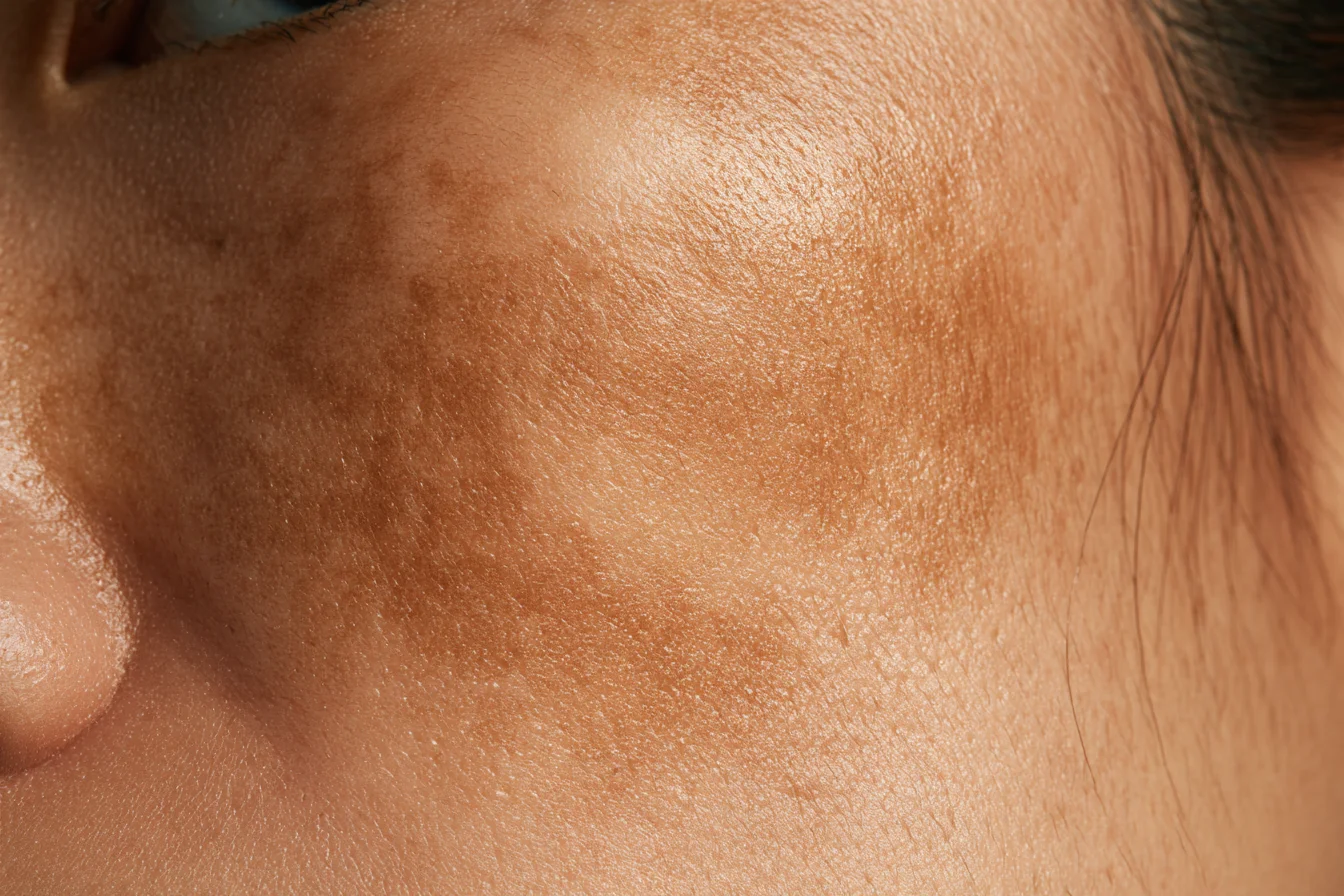
Relationship Between Neural Signals and Melanin Activation
Melanin production is influenced by neural signals in addition to UV exposure. Repetitive facial expressions and muscle contractions cause local inflammation, stimulating melanocytes to increase melanin production. Areas with prominent frowning and crow's feet wrinkles tend to show more pigmentation.
Botox suppresses acetylcholine release at nerve terminals, reducing muscle contraction. Consequently, expression wrinkles decrease and local irritation/inflammation in those areas diminishes, potentially secondarily alleviating pigment worsening.
Botox Effects in Melasma Patients
Some clinicians report gradual lightening of pigmentation in melasma patients treated with Botox, especially in glabellar and periocular areas; the evidence is limited. This follows the mechanism: (1) reduced muscle contraction → (2) decreased local inflammation → (3) reduced melanocyte stimulation → (4) inhibited new melanin generation.
However, already-accumulated melanin or deeply dermal pigmentation won't improve with Botox alone. Thus Botox is primarily useful for preventing melasma progression and worsening, while existing pigment removal requires lasers or chemical peels.
Multimodal Melasma Management
Effective melasma management requires simultaneous use of Botox, laser, and pharmacotherapy. Start with fractional lasers (Lytoner, Pixel) to remove existing pigment, while using melanin synthesis inhibitors (hydroquinone, tranexamic acid) concurrently. Before prescribing oral tranexamic acid, we first check for contraindications such as a thromboembolic history or oral contraceptive use.
Adding Botox limits facial movement to prevent pigment worsening and prolongs pigment improvement effects. Regular Botox retreatment every 3-6 months combined with consistent skincare (vitamin C, sunscreen, antioxidants) may help support long-term melasma care, though recurrence is common and results vary.
Frequently Asked Questions
- Can Botox really inhibit pigmentation?
- Not directly. However, by suppressing neural signals and reducing facial movement, local irritation decreases and melanin activation diminishes. Some reports suggest indirect pigmentation improvement, especially in patients with severe glabellar and periocular wrinkles.
- Can Botox be used alone for melasma treatment?
- Melasma requires lasers, peels, and melanin synthesis inhibitors (hydroquinone, vitamin C) as primary treatments. Botox plays an adjunctive role by reducing expression wrinkles and preventing secondary pigment worsening.
This article is general information and does not replace an individual diagnosis or treatment. Because the right decision depends on your symptoms and skin condition, please see a board-certified dermatologist.