

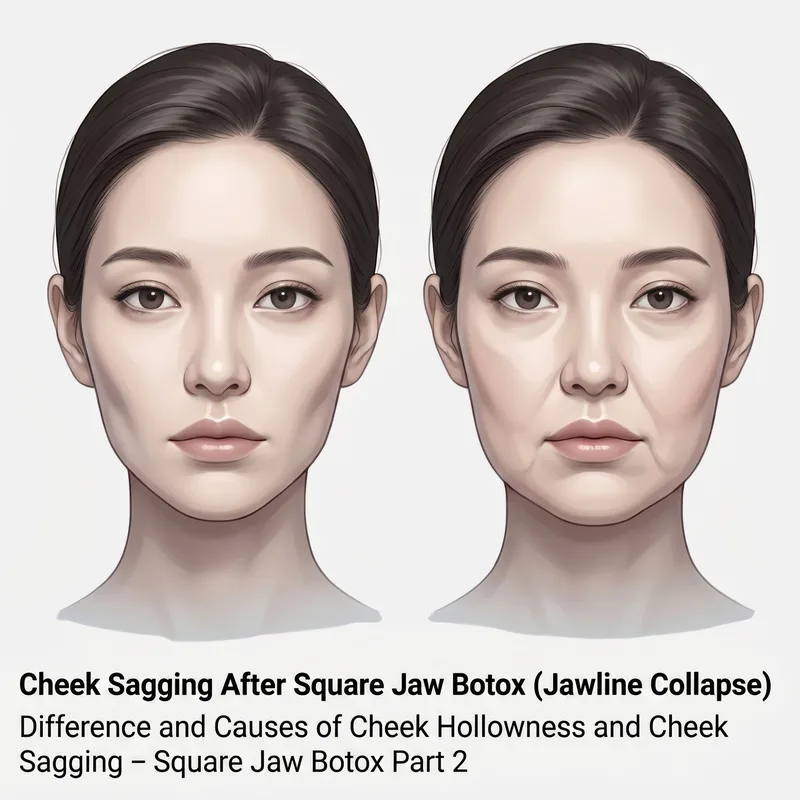
Masseter Weakening and Gravitational Effects
Square jaw is primarily caused by masseter muscle hypertrophy. Botox is injected to weaken this muscle, narrowing the jawline and revealing a V-shape. The aesthetic effect is clear.
However, the masseter does more than define aesthetics. This muscle literally supports cheek tissue weight. When weakened, gravity causes previously supported tissues to descend, deepening the 'premasseter space.'
Premasseter Space Mechanism
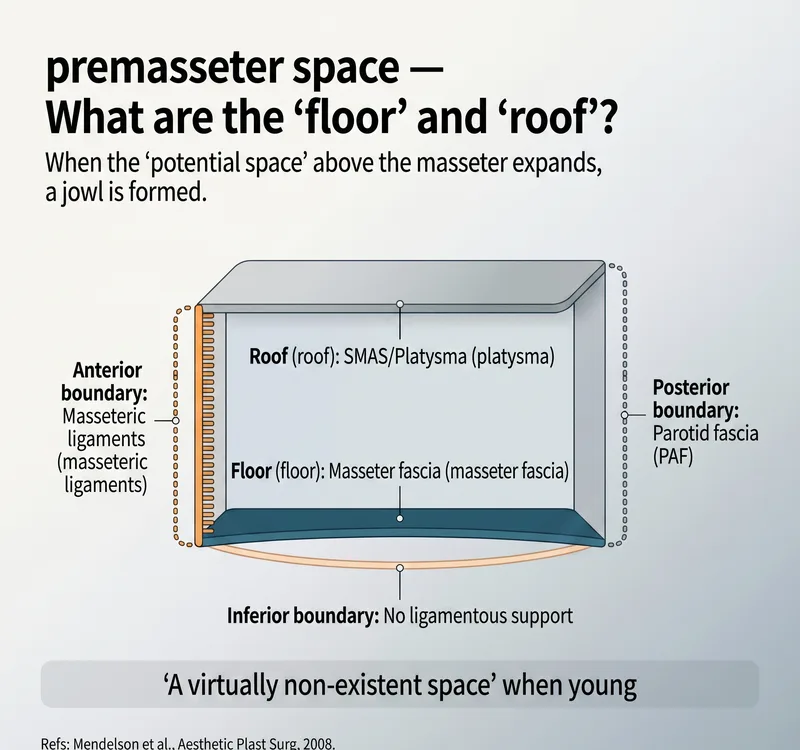
Premasseter space is the area below the malar bone and above the masseter's superior surface. A developed masseter leaves little space, but weakening deepens it visibly. Combined with age-related elasticity loss, this creates a 'saggy cheek' appearance.
Middle-aged or elasticity-compromised patients are especially vulnerable to this complication after jawline botox, essentially trading one problem for another.
Safe Jawline Botox Protocol
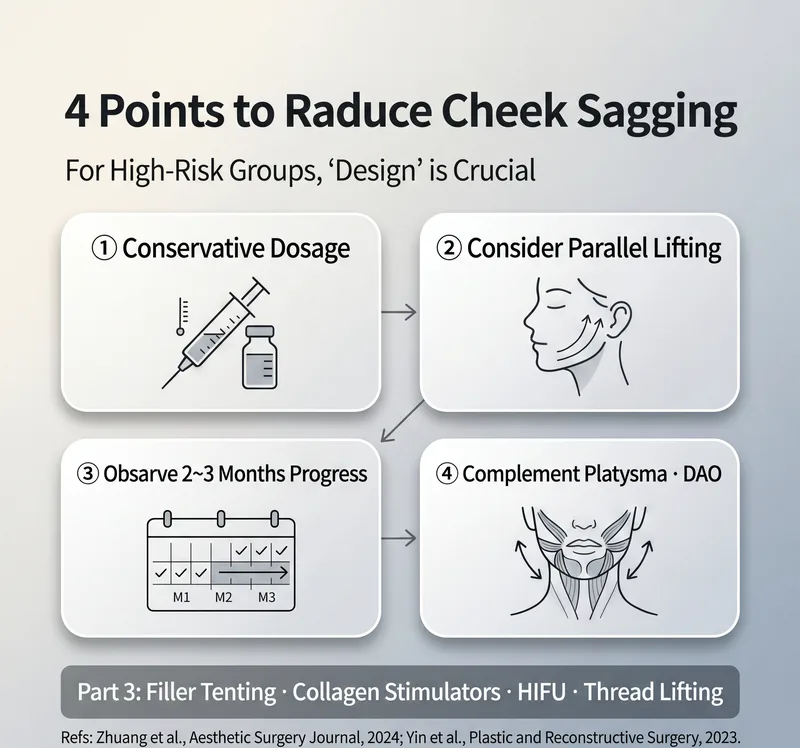
Precise dosing and injection site selection is critical. Rather than uniformly weakening the masseter, selectively target only the angular portions. Start conservatively and adjust based on response.
More importantly, combine jawline botox with simultaneous cheek enhancement treatments. Fillers, lifting procedures (Ulthera, Density), or skinboosters performed concurrently prevent the sagging caused by masseter weakening. Only this integrated approach improves overall facial contour while minimizing complications.
Frequently Asked Questions
- Why does the cheek sag after jawline botox?
- Weakening the masseter allows the cheek tissue and fat it previously supported to descend under gravity. This becomes more pronounced in patients with compromised skin elasticity.
- How can I safely receive jawline botox?
- Avoid excessive botox volume and use selective injection technique targeting only the angular portions. Concurrent cheek volumization or lifting treatments maintain overall contour and prevent sagging.