

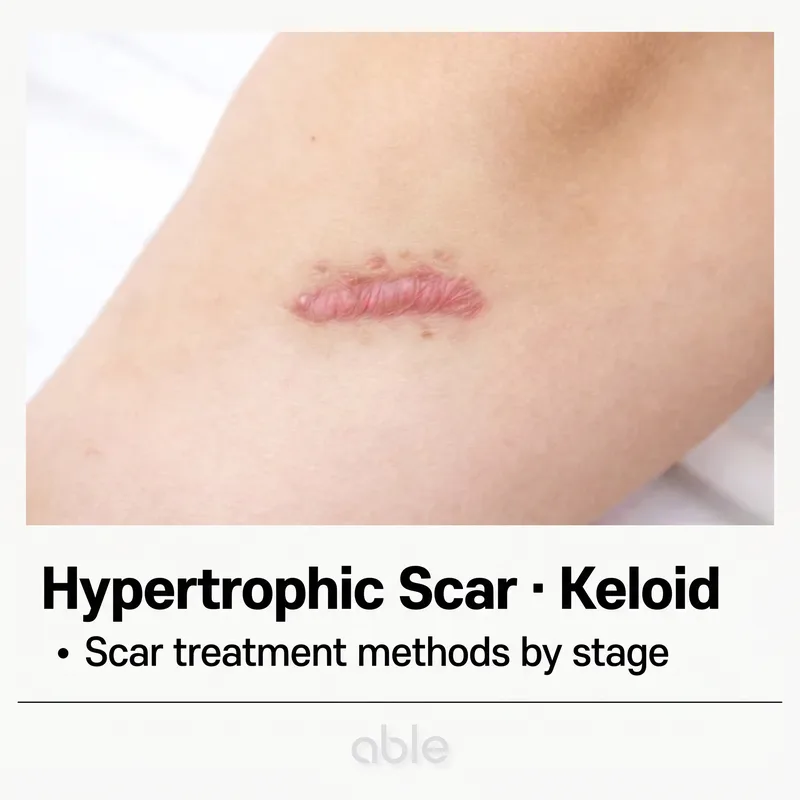
Keloids vs. Hypertrophic Scars: Similar Appearance, Different Approaches Needed
Among scars from trauma (not acne), there are "raised" types: keloids and hypertrophic scars. While these two look similar, their causes and treatment methods are completely different. Misdiagnosis leads to treatment failure.
Hypertrophic scars result from excessive collagen formation during wound healing and grow only within the wound's boundaries. Keloids, by contrast, are a true abnormal reaction where growth continues beyond the wound's borders. Keloid prevention and early intervention are critically important.
Hypertrophic Scars: High Probability of Improvement Over Time
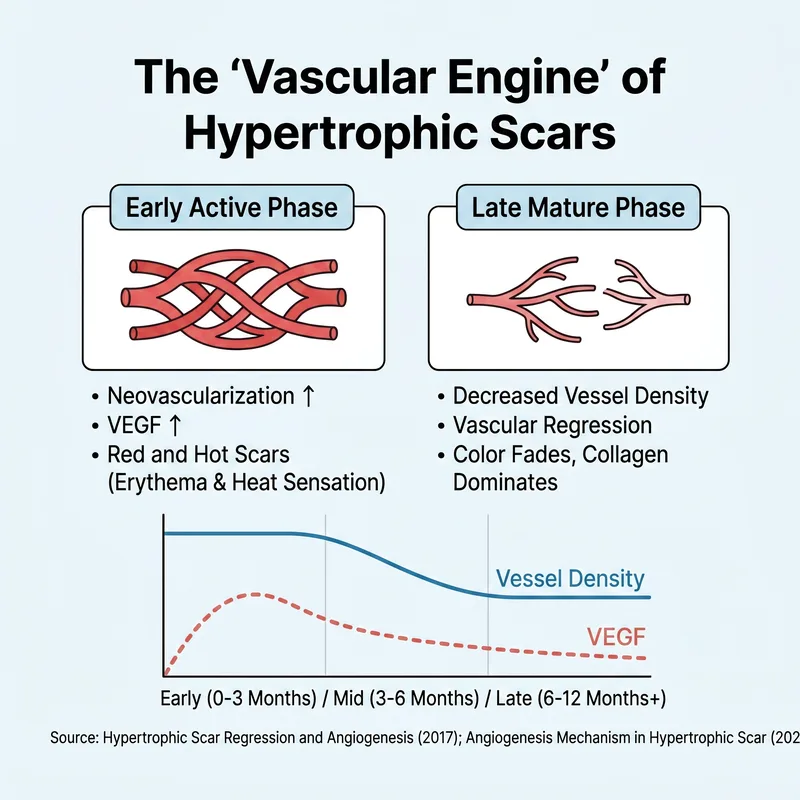
Hypertrophic scar tissue gradually normalizes with time. It thickens during the first 6-12 months, then slowly flattens. Therefore, avoiding impatience is important.
Early treatment focuses on "preventing worsening." Compression stockings, silicone gel, and steroid injections help. If no improvement occurs after 6+ months, consider active treatment (laser, radiofrequency, filler).
Keloids: Aggressive Early Treatment is Essential
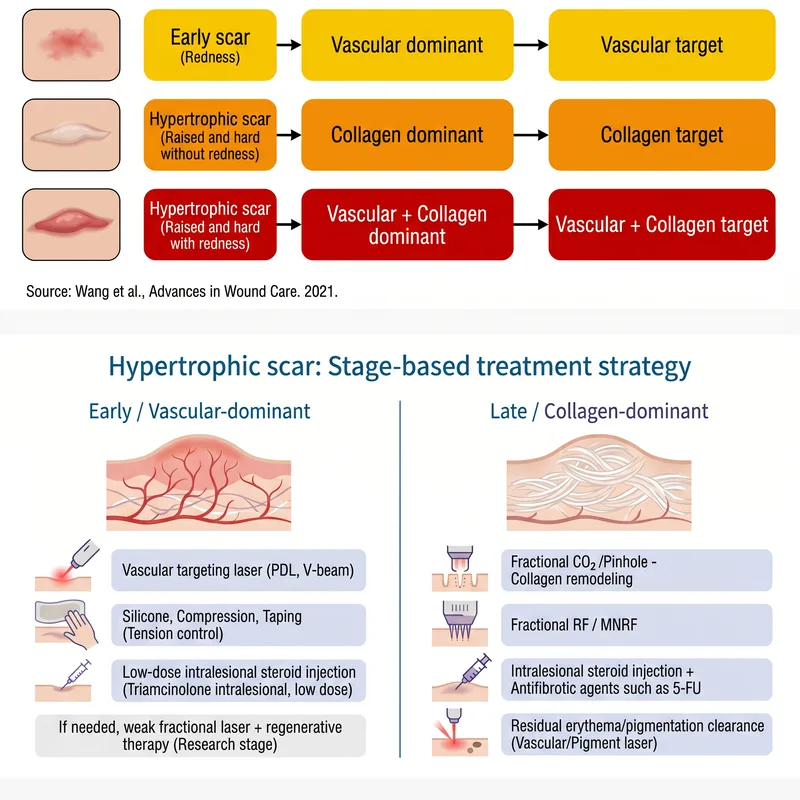
Keloids never heal naturally. They may continue growing over time. Therefore, thinking "we can just watch and wait" is dangerous. Consult a dermatologist immediately if keloid is suspected.
Early keloid treatment combines steroid injection, cryotherapy, and compression therapy. If these show no results after 6+ months, add laser or radiofrequency. Some extensive keloids require surgical excision and radiotherapy.
Different Scar Response by Wound Location
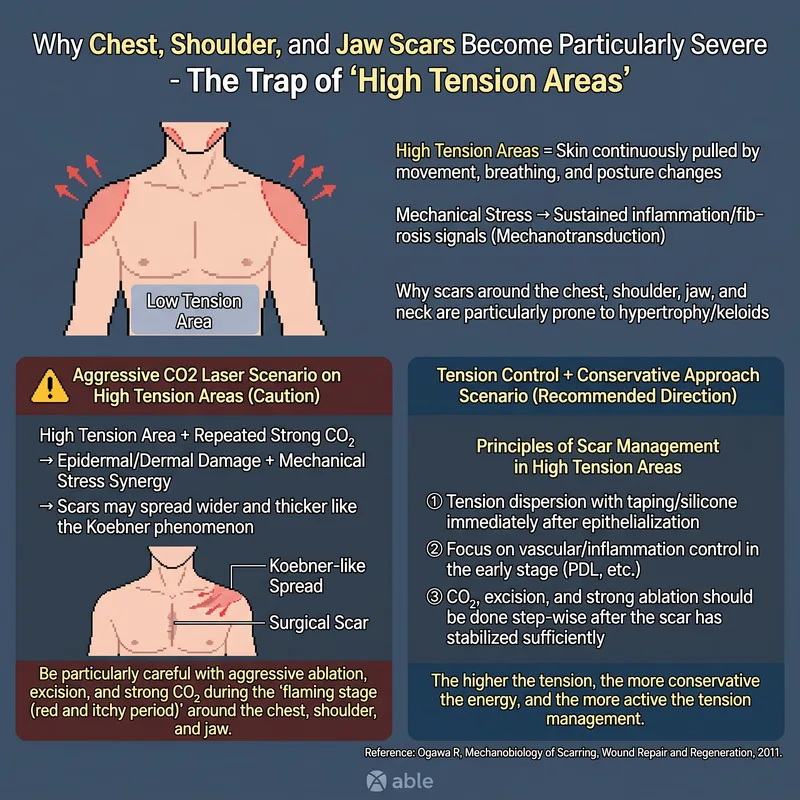
Interestingly, scar response varies by location. Chest, shoulders, and areas below the chin are more prone to keloid and hypertrophic scarring. Face, arms, and legs have relatively less thick scars.
This is due to differences in skin tension, blood supply, and immune response intensity by location. Same-sized wounds have different prognoses by location. High-risk areas require more aggressive early treatment.
Preventing Recurrence After Treatment
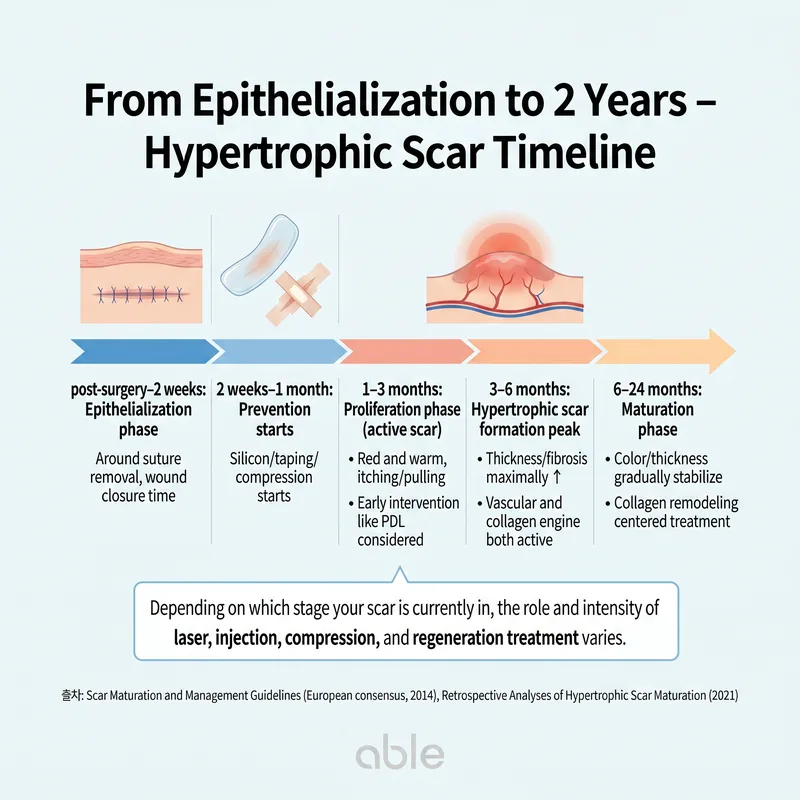
Both hypertrophic scars and keloids can recur after treatment. Therefore, post-treatment management is as important as treatment itself. Continue compression therapy for 6-12 months, strictly avoid sun exposure, and regularly check status with clinic visits.
Also avoid repeatedly stimulating the scar area. Unnecessary piercing or repeated trauma can re-trigger keloid or hypertrophic scarring. Those with keloid history should be cautious about new wounds anywhere on the body.
Frequently Asked Questions
- Why do steroid injections cause the surrounding skin to atrophy?
- Intralesional steroid (IL-TAC) suppresses local fibroblast activity; if dose, depth, or interval is incorrect, surrounding normal skin develops atrophy, telangiectasia, and pigmentary change. Safe protocol uses concentration adjustment (10–40 mg/mL), 4–6 week intervals, and accurate intralesional placement only.
- Can keloid be completely removed?
- Complete removal is difficult; recurrence after excision alone exceeds 50%. Standard 2024 management combines intralesional triamcinolone, pressure therapy, and silicone sheeting, with radiation reserved for high-risk cases. Steroid + 5-FU intralesional injection is the most validated medical approach.
- What is the difference between keloid and hypertrophic scar?
- Hypertrophic scars are thickened scars confined to the original wound boundary and tend to improve over time. Keloids extend beyond the original wound, invading adjacent normal skin, and rarely resolve spontaneously. The distinction determines first-line treatment.